
Blooming
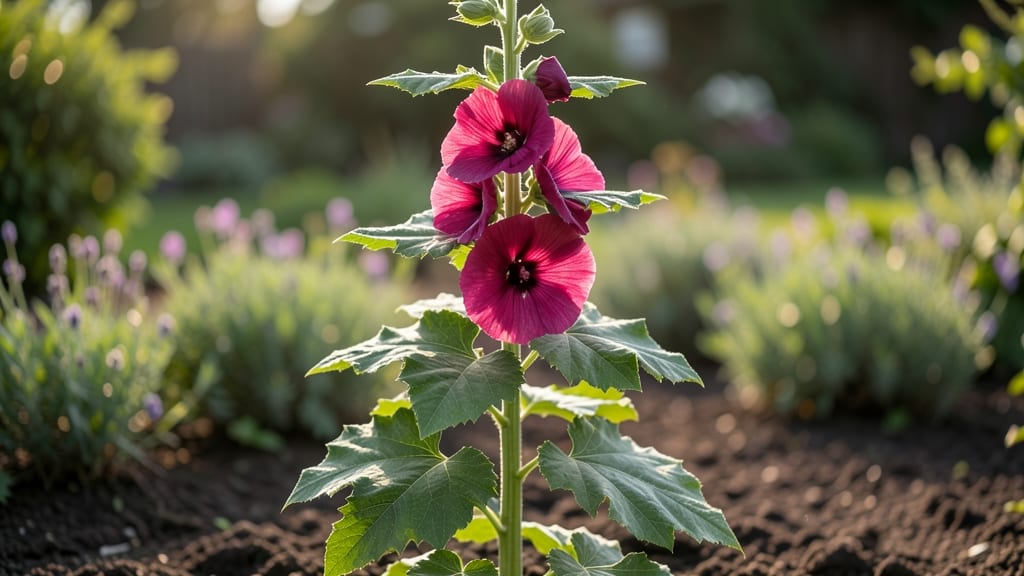
Hollyhocks bloom in late spring through summer, with their exact timing depending on your variety and zone—some burst into color as early as June, while others linger until September.
If you’ve ever waited eagerly for those towering 🌸 blooms to appear, you know timing is everything—especially when different varieties bloom at wildly different times.
Whether you’re in a cold northern zone or a warm southern climate, knowing the exact months for your hollyhock variety can mean the difference between a stunning summer display and a disappointing wait.
Most gardeners in Zone 6a (like myself) see their first blooms in June, but early varieties like ‘Chater’s Double’ can start as soon as May, while late bloomers like ‘Black Prince’ might not peak until August.
The key is matching your variety to your local frost dates and sunlight conditions.
In this guide, I’ll break down the exact bloom windows by popular hollyhock types, share tricks to extend their flowering season, and help you troubleshoot if your plants are playing hard to bloom. Let’s make sure your garden gets those show-stopping 🌸 displays when you want them!
Hollyhock bloom time by variety: when to expect flowers in your garden
Hollyhocks are the dramatic stars of cottage gardens, with their towering spikes of ruffled blooms that seem to stretch toward the sky. But their bloom times vary wildly by variety, making it tricky to plan your garden around them.
Some varieties burst into color in early summer, while others wait until late July or August. Understanding these differences helps you create a continuous display from June through September.
Your USDA hardiness zone also plays a critical role—northern gardeners may see blooms 2-4 weeks later than those in warmer southern zones. For example, 'Black Prince' often starts flowering in mid-June in Zone 7 but may wait until early July in Zone 5.
Let’s break down the bloom windows for popular varieties so you can plan your garden like a pro.
Pro Tip: Plant a mix of early, mid, and late bloomers to ensure your garden stays vibrant all season long. Pair 'Chater’s Double' (early) with 'Peach Blush' (late) for a non-stop floral show from June to frost.
If you’re in Zone 3 or 4, expect blooms to start 2-3 weeks later than the Zone 5-7 timeline above. For example, 'Chater’s Double' in Zone 4 might not bloom until late June or early July.
In Zones 8-10, you’ll often see flowers 4-6 weeks earlier, with some varieties like 'Peach Blush' starting as early as May.
For perennial hollyhocks, the first year of growth focuses on establishing roots, so you might not see blooms until year two. Annual varieties, however, typically flower 60-90 days after sowing, depending on your climate.
If you’re growing from seed, start indoors 8-10 weeks before your last frost date to ensure timely blooms.
One of my favorite tricks for extending bloom time is to plant succession varieties. For instance, sow 'Black Prince' in early spring for mid-summer blooms, then add 'Peach Blush' in late spring to carry the season into fall. This creates a seamless transition of color in your garden beds.
Watch for bud formation in late spring—this is your first sign that blooms are on the way. Hollyhocks form buds along their central spike, starting from the bottom and working upward.
If you notice buds but no flowers, check for rust fungus (a common hollyhock issue) or overcrowding, both of which can delay blooming.
In southern climates, some varieties like 'Russian Prince' may produce a second flush of blooms in fall if given proper care. To encourage this, deadhead spent blooms regularly and keep the soil consistently moist but well-drained. Avoid over-fertilizing with nitrogen, as this promotes leafy growth over flowers.
For gardeners in cooler zones, consider planting hollyhocks near a south-facing wall or fence to absorb extra heat and extend the growing season. A black plastic mulch can also warm the soil and encourage earlier blooms.
Just be sure to water deeply during dry spells, as hollyhocks are drought-sensitive once established.
Remember, hollyhocks are
How to extend hollyhock bloom time: pruning, deadheading, and seasonal care
Want your hollyhocks to bloom longer? The secret lies in smart seasonal care and timely pruning. Unlike many flowers, hollyhocks reward patience—with proper techniques, you can coax second blooms from both perennial and annual varieties.
Whether you're dealing with towering 6-foot stalks or compact 3-foot varieties, these methods work for all types.
First, understand that deadheading isn't just about looks—it's a growth signal for your plants. When you remove spent blooms, you redirect energy from seed production to new flower buds.
But timing matters: prune too early, and you might stunt growth; wait too long, and you miss the window for second-season blooms. Let me break down the exact steps to maximize your hollyhock's display.
- 1 Deadhead weekly during peak bloom (June-August) by snipping spent flowers at the first leaf node below. This prevents seed formation and encourages new side shoots with buds.
- 2 Prune for second blooms in late summer (August-September) by cutting back 1/3 of the plant height. Perennials like 'Chater’s Double' often respond with fall reblooming, while annuals may produce smaller but later flowers.
- 3 Fertilize lightly in early spring (March-April) with 5-10-10 NPK to boost stem and bloom production. Avoid high-nitrogen feeds after June 1st, as they promote leafy growth over flowers.
- 4 Support tall varieties with stakes or cages to prevent wind damage. Bent stems waste energy and reduce flowering potential, especially in Zone 5-7 where storms are common.
- 5 Mulch heavily in fall (October) with 3-4 inches of compost to protect roots. Perennials like 'Black Prince' benefit from this insulation, which translates to earlier spring blooms the next year.
For annual hollyhocks, focus on deadheading and watering consistency—these varieties thrive on regular care. I’ve seen 'Peach Blush' hollyhocks extend their bloom time by 4-6 weeks with weekly deadheading alone. The key is consistency: don’t skip a week, or you’ll lose momentum in the plant’s growth cycle.
In Zone 8-10, where winters are mild, you might even get year-round blooms with minimal intervention. Just ensure your soil stays moist but well-drained—hollyhocks hate soggy roots.
I once grew 'Lady of the Lake' in Southern California and had blooms from May through November by combining deadheading with light pruning every 6 weeks.
Remember, perennial hollyhocks are the real workhorses. They’ll reward you with multi-year blooms if you prune correctly and protect them in winter. For Zone 4-6, add 2-3 inches of straw mulch before the first frost to shield roots from freeze-thaw cycles.
This simple step can mean the difference between a dead plant and a vigorous rebloomer next spring.
Start today—grab your pruners and give your hollyhocks the care they deserve. With these techniques, you’ll enjoy longer, more abundant blooms that’ll be the talk of your neighborhood garden. 🌸✂️🌿