
Blooming
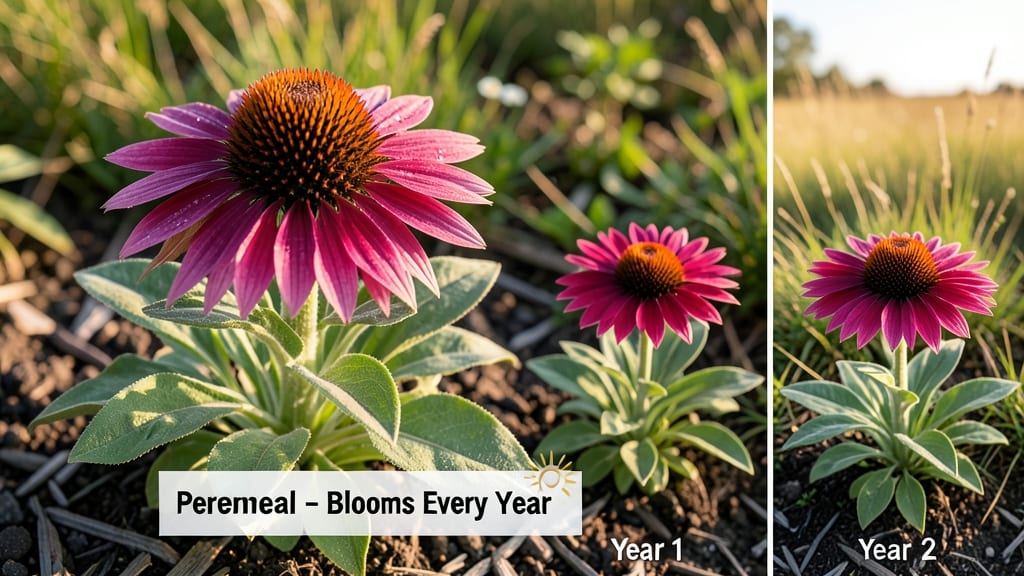
Perennials do not always bloom every year, as their flowering depends on factors like maturity, sunlight exposure, soil health, and seasonal conditions. Most need 2-3 years to establish roots before producing reliable blooms.
Perennial plants often follow a root-establishment-first growth pattern, meaning their first few years focus on building a strong foundation underground rather than flowering. 🌱 This biological strategy ensures survival through harsh seasons, but it can frustrate gardeners expecting immediate blooms.
For example, peonies typically take 2-3 years to reach their full bloom potential, while lavender may bloom sporadically in its first year before becoming more consistent. The key difference between annuals and perennials lies in their life cycle—while annuals prioritize rapid reproduction, perennials invest energy in long-term growth.
Environmental factors play a surprisingly large role in bloom reliability. Insufficient sunlight (especially for sun-loving varieties like daylilies) or poor soil drainage can trigger dormant states where the plant conserves energy instead of flowering.
Even well-established perennials may skip a season if stressed by drought or extreme heat. Understanding these patterns helps gardeners set realistic expectations while implementing targeted care strategies to encourage more consistent blooming.
💡 In This Article
- Why Some Perennials Skip Blooming Seasons
- How to Encourage Reliable Perennial Flowering
Why some perennials skip blooming seasons
The root of inconsistent blooming lies in a perennial's growth priorities. During their first 1-3 years, most perennials focus on developing an extensive root system to store nutrients and water for survival.
This underground growth phase is critical—studies show that plants with deeper root systems (like peony roots reaching 3 feet deep) can better withstand drought and produce more flowers later.
The energy diverted to roots means fewer resources for flowering, which is why many perennials appear "bushy but barren" in early years.
Environmental triggers also play a key role in bloom cycles. Perennials often require specific temperature fluctuations to initiate flowering—a process called vernalization. For example, bearded iris needs cold winter temperatures (35-45°F) for 6-8 weeks to trigger spring blooms.
Without this cold period, the plant may remain dormant or produce only foliage. Similarly, daylilies require 12-14 hours of daylight to bloom, which explains why they often skip flowering in their first year when planted in short-day climates.
Stress responses further complicate bloom reliability. When perennials experience nutrient deficiencies (like low phosphorus) or water stress, they prioritize survival over reproduction. For instance, lavender may produce minimal blooms if soil phosphorus drops below 0.1% by weight, as phosphorus is essential for flower development.
Even well-established plants can revert to this survival mode during droughts, leading gardeners to mistakenly believe the plant is "dying" when it's actually conserving energy.
Seasonal dormancy is another biological mechanism at play. Many perennials enter a rest period during winter or summer to conserve energy. During this time, all growth—including flower buds—stops until conditions improve.
For example, hostas often skip blooming in their first year because they're focusing on leaf production to build energy reserves for future flowering seasons. This dormancy isn't laziness—it's a sophisticated survival strategy that ensures the plant can rebound when conditions are favorable.
Climate variations also create year-to-year inconsistencies. A single late frost can destroy flower buds before they open, while unusual heat waves during bloom season can cause buds to drop prematurely.
For instance, coneflowers planted in zones 5-9 may bloom abundantly one year but produce only foliage the next if spring temperatures exceed 75°F during bud formation. These climate-induced skips can be frustrating, but they're part of the natural adaptive process that helps perennials thrive across diverse environments.
Understanding these biological mechanisms helps explain why even healthy perennials might skip blooming seasons. The key takeaway is that flowering is a secondary priority after root establishment and survival—making patience and proper care essential for long-term bloom success. 🌿