
Blooming
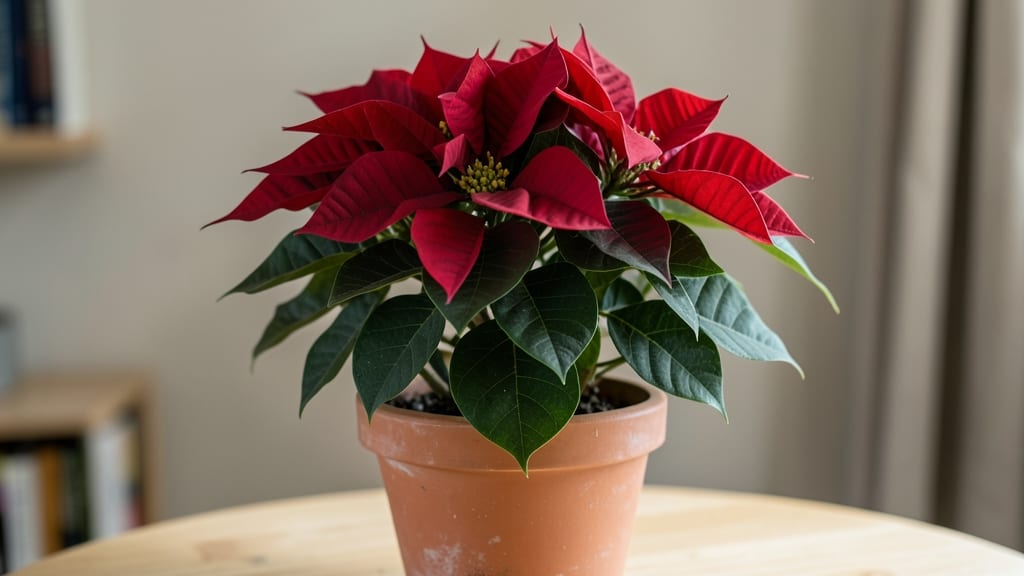
Poinsettias bloom naturally when daylight drops below 12 hours a day—a light-triggered response that turns their leaves into vibrant 🎄 bracts by late fall.
If you’ve ever wondered why your poinsettia’s red glow arrives just in time for the holidays—or how to coax it into blooming earlier—you’re not alone.
These tropical plants rely on short days to signal flowering, and their timing varies by region, from late October in the South to December in cooler climates.
In their native Mexico, poinsettias bloom in response to the 10-12 hours of daylight typical of fall, but indoor plants can be tricked into earlier color with controlled light exposure. The key? Mimicking shorter days by covering plants with a dark box for 14 hours a night—starting in early summer.
Below, I’ll break down the natural bloom cycle, how to adjust timing for your zone, and the 3 simple tricks that guarantee year-round blooms—no greenhouse required.
Poinsettia bloom cycle: how daylight length triggers natural flowering
Poinsettias are famous for their holiday timing, but their blooming isn't magic—it's science! Native to Mexico's highlands, these plants evolved to bloom when daylight shortens in late fall.
In their natural habitat, poinsettias trigger flowering when days drop below 12 hours of light, a response called short-day photoperiodism. This explains why they typically bloom in November-December—right when northern hemisphere daylight shrinks.
Understanding this cycle helps gardeners predict blooming windows. For example, in USDA Zone 10, outdoor poinsettias may bloom as early as October due to earlier daylight reduction. Meanwhile, indoor plants in colder climates often need help mimicking these natural light cues.
The key lies in darkness duration, not just sunlight hours—think of it as a built-in holiday timer!
🌱 BLOOM CYCLE SUMMARY
The 12-hour darkness rule is non-negotiable for poinsettias. Even a few minutes of extra light can delay blooming. In their native Mexico, where days shorten gradually, poinsettias bloom naturally from October through January.
But in colder climates, this process gets compressed into a 6–8 week window starting in late fall. For example, a poinsettia in Zone 5 might need artificial darkness to bloom by Thanksgiving.
Temperature also plays a supporting role. While poinsettias aren’t frost-tolerant, they prefer cooler fall nights (55–65°F) to trigger bud formation. In warmer climates like Zone 11, where nights stay mild year-round, poinsettias may bloom earlier or even twice a year.
This is why outdoor poinsettias in southern California sometimes flower in late summer—their natural response to the region’s shorter daylight in July-August.
One common misconception is that poinsettias bloom because of cold weather. In reality, it’s the lengthening nights that kickstart the process.
Think of it like a biological countdown timer: once darkness exceeds 12 hours for 6–8 consecutive weeks, the plant shifts from leaf production to bract development. These colorful "flowers" (actually modified leaves) are the plant’s way of attracting pollinators in its native habitat.
For gardeners in northern latitudes, this means starting the process early. If you want Christmas-ready poinsettias, begin manipulating light in early October. Place plants in a dark closet or tent from 5 PM to 7 AM daily for 2 weeks to simulate natural conditions.
Skip this step, and you’ll likely see blooms in January instead of December. The trade-off? Poinsettias are short-lived perennials, so most gardeners treat them as annuals and replace them after the holidays.
Interestingly, poinsettias can rebloom if given the right conditions. After their holiday display, prune plants back by half and resume longer daylight exposure (14+ hours) to reset their cycle. In USDA Zone 10+, outdoor poinsettias can even become year-round bloomers if protected from frost and given consistent care.
The secret? Patience and precise light control—just like their wild relatives in Mexico’s cloud forests.
If you’ve ever struggled to get your poinsettia to bloom on schedule, remember: you’re not fighting the plant—you’re working with its built-in calendar. By understanding how daylight length and temperature interact, you can fine-tune blooming times to match any holiday or event.
Whether you’re a seasoned grower or a first-time poinsettia parent, mastering this cycle turns holiday decorating into a predictable (and magical) science. 🎄
How to force poinsettias to bloom earlier than December
Poinsettias naturally bloom in late fall—typically November to December—when daylight hours shrink to 10-12 hours daily. This short-day photoperiod triggers their bracts (colored leaves) to develop vibrant hues. But if you’re dreaming of holiday cheer in October, you can manipulate their light exposure to force earlier blooms.
To advance flowering, start by providing 14 hours of darkness daily for 6-8 weeks before your target bloom date. This mimics the winter solstice conditions poinsettias crave. For example, if you want blooms by October 15th, begin the darkness treatment by August 15th.
⚠️ Natural Bloom Timing Matters!
Poinsettias bloom naturally between November 1st and December 25th because their native Mexico climate triggers flowering during short winter days. Forcing earlier blooms requires artificial darkness—but skip this if your plant hasn’t had 6-8 weeks of 10-hour daylight first. Without this prep, buds may fail to form!
Use a blackout box or dark curtain to cover the plant for 14 hours daily, starting at 5 PM and ending by 7 AM.
Place it in a cool (60-65°F) spot, like a basement or garage, to enhance results. Avoid artificial light leaks—even a nightlight can disrupt flowering.
For indoor growers in warm climates, adjust timing based on your local daylight savings. In Southern California, where days stay long into December, start the darkness treatment by July 1st for October blooms.
In Northern states, begin by September 1st to align with natural daylight shortening.
Common mistakes like inconsistent darkness or overwatering can delay blooms. Ensure your plant gets bright indirect light during the remaining 10 hours of daylight—a south-facing window works best. Reduce fertilizer use during the darkness phase to prevent leafy growth over buds.
With patience and precision, you can push poinsettia blooms to October or even September—just remember, the earlier you force them, the more light discipline your plant will need. Happy gardening! 🎄