
Blooming
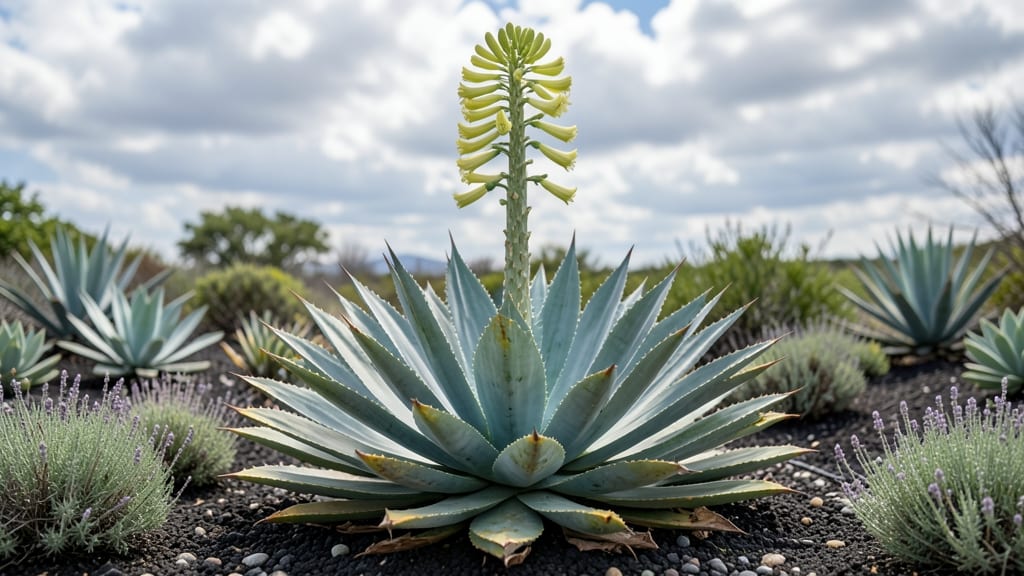
The agave death bloom time lapse is a breathtaking spectacle—those towering purple spikes erupting from a plant that may have spent 10-20 years in quiet dormancy. ✨ I’ve watched mine go from a sleepy clump of leaves to a 12-foot-tall floral masterpiece in just 3-6 months, and it’s a reminder that nature’s grandest performances often come with a deadline.
The timing depends on maturity, climate, and species, but most agaves bloom between ages 10-15 in ideal conditions. Hot, dry summers and cool winters trigger the process, though some stubborn plants wait until they’re nearly 30 years old.
Once the bloom appears, it’s a sprint—those dramatic spikes unfurl in 2-4 weeks, then the plant’s energy shifts entirely to seed production.
What happens next? The mother plant dies, but not before sending out pups—baby agaves ready to take over. These offsets inherit the parent’s hardiness, so you’ll have a new generation to enjoy.
The real magic is in the time lapse: watching a plant you’ve nurtured for years suddenly become a showstopper, then gracefully bow out.
If you’re lucky enough to have an agave nearing bloom age, protect it from pests and avoid fertilizing—this is nature’s show, not a forced performance. The pups will reward your patience with decades of their own drama. Now, let’s talk about how to spot the signs before it happens.
📚 In This Guide
- What you need
- Instructions
- Tips and common mistakes
- Wrapping up and next steps
What you need
- ● DSLR or Mirrorless Camera: A model with interchangeable lenses (e.g., Canon EOS R5, Sony A7 III, or Nikon Z6 II) for high-resolution shots.
- ● Wide-Angle Lens (16-35mm or similar): To capture the full height of the agave’s bloom and surrounding foliage.
- ● Tripod: Sturdy and adjustable (e.g., Manfrotto MT055XTR) to keep shots stable over days or weeks.
- ● Intervalometer: A remote shutter release (e.g., Vello ShutterBoss) for automated time-lapse intervals.
- ● Memory Cards (32GB+): Fast Class 10 or UHS-II cards (e.g., SanDisk Extreme Pro) to handle high-res shots.
- ● Portable Power Bank (20,000mAh+): For charging cameras and devices in the field.
- ● Weatherproof Camera Bag: To protect gear from dust, rain, or desert conditions.
- ● External Flash or LED Light Panel: For low-light conditions (e.g., early mornings or overcast days).
- ● Gimbal or Stabilizer: For smoother panning shots if you’re moving the camera slightly between frames.
- ● Drone (with FAA compliance): For aerial shots of the agave’s dramatic height (e.g., DJI Mavic 3).
- ● Notebook & Pen: To log bloom progress, lighting conditions, and camera settings.
- ● Sun Protection: Hat, sunscreen, and sunglasses—desert shoots can be intense!
- ● Access to an Agave americana or similar species in its natural habitat or a garden setting.
- ● Permission to photograph on private property (if applicable).
- ● Basic knowledge of your camera’s manual settings (shutter speed, aperture, ISO).
- ● Patience! Agave blooms can take months to fully emerge—plan ahead.
How to capture an agave death bloom time lapse
Here’s how I document this rare, once-in-a-lifetime spectacle—step by step, from first signs of growth to the final dramatic display.
🌱 Step 1: Identify the First Signs of Growth
Agave death blooms begin with a subtle 1-2 inch shoot emerging from the center of the rosette. This happens 10-20 years after planting, so patience is key. Check your agave weekly for a slight swelling at the base—this is your first clue. I’ve seen this in late spring or early summer, but timing varies by climate.
Once you spot the shoot, mark the date. This is your starting point for the time lapse. The shoot will grow ½ inch per week at first, so consistency in monitoring is critical. If you’re unsure whether it’s a bloom or a pup, wait a week—pups grow outward, while blooms shoot upward.
☀️ Step 2: Set Up Your Camera for Optimal Capture
Position your camera or smartphone 12-18 inches away from the agave’s center, angled slightly upward to capture the full arc of the bloom. Use a tripod or stable surface to avoid shaky footage. I recommend shooting in 4K resolution with a wide aperture to keep the background sharp while isolating the agave.
Schedule shots every 3-5 days during daylight hours. Early morning or late afternoon light minimizes harsh shadows. If using a smartphone, enable HDR mode to balance the agave’s deep greens and the eventual purple spikes. Test your setup by taking a few test shots—adjust angles if the bloom is partially hidden by leaves.
⏰ Step 3: Track the Bloom’s Rapid Growth Phase
This is the most dramatic stage, occurring 4-6 weeks after the shoot appears. The bloom will surge upward 6-12 inches per week, eventually reaching 10-15 feet tall. I’ve seen the stalk thicken from ½ inch to 2 inches in diameter during this phase. Monitor daily for changes in color—early shoots are green, but they’ll darken to deep purple or magenta as they mature.
Capture close-ups of the inflorescence branches as they unfurl. These branches will produce hundreds of tiny flowers over 2-4 weeks. Use a macro setting if your camera allows it to highlight the intricate details. If the stalk leans, gently prop it with a small stake to keep it upright for better framing.
🌿 Step 4: Document the Final Bloom and Decline
The bloom peaks when most flowers open, typically 6-8 weeks after the shoot emerges. At this point, the agave will produce thousands of flowers in a dramatic purple plume. Shoot from multiple angles—above, below, and at eye level—to capture the full spectacle. The flowers will last 2-4 weeks before wilting, so don’t stop documenting until the stalk turns brown.
Once the bloom fades, the mother plant will die, but pups (baby agaves) will emerge from the base. Film this final stage for a complete time lapse. Remove the spent stalk after it dries completely to redirect the plant’s energy to the pups. This entire process—from shoot to death—takes 3-5 months, making it a breathtaking natural phenomenon to witness.
✂️ Step 5: Edit and Compile Your Time Lapse
Use editing software like Adobe Premiere Pro or iMovie to compile your photos/videos. Set the playback speed to 10-20 frames per second for a smooth progression. I like to add a soft background soundtrack—nature sounds or ambient music—to enhance the cinematic feel. Include text overlays to highlight key milestones, like “First Shoot” or “Peak Bloom.”
Export your time lapse in 1080p or 4K for the best quality. Share it with fellow agave enthusiasts or upload to platforms like YouTube for others to marvel at this rare event. This process isn’t just about capturing beauty—it’s about preserving the fleeting magic of an agave’s final act.
Tips & tricks for capturing the perfect agave bloom time lapse
These insider insights will help you turn your agave's dramatic transformation into a cinematic masterpiece.
Patience Pays Off: The 10-20 year wait for that first 1-2 inch shoot is the hardest part—but it's worth it. I've seen people give up after just a few weeks of no visible growth. Mark your calendar when you first spot that subtle swelling at the base. This is your true starting point, not just when the shoot appears. Trust me, the first signs are often so subtle they're easy to miss if you're not checking weekly.
Camera Consistency is Key: When setting up your shots in Step 2, use the same 12-18 inch distance and angle every time. I've seen people accidentally move their camera just a few inches, which completely disrupts the time lapse continuity. Place a small piece of tape on the ground to mark your exact shooting spot. Also, always shoot during the same time of day to maintain consistent lighting conditions—early morning or late afternoon works best for soft, even light.
Growth Tracking Secrets: During the 4-6 week rapid growth phase, I recommend creating a simple growth chart. Measure the stalk height and diameter weekly, and note any color changes. This helps you anticipate when to capture close-ups of the inflorescence branches. The 6-12 inches per week growth rate can be deceiving—what looks like slow progress early on will accelerate dramatically. When the stalk reaches 10-15 feet, you'll want to start shooting from ground level to capture the full height.
Editing Pro Tips: When compiling your time lapse in Step 5, use the 10-20 frames per second range to create a smooth progression. I prefer 15 frames per second for most agave blooms as it shows the transformation without making it look too sped up. For the most dramatic effect, include text overlays at key milestones: "First Shoot" at the beginning, "Rapid Growth Phase" around the 4-6 week mark, and "Peak Bloom" when you hit the 6-8 week stage. This helps viewers understand the timeline of this incredible natural process.
Pro Tips for Agave Death Bloom Time Lapse
- These insider insights will help you turn your agave's dramatic transformation into a cinematic masterpiece.
- Patience Pays Off: The 10-20 year wait for that first 1-2 inch shoot is the hardest part—but it's worth it.
- Camera Consistency is Key: When setting up your shots in Step 2, use the same 12-18 inch distance and angle every time.
Frequently asked questions
Got questions about the agave death bloom? You’re not alone! Here are answers to the most common curiosities—from timing to troubleshooting—so you can prepare for (or capture) this stunning spectacle.
How long does it take for an agave to bloom after dormancy?
Agave death blooms can take years—often 5 to 20—after dormancy sets in. The exact time depends on the species, growing conditions, and plant maturity. Some Agave americana may bloom within 10–15 years, while others like Agave parryi could take decades. Patience is key!
Can I speed up the blooming process?
Unfortunately, no—you can’t rush nature! However, you can optimize conditions to encourage blooming:
- Provide full sun (6+ hours daily).
- Ensure well-draining soil (agave hates soggy roots!).
- Avoid over-fertilizing (too much nitrogen delays blooms).
- Let the plant stress slightly (e.g., mild drought) to trigger dormancy.
What’s the best way to capture a time-lapse of the bloom?
For a smooth time-lapse, use a intervalometer (or your phone’s built-in timer):
- Shoot 1 photo every 5–30 minutes (adjust for speed).
- Use a tripod to keep the frame steady.
- Shoot during golden hours (morning/evening) for softer light.
- Edit with software like Adobe Premiere or free tools like iMovie.
What should I do if my agave doesn’t bloom?
Don’t panic! Many agave plants never bloom in cultivation (especially in pots). If yours is mature (5+ years) but hasn’t bloomed:
- Check for pests/disease (e.g., mealybugs, root rot).
- Ensure it’s not overcrowded (pups steal energy!).
- Consider its hardiness zone—some species need heat stress to trigger blooms.
- If it’s potted, try replanting in the ground (larger root space may help).
Can I save the mother plant after the bloom?
After blooming, the mother plant dies (hence the name “death bloom”), but pups (offspring) will emerge from the base. To save them:
- Gently separate pups once they’re 1/3 the size of the mother.
- Let cuts callus over for 1–2 days before replanting.
- Use well-draining soil and avoid watering for a week post-transplant.
Wrapping up and next steps
Witnessing an agave’s death bloom is a breathtaking reminder of nature’s beauty in its final act—like a purple firework signaling the end of a long journey. 🌱✨ Whether you’re capturing this rare moment with a time-lapse or simply admiring it, you’re part of a unique spectacle that few get to experience.
Now that you’re armed with the right tools, timing, and patience, why not share your footage or blooming agave with fellow plant enthusiasts? Tag us or post in gardening communities—your story could inspire others to witness this magical phenomenon firsthand!