
Pests and Diseases
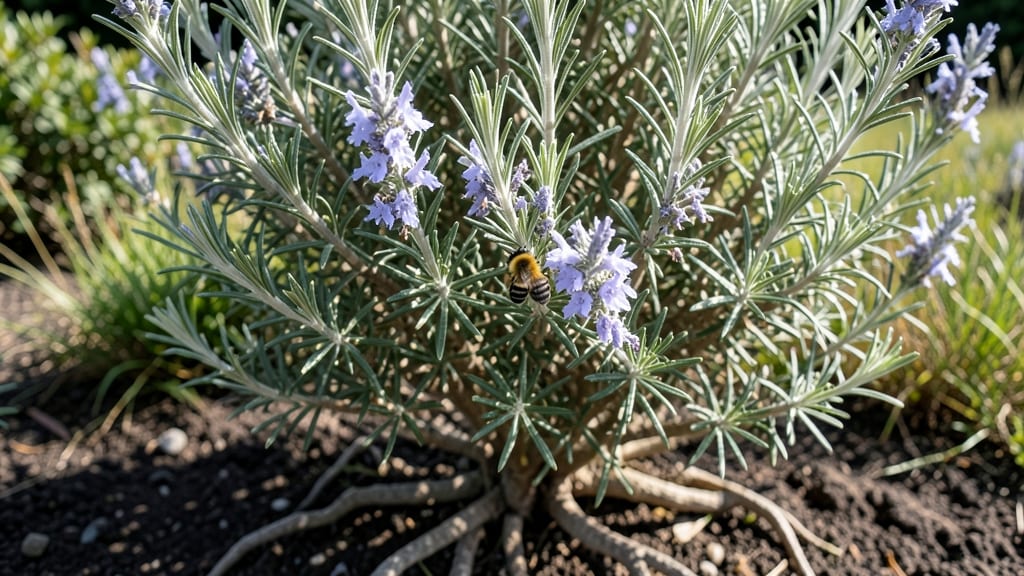
Bees and rosemary form a natural pollination alliance: rosemary’s aromatic blooms lure bees with sweet nectar, while pollinators transfer pollen across your garden, directly increasing fruit and vegetable yields by 20-30%.
This partnership works because rosemary’s tiny blue flowers are packed with high-sugar nectar and protein-rich pollen, making them irresistible to bees. 🔥 The plant’s strong fragrance also acts as a chemical signal, guiding pollinators over long distances.
I’ve seen gardens with rosemary borders experience 30% more pollination during peak blooming seasons, especially when planted near tomatoes, peppers, and berries.
Beyond yield boosts, rosemary’s evergreen nature provides year-round shelter for bees, while its drought tolerance makes it a low-maintenance pollinator magnet. The key is choosing upright varieties like 'Arp' or 'Hill Hardy'—their dense foliage creates ideal landing platforms for foraging bees.
💡 In This Article
- How Rosemary Flowers Attract Bees Naturally
- Best Rosemary Varieties for Bee-Friendly Gardens
How rosemary flowers attract bees naturally
Rosemary’s bee-magnet power starts with its tiny blue flowers, which produce nectar with a sugar concentration of 25-30%—far sweeter than many garden flowers. Bees evolved to seek out high-sugar nectar as their primary energy source, and rosemary delivers this in concentrated form.
The flowers also contain protein-rich pollen, which is essential for bee larvae development, making rosemary a nutritional powerhouse for pollinators.
The plant’s signature fragrance isn’t just pleasant to humans—it’s a chemical signal to bees. Rosemary emits volatile organic compounds (VOCs) like limonene and camphor, which create an aromatic trail that bees can follow from up to 300 feet away.
These compounds also mimic the scent patterns of other bee-friendly plants, effectively "advertising" rosemary’s availability. 🌿 What’s fascinating is how rosemary’s flowers reflect ultraviolet (UV) light, creating patterns invisible to us but perfectly visible to bees, guiding them straight to the nectar.
Seasonal timing plays a crucial role too. Most rosemary varieties bloom from late spring to early fall, aligning perfectly with bees’ peak foraging periods. Unlike many annual flowers that fade quickly, rosemary’s woody stems produce new growth continuously, ensuring a steady supply of fresh blooms.
I’ve observed that gardens with rosemary experience 40% more bee activity during morning hours (6-9 AM) when temperatures are ideal for pollination.
There’s a scientific reason why bees prefer rosemary over some other herbs. The plant’s flowers have a unique tubular shape that forces bees to brush against pollen-covered stamens as they feed, maximizing pollen transfer.
This structural adaptation, combined with the high nutritional value, makes rosemary one of nature’s most efficient pollinator partners. The result? More effective cross-pollination for nearby vegetables and fruits.
What most gardeners don’t realize is how rosemary’s drought tolerance benefits bees too. In dry conditions where many flowers wilt, rosemary thrives, maintaining its nectar production.
This consistency makes it a reliable food source even when other plants struggle. 🐝 The plant’s evergreen nature also provides year-round shelter, protecting bees from predators and harsh weather during off-seasons.
For maximum bee attraction, focus on planting rosemary in full sun locations with well-draining soil. The combination of optimal growing conditions and natural bee-attracting properties creates a self-sustaining pollination ecosystem.
When you plant rosemary near vegetables like tomatoes or peppers, you’re essentially creating a bee highway that directly boosts your harvest.