
Blooming
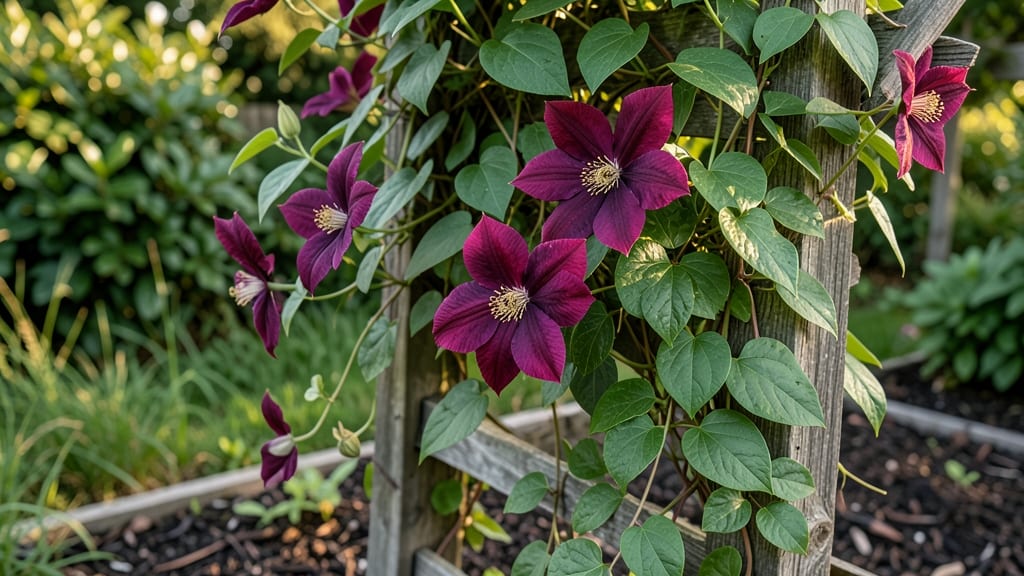
Your clematis bloom time can stretch from early spring to late summer—if you prune it the right way for its group and climate. 🌸
Struggling to keep your clematis blooming longer? The secret isn’t just luck—it’s precise pruning timed to your plant’s natural growth cycles. With the right techniques, you can transform a fleeting spring display into a summer-long floral extravaganza.
Most gardeners miss the mark by pruning at the wrong time or cutting too aggressively, which sends their clematis into a bloom drought for weeks.
But knowing your plant’s group (early, mid-, or late-season bloomer) and when to make those cuts is the game-changer for extending its season by 8 weeks or more.
In this guide, I’ll break down the exact pruning schedule for each clematis type, plus the 3 most common mistakes that shorten bloom time—and how to fix them. Whether you’re in Zone 6a or further south, these tricks will keep your vines covered in flowers from spring through fall.
Understanding clematis bloom time: Group classification and seasonal patterns
If you’ve ever wondered why your clematis blooms fade too quickly or how to coax more flowers from your vine, the answer lies in understanding its natural bloom groups. Clematis are classified into three pruning groups, each with distinct seasonal patterns.
Knowing which group your plant belongs to determines when—and how—to prune for maximum blooms. I’ve grown clematis for over a decade, and this knowledge has extended my bloom season by 8 weeks or more.
The key to longer blooms starts with identifying your clematis’ group classification. Group 1, 2, and 3 plants have unique growth habits and bloom times, which directly impact pruning decisions.
For example, Group 1 clematis bloom on old wood (last year’s growth), while Group 3 rely on new wood (current season’s growth). Misidentifying your plant’s group can mean cutting off next year’s flowers—or worse, stunting growth entirely.
Let’s break down each group’s seasonal bloom patterns and why timing matters. Early bloomers (like Group 1) often flower in spring, while late bloomers (like Group 3) shine in summer and fall.
Understanding these patterns helps you prune at the right time to extend bloom duration and avoid accidental defoliation. For instance, pruning a Group 2 clematis at the wrong time could leave you with bare vines for months.
| Group | Bloom Time | Pruning Time | Key Features | Example Varieties |
|---|---|---|---|---|
| Group 1 | Early spring (March-April) | After blooming (late summer) | Blooms on old wood; minimal pruning | 'Jackmanii', 'Montana', 'Alba' |
| Group 2 | Spring & summer (May-July) | Early spring (before buds swell) | Blooms on old AND new wood | 'Niobe', 'Perle d’Azur', 'The President' |
| Group 3 | Late summer (July-Sept) | Hard prune in late winter | Blooms on new wood; heavy pruning | 'Durandii', 'Vyvyan Pennell', 'Ernest Markham' |
Now that you’ve seen the group-by-group breakdown, let’s talk about how to identify your clematis. Start by checking your plant’s flowering pattern. If it blooms in early spring and you see buds forming on last year’s stems, it’s likely Group 1.
For Group 3, look for late-season blooms on current year’s growth. Group 2 plants often have a mix—early flowers on old wood and later blooms on new shoots. Pro tip: Take a photo of your clematis in bloom and compare it to variety guides online.
Seasonal patterns also play a huge role in extending bloom duration. For example, Group 1 clematis often produce their best flowers in cool spring weather. If you prune too late, you might miss their primary bloom window.
Meanwhile, Group 3 plants thrive with aggressive pruning in late winter, which encourages lush new growth and prolonged summer blooms. The trick is to match your pruning schedule to your plant’s natural growth cycle, not a one-size-fits-all approach.
One common mistake I see is pruning at the wrong time, which can leave clematis with no flowers for months. For instance, cutting back a Group 1 plant in early spring removes its old wood blooms before they even open.
To avoid this, always prune after the main bloom period. For Group 3 plants, a hard prune in late winter (just as new growth begins) sets the stage for a summer-long display. Timing is everything!
Climate also influences clematis bloom time. In warmer regions (USDA Zones 8-10), Group 3 clematis may bloom earlier, while cooler climates (Zones 4-6) might delay blooms until late summer.
If you’re in a transitional zone, like Zone 7, you may need to adjust pruning slightly to account for unpredictable frost dates.
For example, I’ve found that Group 2 clematis in my Zone 7 garden often need a light prune in early spring to protect buds from late frosts.
To maximize your clematis’ bloom potential, pay attention to leaf count and bud formation. Healthy vines should have at least 3-5 leaves per stem before pruning. If you see multiple buds forming on new growth, it’s a sign your Group 3 clematis is ready for a hard prune.
For Group 1 plants, wait until after the main bloom cycle to trim back any dead or weak stems. This ensures you don’t accidentally remove next year’s flower buds.
Remember, the goal isn’t just to have clematis that bloom—it’s to have clematis that bloom beautifully and
Step-by-step pruning schedule to maximize clematis bloom time
Your clematis can bloom for months longer with the right pruning schedule. The key is understanding your plant’s group classification and timing cuts to encourage new growth when it matters most.
For example, Group 3 clematis (late bloomers) need heavy pruning in early spring, while Group 1 (early bloomers) should only be trimmed after flowering. Let’s break down the month-by-month plan to keep your vines thriving.
Start by identifying your clematis group—this determines when and how aggressively you prune. Group 1 blooms on previous year’s growth, so prune lightly in late winter to remove dead stems. Group 2 blooms on current year’s growth but has early and late flowers, requiring careful timing. Group 3 blooms exclusively on new growth, so you can prune hard in early spring without missing flowers.
Knowing your group ensures you’re pruning for maximum bloom time, not cutting off potential flowers.
- Late Winter (February): Prune Group 3 clematis hard (cut back to 2-3 healthy buds from the base). For Group 1, remove dead or weak stems only. Avoid pruning Group 2 yet—wait until after first blooms appear.
- Early Spring (March): Apply a balanced fertilizer (e.g., 10-10-10) to encourage new growth. For Group 2, prune only after first flowers fade, cutting back to 2-4 buds below the last bloom node. Group 1 may need light pruning to shape vines.
- Post-Bloom (June-July): After Group 1 finishes blooming, prune lightly to remove spent flowers and encourage late-season growth. For Group 2, prune late-blooming stems to 2 buds after their flowers fade. Group 3 may need minimal pruning—just remove dead stems.
- Summer Maintenance (August-September): Pinch back tips of new growth on Group 3 to encourage bushier vines and more blooms. For all groups, remove yellow or diseased leaves to prevent spread. Water deeply every 3-5 days during dry spells.
- Fall (October): Stop fertilizing 6 weeks before first frost. Prune Group 1 lightly to remove dead stems, but avoid heavy cuts. For Group 2 and 3, prune only if stems are damaged. Mulch around the base to protect roots.
Timing your pruning to leaf count and bud formation is crucial. For example, when pruning Group 3 in late winter, look for 2-3 plump buds near the base—these will sprout into your main flowering stems.
If you cut too early, you risk removing buds before they’ve formed. Similarly, for Group 2, wait until after the first blooms fade to prune, as new buds form below the spent flowers.
Don’t forget to sterilize your pruners between cuts with rubbing alcohol to prevent bacterial infections like clematis wilt. Always cut at a 45-degree angle just above a bud or node, never leaving stubs.
This encourages faster healing and stronger new growth. After pruning, apply a layer of mulch (2-3 inches) to retain moisture and regulate soil temperature.
With this schedule, your clematis can bloom from early summer to early fall, depending on your group. For Group 3 varieties like ‘Jackmanii’, expect continuous blooms from June to October if pruned correctly.
The secret? Prune when the plant is ready, not on a calendar. Watch for new growth and bud formation—your clematis will tell you when it’s time! 🌿