
Shrubs
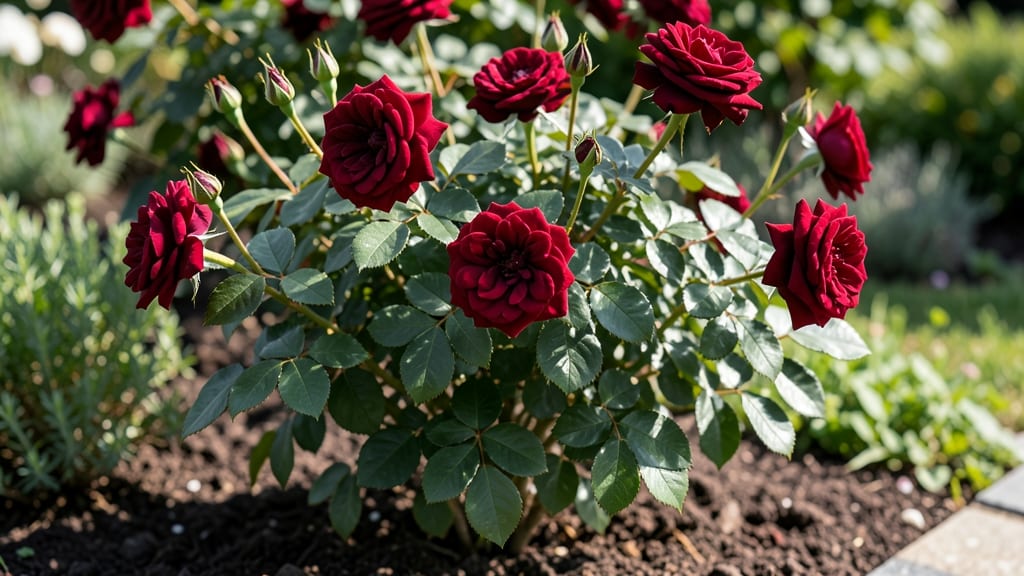
Deep red rose bushes are the bold statement your garden deserves—velvety blooms that command attention from spring until frost. 🌹 I fell in love with them after transforming a dull corner into a romantic focal point, where their rich hue contrasts perfectly against lush greenery.
The secret isn’t just their color; it’s how they transform a space into a fragrant, timeless retreat.
Pair them with lavender’s soft purple for a cottage garden vibe or silver foliage like lamb’s ear for a modern contrast. In autumn, their deep red leaves add warmth, while winter’s bare branches create an elegant silhouette.
These roses thrive in full sun, making them ideal for borders, trellises, or even as standalone stars in a mixed shrubbery bed.
Imagine morning sunlight catching the petals, filling your garden with a spicy-sweet fragrance that lingers long after the blooms fade. They’re surprisingly low-maintenance once established, rewarding you with months of drama without the fuss.
The key is pairing them with complementary textures—think boxwood’s structured form or hydrangeas’ soft clusters—to create visual harmony.
For a romantic garden, weave them through arbors with climbing roses for a fairy-tale effect. Or, for a modern look, plant them in geometric patterns with ornamental grasses. The possibilities are endless—let these deep red beauties be the centerpiece of your garden’s story.
📚 In This Guide
- What you need
- Instructions
- Tips and common mistakes
- Wrapping up and next steps
What you need
- ● Deep red rose bushes: Choose hybrid teas, floribundas, or climbers like 'Black Baccara,' 'Don Juan,' or 'The Fairy' (3–5 plants for a small garden, 6+ for a statement border).
- ○ High-quality potting soil or garden soil: Amend with compost or aged manure (50% soil, 50% organic matter for loose, well-draining mix). Optional: Add rose-specific fertilizer (10-10-10 NPK ratio) at planting.
- ● Organic mulch: Wood chips or straw (2–3 inches thick) to retain moisture and suppress weeds.
- ● Slow-release fertilizer: Osmocote or Espoma Rose-Tone (follow package rates for granular application).
- ● Pruning shears: Bypass pruners (sterilized with rubbing alcohol) for clean cuts.
- ● Garden gloves: Heavy-duty nitrile-coated to protect from thorns.
- ● Shovel or trowel: For digging holes (12–18 inches wide/deep for bare roots, match container size for potted roses).
- ● Staking system: 3–4 ft bamboo stakes + soft ties (for climbers or tall varieties).
- ○ Watering can or hose with nozzle: Drip irrigation (optional but ideal for consistent moisture).
- ● Sunlight: 6+ hours of full sun daily (no exceptions—deep red roses thrive in heat!).
- ● Disease prevention: Copper fungicide spray (prevents black spot; apply every 2–3 weeks in humid climates).
- ● Neem oil (natural pest deterrent for aphids/rose slugs).
- ● 🌡️ Plant in early spring or fall (avoid summer heat stress!).
- ● ✨ Test soil pH: Aim for 6.0–6.5 (use a soil test kit; amend with lime if needed).
- ● 🎯 Space plants 2–3 ft apart (3–4 ft for climbers) for airflow and sunlight.
Step-by-step instructions for planting and cultivating deep red rose bushes
Here's how to establish thriving, fragrant deep red climbers that dominate any sunlit garden.
🪴 Step 1: Select and Prepare the Planting Site
Choose a location with at least 6 hours of direct sunlight daily—deep red roses demand full sun to develop their signature rich color and intense fragrance. Test your soil's drainage by digging a 12-inch deep hole and filling it with water; if it doesn't drain within 2 hours, amend with 2-3 inches of coarse sand or gravel mixed into the native soil.
I always work the soil to a depth of 18 inches, incorporating 3-4 inches of compost and a balanced 10-10-10 fertilizer at half-strength. The goal is loose, aerated soil that mimics the roses' native woodland edge conditions. Avoid fresh manure—it can burn delicate roots and encourage fungal diseases.
🌱 Step 2: Plant Bare-Root Roses at the Right Time and Depth
Plant your deep red roses in early spring, 4-6 weeks before your last frost date, when soil temperatures reach 55°F. Soak bare-root plants in lukewarm water for 1-2 hours before planting to rehydrate the roots. For container-grown roses, water thoroughly until water runs freely from the drainage holes.
Dig a hole twice as wide as the root ball but only 6 inches deep—roses need to be planted shallowly. Position the plant so the graft union (the swollen area near the base) sits 2-3 inches above soil level. This prevents soil-borne diseases from reaching the scion wood. Spread roots outward gently, ensuring they don't circle or bend.
💧 Step 3: Water and Mulch for Establishment
Backfill the hole with native soil, tamping down lightly to eliminate air pockets. Water immediately with 1 gallon per plant, then create a 3-inch deep watering basin around the base. Deep red roses need 1-2 inches of water weekly during establishment, but never let them sit in soggy soil—this is when black spot and powdery mildew take hold.
Apply a 3-inch layer of organic mulch (such as wood chips or shredded bark) around the base, keeping it 6 inches away from the stem to prevent rot. Mulch conserves moisture and regulates soil temperature, but avoid piling it against the trunk—this creates a damp environment that invites fungal problems. Replenish mulch annually as it decomposes.
☀️ Step 4: Provide Support and Seasonal Care
Install a 5-6 foot tall support structure (such as a trellis or sturdy stakes) immediately after planting. Deep red climbers can grow 6-8 feet tall with proper care, so secure the main stems to the support with soft ties. Prune any crossing branches now to encourage an open, airy growth habit that reduces disease risk.
Fertilize monthly from spring through summer with a balanced rose fertilizer (such as 10-10-10 or a rose-specific formula), following label directions. In fall, switch to a low-nitrogen, high-phosphorus fertilizer (like 5-10-10) to encourage root development and prepare for winter. Deadhead spent blooms regularly to redirect energy into new growth and prolong the flowering season.
✂️ Step 5: Winterize and Prune for Next Season
As temperatures drop below 40°F, mound 6-8 inches of soil or mulch around the base of the plant to insulate roots. In colder climates (Zone 5 and below), wrap the canes loosely with burlap or frost cloth to protect against winter desiccation. Remove the support structure in early spring before new growth begins.
Prune in late winter or early spring, 2-4 weeks before new growth starts. Remove all dead, diseased, or crossing branches first. Then cut back remaining canes by one-third, making cuts just above an outward-facing bud. This encourages strong, upright growth and prevents the leggy habit that weakens deep red climbers. Dispose of pruned material immediately to reduce disease spread.
Tips & tricks for perfect deep red rose bushes
These expert insights will help you cultivate vibrant, fragrant climbers that flourish in full sun gardens.
Site Selection: Pay close attention to the 6 hours of direct sunlight requirement—deep red roses won't develop their signature rich color without it. If your garden only gets partial sun, consider planting near a south-facing wall or fence that reflects sunlight. I've seen deep red roses planted in east-facing locations fail to develop their characteristic vibrant hue, so always prioritize the sunniest spot in your garden.
Soil Preparation: The 18-inch deep soil preparation is crucial for establishing strong root systems. If your soil is particularly heavy clay, consider adding extra compost (up to 5-6 inches) to improve drainage and aeration. I've found that amending with perlite or vermiculite (mixed at 10% by volume) helps prevent compaction in clay-heavy soils while still maintaining moisture retention.
Planting Depth: Getting the 6-inch deep hole right is more important than you might think. Planting too deeply can suffocate the graft union, while planting too shallowly leaves it vulnerable to frost damage. I always verify the graft union sits 2-3 inches above soil level by using a small ruler or measuring tape during planting—this small step makes a huge difference in long-term plant health.
Watering Strategy: The 1-2 inches of water weekly guideline works well, but timing matters just as much. Water in the early morning to allow foliage to dry completely before evening, which helps prevent fungal diseases. I've noticed that deep red roses show better resistance to black spot when watered consistently at the same time each day rather than sporadically.
Pro Tips for Deep Red Rose Bushes
- These expert insights will help you cultivate vibrant, fragrant climbers that flourish in full sun gardens.
- Site Selection: Pay close attention to the 6 hours of direct sunlight requirement—deep red roses won't develop their signature rich color without it.
- Soil Preparation: The 18-inch deep soil preparation is crucial for establishing strong root systems.
Frequently asked questions
Got questions about growing and caring for deep red rose bushes? You’re not alone! Here are some of the most common concerns—plus straightforward answers to help your fragrant climbers thrive.
When is the best time to plant deep red rose bushes?
Plant them in early spring or fall when temperatures are mild (50–60°F). Avoid extreme heat or frost—roots need time to establish before winter. Bare-root roses can go in as soon as the ground thaws, while container-grown bushes adapt year-round (except in freezing conditions). Pro tip: Soak roots in water for 1–2 hours before planting for a head start!
How often should I water deep red rose bushes?
Water deeply 1–2 times per week (more in blazing sun or dry spells). Aim for 1–1.5 inches of water per week, directing it to the soil—not the leaves—to prevent fungal diseases. Mulch around the base to retain moisture. Watch for: Wilting leaves (underwatering) or yellowing foliage (overwatering or poor drainage).
Why are my deep red rose leaves turning yellow?
Yellow leaves usually signal overwatering, nutrient deficiency, or pests. Check the soil—it should drain well and not stay soggy. Test for chlorosis (yellowing between veins), often caused by iron deficiency (common in alkaline soil). Fix it: Add compost, use chelated iron, or adjust pH (ideal: 6.0–6.5). Pests? Inspect for aphids or spider mites on undersides of leaves.
Can deep red roses grow in partial shade?
They prefer full sun (6+ hours daily), but they’ll tolerate 4–6 hours of sun in partial shade—though blooms may be fewer. If shading is unavoidable, choose a north-facing spot (gentler light). Avoid deep shade (e.g., under trees), which weakens growth and invites diseases like black spot. Bonus: Prune nearby plants to boost airflow and sunlight!
How do I encourage more blooms on my deep red rose bush?
Prune strategically in late winter/early spring to remove dead wood and shape the bush. Deadhead spent blooms regularly to redirect energy to new flowers. Feed with a balanced rose fertilizer (10-10-10) in spring and summer, and mulch to retain nutrients. Fun fact: Deep red roses often rebloom if given consistent care—patience pays off with vibrant, repeat flowers!
What’s the best way to protect deep red roses from pests?
Prevent pests with good airflow, clean pruning tools, and regular inspections. Spray neem oil (natural repellent) or insecticidal soap for aphids/mites. Common threats:
- Aphids: Curled leaves, sticky residue.
- Japanese beetles: Skeletonized foliage.
- Rose slugs (sawfly larvae): Ragged leaves.
Wrapping up and next steps
Deep red rose bushes aren’t just a stunning addition to your garden—they’re a fragrant, low-maintenance powerhouse that thrives in full sun and adds drama to any landscape. Whether you’re drawn to their bold color, intoxicating scent, or resilience, these climbers prove that beauty and ease go hand in hand. 🌹
Ready to transform your outdoor space? Start by selecting the right variety for your climate, then gather your tools and soil amendments. With a little patience and care, you’ll soon be rewarded with lush, blooming bushes that turn heads—and fill the air with romance.
Next step: Pick your favorite deep red rose and get planting—your garden’s masterpiece is waiting! 🌱