
Blooming
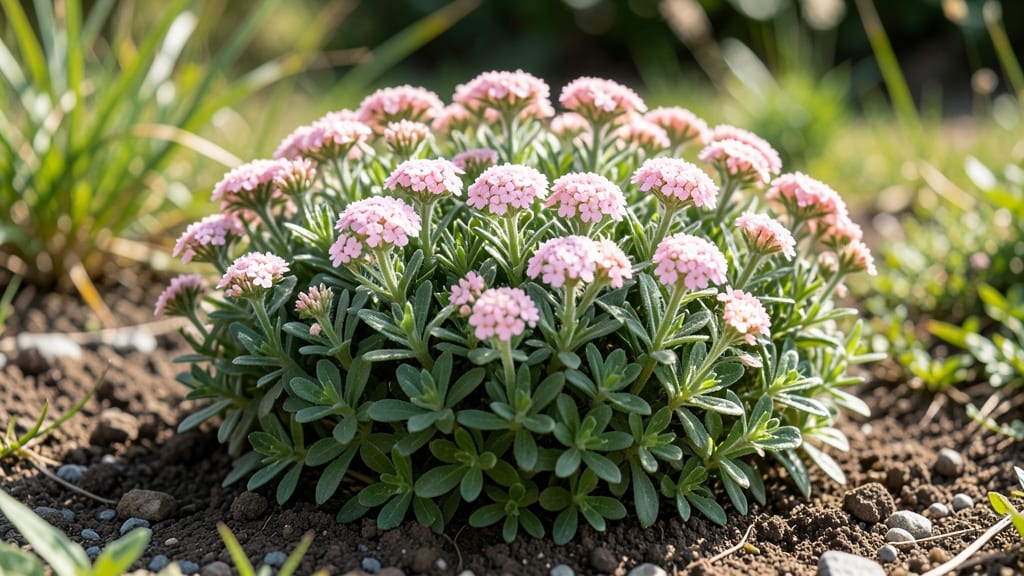
Candytuft blooms don't last all summer—most varieties flower primarily in spring and early summer (April to June), with occasional fall reblooms if you deadhead consistently. Even with diligent care, their flowering season remains seasonal rather than continuous.
Candytuft's natural growth cycle is tied to daylight length and temperature shifts—it's hardwired to bloom when days grow longer in spring. 🌸 The plant's energy focuses on producing flowers during this window, then shifts to seed development later in the season.
Some varieties like 'Moonshine' may extend blooming into early fall, but this is rare and requires perfect growing conditions. I've found that regular deadheading (removing spent blooms) tricks the plant into producing new flowers, but it won't create a continuous summer display.
What sets candytuft apart is its two-phase blooming habit: the initial spring flush is always reliable, while any fall reblooming depends on your climate and aftercare. 🌿 In warmer regions, you might see a second round of flowers in September or October, but northern gardeners should expect just the spring show.
The key to maximizing what you do get is consistent watering and well-draining soil—these plants hate soggy roots, which can shorten their flowering period.
💡 In This Article
- Understanding Candytuft Bloom Seasons and Flower Longevity
- Pro Tips to Prolong Candytuft Flowering in Your Garden
Understanding candytuft bloom seasons and flower longevity
Candytuft's flowering cycle is primarily governed by photoperiodism—the plant's response to daylight length. During spring and early summer, when days grow longer, candytuft receives a hormonal signal to produce flowers.
This process is triggered by phytochrome pigments in the plant that detect increasing daylight hours, typically between 12-16 hours of light per day. 🌞 Once the days begin shortening in late summer, the plant naturally shifts its energy toward seed production rather than maintaining blooms.
The plant's genetics also play a crucial role in bloom duration. Most varieties, like the popular 'Moonshine' or 'Ivory Towers', are bred for early-season flowering (April-June) with a secondary, less robust flush in fall.
These varieties have a determinate growth habit, meaning their flowering period is genetically limited to about 6-8 weeks unless stimulated. In contrast, some newer hybrids may extend blooming into early July, but this is still far from a continuous summer display.
Temperature sensitivity further limits candytuft's summer performance. Ideal blooming occurs between 55-75°F, with temperatures above 80°F causing flowers to bolt (prematurely produce seeds) or wilt.
The delicate flower clusters also struggle in high humidity, which can lead to fungal issues like powdery mildew that shorten the display. 🌡️ In my experience, candytuft thrives in cooler maritime climates where spring temperatures linger into June, while hotter inland regions often see flowers fade by early July.
Daylight intensity matters too. Candytuft requires full sun (6+ hours daily) to produce vibrant blooms, but too much midday heat can scorch the foliage. The plant's native habitats in Mediterranean regions explain why it prefers cooler spring conditions over summer's intensity.
This is why you'll often see candytuft performing best in morning sun with afternoon shade—a placement that extends its flowering window by 1-2 weeks compared to full sun exposure.
Comparing early vs. late varieties reveals another layer of complexity. Early bloomers like 'Moonshine' typically flower 2-3 weeks earlier than late varieties such as 'Snowflake', but their total bloom duration is similar—around 5-6 weeks.
The trade-off is that late varieties may produce slightly larger flower clusters (up to 3 inches wide) but at the cost of potential heat stress in July. This genetic timing is why candytuft remains a spring/early summer star rather than a summer-long performer.