
Pests
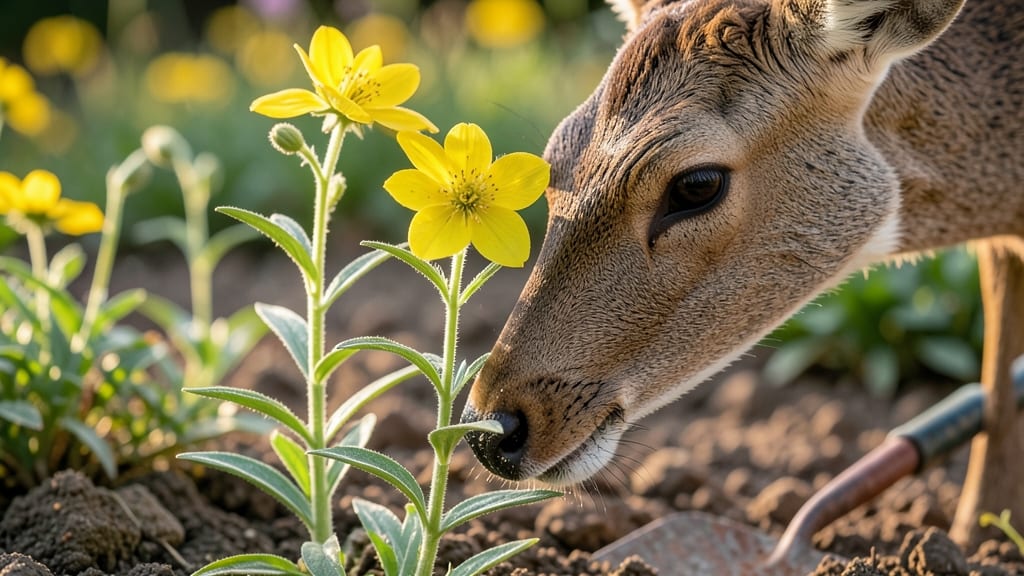
Evening primrose contains natural compounds like alkaloids and saponins that create that bitter taste deer dislike. 🌿 These chemical defenses work best when the plant is mature—young shoots are more tender and may tempt curious deer.
The key to maximizing protection is strategic planting: cluster evening primrose with other deer-resistant perennials to create a "no-go zone" that deer will naturally avoid.
For best results, plant evening primrose in groups of three or more and intersperse with lavender, Russian sage, or yarrow. The combined scent and texture make the area less inviting. I've found that maintaining healthy, dense foliage through regular watering and pruning further strengthens its deterrent effect.
💡 In This Article
- Why Evening Primrose Deters Deer Naturally
- Strategic Planting to Maximize Deer Resistance
Why evening primrose deters deer naturally
Evening primrose (Oenothera biennis) contains natural chemical compounds that act as built-in deer repellents. The plant produces alkaloids and saponins—bitter-tasting compounds that create an unpleasant flavor profile for deer.
These chemicals aren't just bitter; they can also cause mild gastrointestinal discomfort if ingested, making the plant a less appealing snack. 🌿 The leaves and stems contain the highest concentrations of these compounds, especially as the plant matures.
Scientifically, deer have evolved to avoid plants with high levels of secondary metabolites like these. Alkaloids disrupt their digestive enzymes, while saponins create a soapy texture that deer find unpalatable. For comparison, plants like foxglove and lobelia contain similar alkaloids, which is why deer avoid them too.
However, evening primrose's compounds are less toxic than these, making it a safer yet effective deer deterrent for home gardens.
The plant's growth pattern also plays a role in its deer resistance. Evening primrose typically grows to 3-5 feet tall with a woody base, creating a dense foliage structure that deer prefer to avoid.
The hairy stems and rough leaves add to its unappealing texture. Unlike tender annuals that deer love, evening primrose's mature foliage feels coarse and uninviting, further discouraging browsing.
However, there's a critical exception: young shoots in spring. When evening primrose first emerges, its tender new growth lacks the full concentration of defensive compounds. This is when deer might take a nibble, especially if other preferred foods are scarce.
The key difference is the bitter taste intensity, which increases as the plant matures over 4-6 weeks after germination.
Comparing evening primrose to other deer-resistant perennials helps illustrate its effectiveness. While lavender and Russian sage rely primarily on strong aromas, evening primrose combines both chemical defenses and physical deterrents.
This dual approach makes it particularly valuable in garden designs where you want a plant that's both beautiful and functional as a deer barrier.
What most gardeners don't realize is how the plant's flowering time affects its deer resistance. Evening primrose blooms in late spring to early summer, and the yellow flowers contain concentrated saponins that make them particularly unappealing.
The flowers' bright color also serves as a visual warning to deer, similar to how monarda uses its striking blooms as a deterrent.