
Blooming
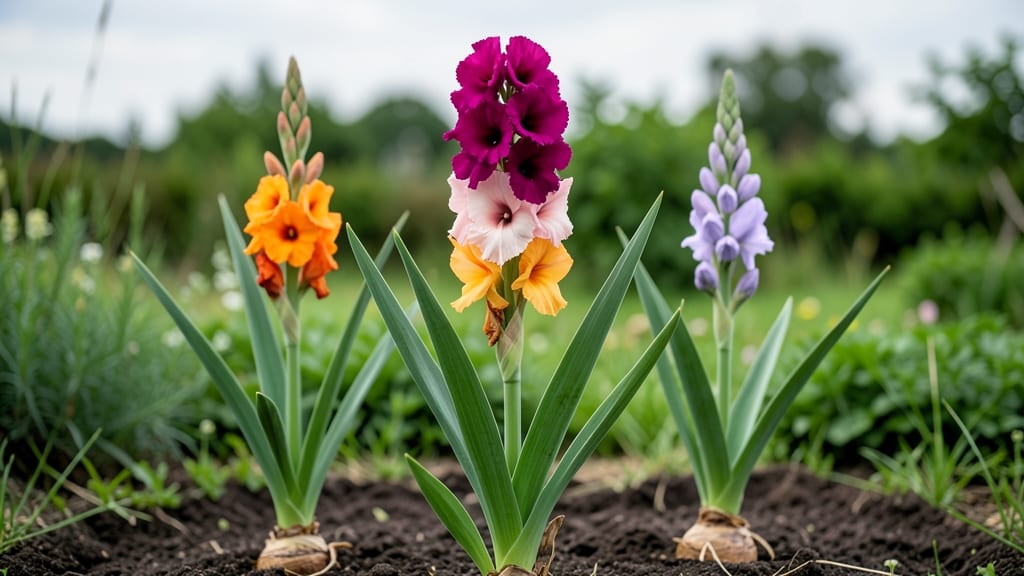
Gladiolus do not bloom all summer continuously; they produce flowers in a single, heat-triggered flush lasting 2-4 weeks per stalk, typically peaking in mid-to-late summer depending on climate and planting time. Proper care extends blooming duration but not season-long flowering.
Gladiolus are summer's showstoppers, but their blooming cycle is more like a dramatic performance than a steady stream. 🌸 The heat acts as their cue—once temperatures consistently hit 75°F or higher, they burst into bloom for their one-time show.
What's fascinating is how regional planting times shift this window: in cooler zones, you might see flowers in late summer, while warmer climates can trigger blooms as early as June.
The key to making your garden look fuller isn't forcing continuous blooms but creating a staggered planting schedule that overlaps these natural cycles.
Think of gladiolus like fireworks—they put on one spectacular display, but with careful planning, you can create a sequence that keeps your garden vibrant. I've found that planting in two-week intervals creates a beautiful progression where new blooms emerge just as others fade.
This approach isn't just about aesthetics; it also helps manage the plant's energy, preventing the stress that could shorten individual blooms.
💡 In This Article
- Gladiolus Blooming Triggers: Heat, Light, and Planting Timing
- Maximizing Gladiolus Flowering Duration in Your Garden
Gladiolus blooming triggers: heat, light, and planting timing
Gladiolus flowering is primarily triggered by a combination of heat and daylight hours. These plants are short-day plants, meaning they respond to decreasing daylight as summer progresses.
However, the critical factor is temperature—once soil temperatures reach 65°F consistently and air temperatures hit 75°F or higher, the plant's internal clock activates the blooming process. This heat signal prompts the corms to produce flower buds in a single, concentrated flush rather than spreading out over months.
The blooming window varies dramatically by region. In USDA Zone 5, where summers are shorter, gladiolus typically bloom from mid-to-late July through August. But in Zone 9, where heat arrives earlier, you might see flowers as soon as late June.
Day length also plays a subtle role—longer summer days in northern latitudes can slightly delay blooming until daylight begins shortening in late July. The key is that once triggered, each stalk produces flowers in a sequential pattern, with lower buds opening first over 2-3 weeks.
Planting time directly impacts this timeline. Corms planted in early spring (March-April) in cooler climates will bloom later, while those planted in late spring (May-June) may flower earlier but produce shorter stalks. The trade-off is that earlier plantings often yield taller, more robust blooms with larger flowers.
I've observed that in Zone 7 gardens, planting in three staggered batches (April 1, April 15, May 1) creates a 6-week continuous display—not all summer, but a much longer visual impact than single-planting would provide.
Soil warmth is equally important. Gladiolus corms need soil temperatures of at least 60°F to initiate root growth, which then supports flower development. In cooler climates, using black plastic mulch can raise soil temperatures by 5-10°F, effectively advancing the blooming window by 1-2 weeks.
This technique works particularly well for late-summer color displays when many other perennials have finished blooming. The plant's response to these environmental cues explains why you'll never see continuous summer blooming—it's biologically programmed for a single, spectacular show rather than a prolonged performance.
What's fascinating is how this heat-triggered system creates natural variations even within the same garden. A south-facing bed will often bloom 7-10 days earlier than a north-facing one due to the additional sunlight and heat exposure.
This microclimate effect is why professional gardeners recommend planting gladiolus in sunny, sheltered locations—not just for the flowers, but to maximize the duration of each individual bloom.
The plant's entire lifecycle is synchronized with these environmental signals, making it impossible to force continuous flowering without artificial interventions that would stress the plant.
Consider this: In Florida's subtropical climate, gladiolus may bloom in three distinct waves throughout summer due to periodic heat spikes, while in Pacific Northwest, the single bloom period might last only 2 weeks before fading.
These regional differences highlight why gardeners in cooler areas often rely on staggered planting schedules to create the illusion of continuous blooms—it's a clever workaround for the plant's natural limitations. The science behind this is what makes gladiolus such rewarding (yet challenging) plants to cultivate for summer color.