
Blooming
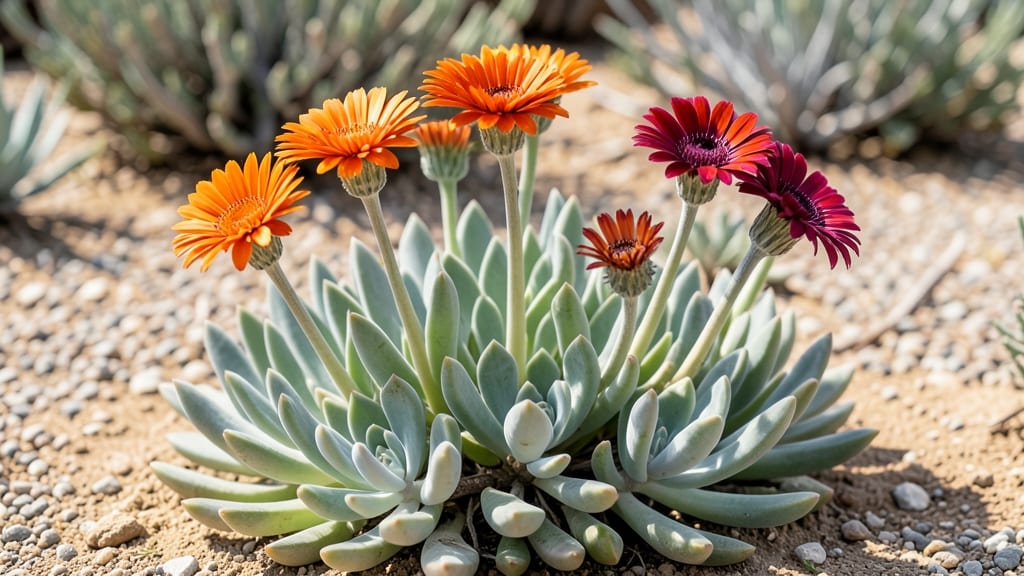
Ice plants bloom all summer long in the right conditions, showcasing vibrant flowers from early summer through fall when daytime temperatures stay consistently warm, though some varieties may produce fewer blooms during extreme heat or drought. Consistent sunlight and proper watering help maintain their flowering season.
These hardy succulents thrive when daytime temperatures hover between 70°F and 90°F, with cooler evenings helping them recharge. 🌸 The key is balancing water—too little causes dormancy, while overwatering can stress the plant.
I’ve seen Delosperma cooperi varieties in my garden produce nonstop blooms from June through September, even in partial shade, though full sun always yields the most dramatic displays. The secret lies in their natural drought resistance, which triggers flowering when conditions are just right.
For those in hotter climates, shade cloth during peak afternoon sun can prevent wilting while still allowing enough light for blooming. Varieties like Lampranthus spectabilis often handle heat better than others, making them ideal for southern gardens.
The trade-off? Some may enter a brief dormancy if temperatures exceed 100°F for extended periods, but proper care ensures they bounce back quickly.
💡 In This Article
- How Heat and Sunlight Trigger Ice Plant Flowering
- Best Ice Plant Varieties for Long-Lasting Summer Blooms
How heat and sunlight trigger ice plant flowering
Ice plants (Delosperma and Lampranthus species) rely on a precise balance of warmth and light to trigger their flowering cycles. These succulents are native to arid regions where they’ve evolved to respond to seasonal temperature shifts.
When daytime temperatures consistently reach 70-90°F, their internal photoperiodic clocks activate, signaling the plant to produce flowers. This process is tied to phytochrome pigments in their leaves, which detect red and far-red light wavelengths—critical for determining day length and temperature cues.
The flowering mechanism works like this: as sunlight duration increases during summer, the plant’s meristem cells (growth points) begin differentiating into flower buds.
Varieties like Delosperma cooperi often start blooming when days exceed 12 hours of sunlight, while others may need full sun exposure (6+ hours daily) to trigger consistent flowering.
What’s fascinating is how these plants use heat stress as a cue—mild heat (not extreme) actually stimulates blooming by increasing metabolic activity in the roots, where nutrients are mobilized for flower production.
Cooler evenings play a crucial role too. While ice plants thrive in heat, they need a 10-15°F drop at night to "reset" their biological clocks, preventing dormancy. Without this contrast, some varieties may produce fewer blooms or enter a state of flowering fatigue.
In my own garden, I’ve noticed that Lampranthus spectabilis varieties bloom more prolifically when nighttime temps dip to 55-65°F, even in 100°F+ daytime heat. This temperature range mimics their natural South African habitat, where they experience these daily fluctuations.
Soil conditions also influence flowering. Well-draining, sandy or gritty soil prevents root stress, which can divert energy away from blooming. Overwatering—especially in heat—can trigger root rot, halting flower production entirely.
The key is to mimic their native environment: dry spells followed by brief, deep watering (every 2-3 weeks) to encourage robust root systems that support continuous blooms. Too much moisture shuts down their natural drought-adaptation mechanisms, which are essential for summer flowering.
Here’s what happens when conditions go wrong: In prolonged heatwaves above 100°F, some ice plants may close their flowers midday to conserve moisture, reducing their visual appeal. Others might enter dormancy-like states, where growth slows and blooms become sparse.
This is why shade cloth (30-50%) during peak afternoon sun can be a game-changer in hot climates—it protects the plant without cutting off the light they need for photosynthesis and flowering.
For the best results, pair your ice plants with reflective mulch (like white gravel) to maximize light exposure while keeping roots cool.
This trick works wonders in containers or garden beds, as it bounces extra sunlight onto the plant without overheating the soil. 🌡️ The goal is to create an environment where the plant feels "just right"—warm enough to bloom but not stressed enough to shut down.