
Blooming
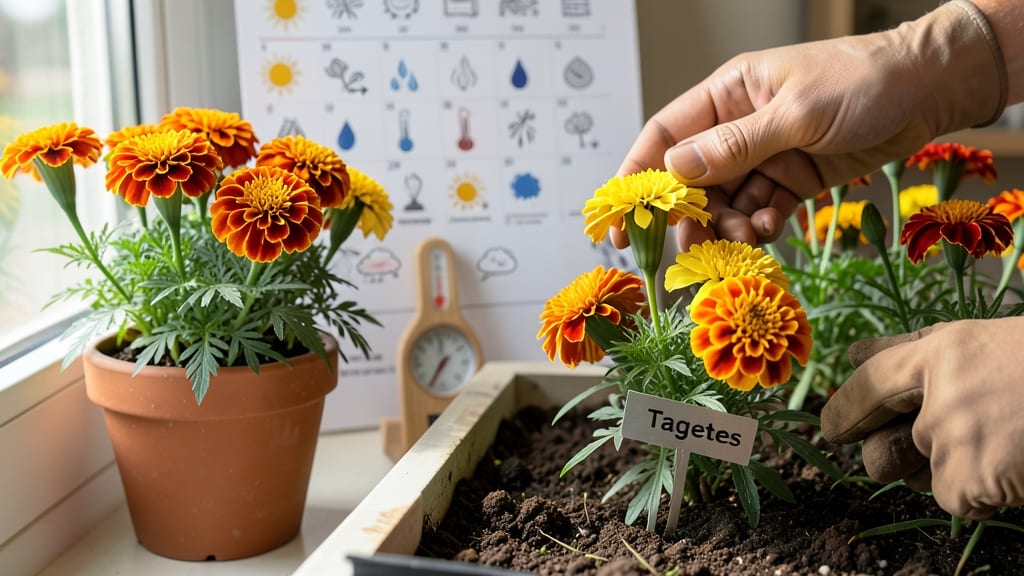
Marigolds don't bloom all year naturally, since their flowering depends on seasonal daylight and temperature changes. Most varieties produce flowers primarily in warm months (spring through fall) and enter dormancy during cooler seasons.
Marigolds are seasonal plants that respond directly to environmental cues, particularly daylight hours and temperature. 🌿 In regions with distinct winters, they typically stop blooming when days shorten and temperatures drop below 50°F, though some tropical varieties may continue flowering in warmer microclimates.
The key factor is photosynthesis—longer daylight periods fuel their energy needs for continuous blooming, which is why you'll see peak performance in summer gardens. Understanding your specific USDA hardiness zone helps predict when to expect new flowers each year.
For gardeners wanting year-round color, strategic planning makes a difference. Moving potted marigolds indoors during winter or using grow lights can trick them into blooming, though results vary by variety. The secret lies in maintaining consistent moisture and nutrient levels while protecting them from frost.
Many gardeners also swear by regular deadheading—removing spent blooms encourages new ones to form, extending the flowering season by several weeks.
💡 In This Article
- Marigold Blooming Seasons by Climate Zone
- Extending Marigold Blooms Through Gardening Hacks
Marigold blooming seasons by climate zone
Marigolds are photoperiod-sensitive plants, meaning their blooming cycles are triggered by changes in daylight length. In USDA Zones 1-7, where winters drop below 32°F, most varieties enter dormancy when days shorten to 10-12 hours of sunlight.
The French marigold (Tagetes patula), for example, typically blooms from late spring to first frost, while African marigolds (Tagetes erecta) may extend into early fall due to their taller stature and heat tolerance.
Tropical varieties like Tagetes lucida (Mexican marigold) or Tagetes minuta (stinking Roger) behave differently—they thrive in Zones 8-11 where winter temperatures rarely fall below 40°F.
These types may continue blooming year-round in frost-free coastal regions like Southern California or Florida, where mild winters and consistent 12+ hour daylight create ideal conditions. The key difference is their genetic adaptation to warmer climates, allowing them to photosynthesize continuously without dormancy triggers.
Daylight exposure directly affects flower production. Marigolds need 6-8 hours of direct sunlight daily to bloom prolifically, but excessive heat (above 90°F) can stress plants, causing them to bolt or stop flowering.
In northern climates, gardeners often see peak blooms in June-August when days are longest, while southern gardens may experience staggered blooms throughout winter months due to stable temperatures and light.
Regional exceptions exist where microclimates defy general rules. For instance, marigolds grown near large bodies of water (like lakes or oceans) may experience delayed dormancy due to moderated temperatures. The water's heat capacity creates a 5-10°F warmer environment than inland areas, extending the growing season by 4-6 weeks.
This is why coastal gardeners in Zone 7 sometimes see fall blooms when inland gardens have already frozen.
Understanding your zone's last frost date and first frost date is crucial. Most marigolds planted after the last frost (typically April-May in Zones 5-7) will bloom until temperatures drop below 45°F at night.
In Zones 9-11, you might see continuous blooming with proper care, but even tropical varieties will slow down during monsoon seasons when humidity exceeds 80%.
What most gardeners don't realize is that marigolds' dormancy isn't just about temperature—it's a combination of light, temperature, and soil moisture. When nights stay above 50°F but days drop below 10 hours, plants conserve energy by reducing flower production.
This natural mechanism ensures survival during resource-scarce periods, which is why you'll rarely see marigolds blooming in true winter months unless you're in a tropical microclimate.