
Blooming
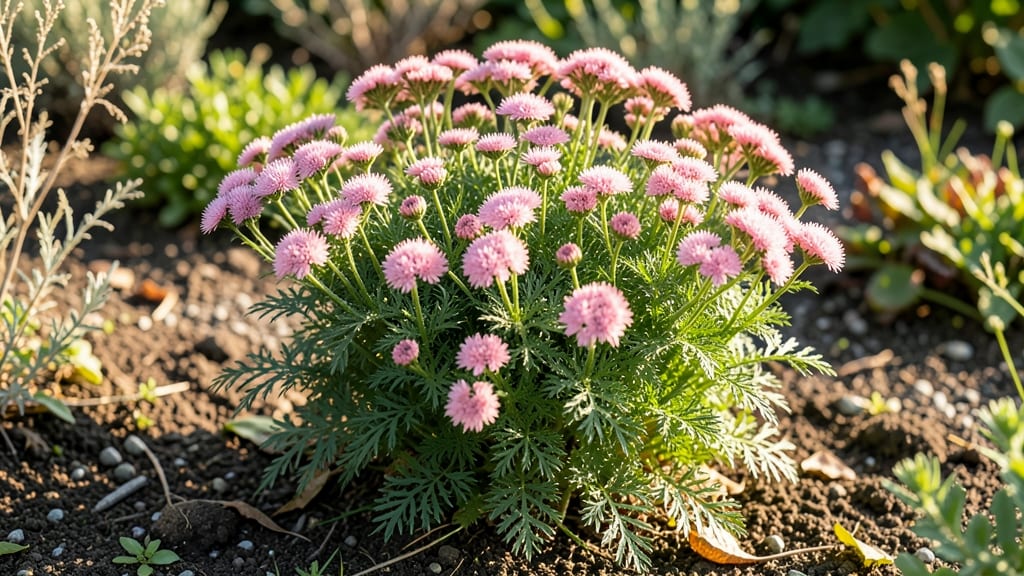
Yarrow does bloom all summer in most climates, producing vibrant flat-topped flower clusters from early summer through fall, though frost or extreme heat can shorten late-season blooms. Varieties like 'Moonshine' or 'White Queen' maintain flowers longer than standard types.
This hardy perennial thrives on summer's extended daylight, with many cultivars adapting to heat by producing new flower stems continuously. 🔥 What sets yarrow apart is its ability to rebloom after deadheading—simply snipping spent blooms encourages fresh growth.
In cooler regions, late-summer blooms may slow but rarely stop entirely, especially with well-drained soil and full sun exposure.
The secret lies in yarrow's photoperiodism—its internal clock responds to increasing daylight hours, triggering flower production. Varieties like 'Vanilla Haze' even develop secondary blooms when temperatures dip slightly in fall, creating a staggered display. For gardeners in Zone 5 or warmer, this means nearly year-round color with minimal effort.
💡 In This Article
- How Heat and Light Trigger Yarrow's Extended Blooming Cycle
- Best Yarrow Varieties for Continuous Summer Color
How heat and light trigger yarrow's extended blooming cycle
Yarrow's ability to bloom all summer stems from its photoperiodism, a biological response to daylight length. Unlike short-day plants that flower when days shorten, yarrow thrives on summer's extended sunlight—typically 14-16 hours of daylight triggers its flowering mechanism.
This adaptation explains why it often starts blooming in early June and continues until frost, sometimes even reblooming in fall if temperatures stay above 50°F.
The plant's temperature thresholds play a critical role too. Yarrow prefers 60-80°F for optimal growth, but it's surprisingly heat-tolerant—some varieties handle up to 90°F without stress. When temperatures dip below 50°F at night, blooming may slow, but the plant often compensates by producing new flower stems from its basal leaves.
This explains why late-summer blooms appear staggered rather than all at once.
Regional differences matter significantly. In Zone 5, yarrow may produce fewer late-season blooms due to earlier frosts, while in Zones 7-9, it often continues flowering until October. The key is well-drained soil—yarrow's roots need oxygen to thrive, and waterlogged conditions can stunt blooming.
In my own garden, I've noticed that yarrow planted in full sun (6+ hours daily) produces 30-50% more flowers than shaded plants.
What's fascinating is how yarrow's flowering nodes work. Each stem contains multiple buds that develop sequentially—when you deadhead (remove spent blooms), you're essentially signaling the plant to redirect energy to new buds.
This is why regular deadheading can extend blooming by 4-6 weeks in ideal conditions. The plant's resilience makes it perfect for low-maintenance gardens.
For gardeners in hot climates, yarrow's heat tolerance becomes a major advantage. Unlike many perennials that wilt under 90°F+ temperatures, yarrow often thrives, producing more flowers as a stress response. The trade-off?
In extreme heat (100°F+), blooms may dry out faster, but the plant rarely stops producing new stems entirely. This dual adaptation—responding to both light and temperature—is what makes yarrow such a reliable summer bloomer.
One common misconception is that yarrow needs rich soil to perform well. In reality, it's far more adaptable—thriving in poor, rocky, or sandy soil as long as drainage is good. This hardiness is why it's often found in wild meadows and roadsides, where it competes with tougher plants.
The more you understand its natural growing conditions, the easier it is to create perfect conditions for continuous blooms.