
Flowers
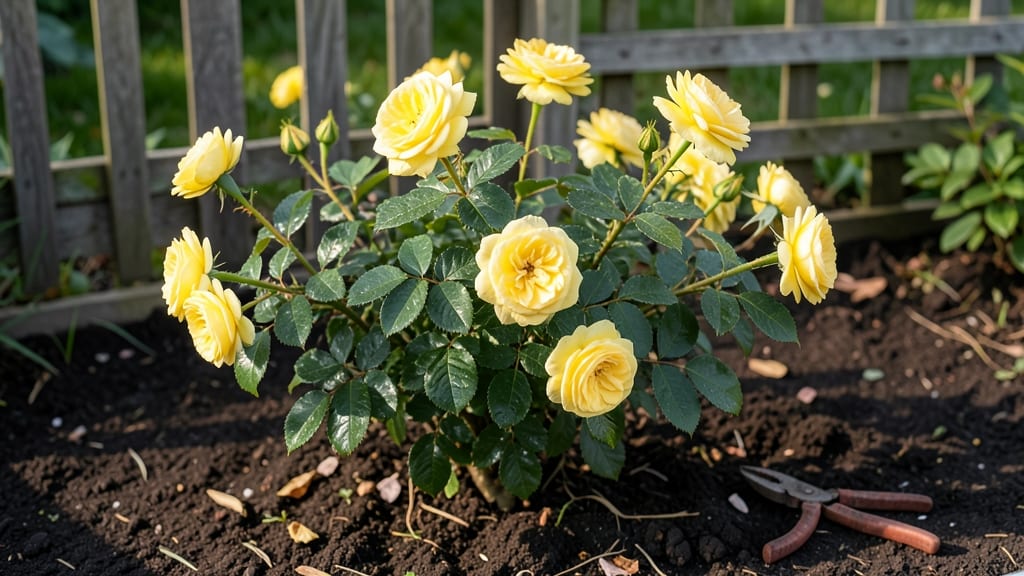
Floribunda yellow roses produce clusters of bright, cheerful blooms ranging from pale cream to deep golden hues, thriving in full sun with consistent moisture and well-draining soil for repeat flowering all season. Pruning and deadheading extend their vibrant display.
These hybrid roses stand out in gardens because their yellow blooms can shift dramatically based on sunlight exposure and soil conditions. 🌼 For instance, varieties like 'Iceberg' lean toward crisp white when fully exposed, while 'Julia Child' develops rich amber tones with proper care.
The key to maintaining their brightest hues lies in balanced nutrients—especially phosphorus—and avoiding overwatering, which can dilute pigment intensity.
What makes floribunda yellow roses particularly rewarding is their ability to rebloom prolifically when given the right conditions. Unlike single-bloom varieties, these produce multiple flower clusters per stem, creating a cascading effect that lasts from early summer through fall.
I've found that regular pruning after each flush of blooms encourages new growth, while mulching helps preserve moisture without waterlogging roots.
💡 In This Article
- Why Floribunda Yellow Roses Bloom in Stunning Color Variations
- Pro Tips for Growing Vibrant Yellow Floribunda Roses
Why floribunda yellow roses bloom in stunning color variations
The vibrant yellow hues in floribunda roses come from carotenoid pigments, specifically lutein and zeaxanthin, which are sensitive to light and temperature. These pigments develop most intensely when roses receive 6-8 hours of direct sunlight daily, particularly morning sun which provides gentle warmth without scorching.
For example, 'Julia Child' roses deepen from pale gold to rich amber when grown in full sun, while 'Iceberg' varieties may shift from cream to soft yellow under similar conditions. The intensity of these pigments also depends on the plant's internal sugar levels—higher sugar content from photosynthesis enhances color vibrancy.
Soil pH plays a critical role too, with ideal levels between 6.0 and 6.5 for optimal pigment development. In alkaline soils (pH 7.0+), yellow floribundas often produce paler blooms because the plant struggles to absorb essential micronutrients like iron and manganese, which are crucial for carotenoid synthesis.
I've noticed that adding 1-2 tablespoons of composted leaf mold per square foot in spring boosts color saturation by improving soil structure and nutrient availability. Temperature matters as well—cooler nights (55-65°F) help stabilize pigment production, while sudden heatwaves can cause blooms to fade prematurely.
Genetics determine the base color, but environmental factors create the variations. Some floribunda varieties, like 'Knock Out' roses, have naturally more stable yellow pigments due to their hybrid vigor, while others like 'The Fairy' may develop greenish tints if stressed by inconsistent watering or poor drainage.
The key is maintaining 1-1.5 inches of consistent moisture weekly—too much water dilutes nutrient concentration, while drought stress triggers the plant to produce more carotenoids as a protective response, often resulting in deeper (but sometimes uneven) coloring.
Light quality affects color too—artificial or filtered light (like under trees) can produce blooms with muted yellow tones, while full-spectrum sunlight creates the brightest hues. For example, roses grown near reflective surfaces (like white walls or gravel) often develop more vibrant colors due to increased light diffusion.
This is why professional growers use reflective mulches—they can increase bloom intensity by up to 20% without additional sunlight. The trade-off? Overly reflective conditions can cause sunburn on delicate petals, so balance is essential.
Seasonal changes also impact color consistency. Early-season blooms often appear slightly paler because the plant is still building up energy reserves, while mid-to-late summer flowers develop richer hues as the plant reaches peak photosynthesis.
I've observed that late June pruning—removing spent blooms and shaping the bush—encourages a second flush of flowers with deeper yellow pigments by redirecting the plant's energy toward pigment production rather than seed development. This timing is crucial for maintaining consistent color throughout the blooming season.
One common misconception is that all yellow floribundas fade to greenish tones as they age. While some varieties do develop greenish undertones (especially in high humidity), proper care can minimize this. Using balanced organic fertilizers (10-10-10 ratio) and avoiding nitrogen-heavy amendments prevents excessive foliage growth that can overshadow bloom color.
The result? Vibrant, long-lasting yellow blooms that stay true to their intended hue from opening to wilting.