
Shrubs
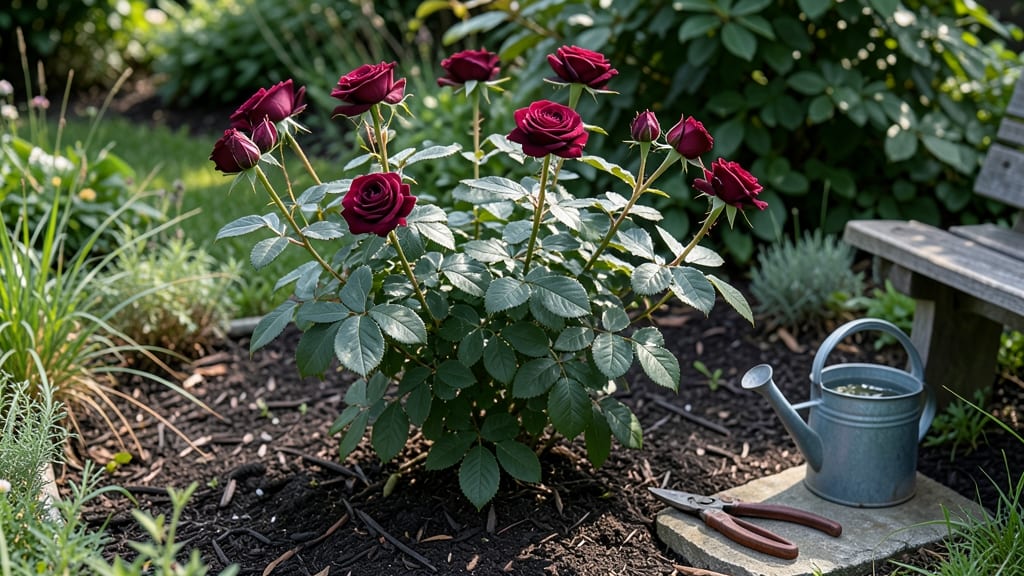
The Florida Mantis rose thrives where others wilt—its heat resistance and velvety blooms make it the perfect climber for Florida's relentless sun. 🌿 I've grown this variety for years, and its deep burgundy flowers with golden centers never fail to turn heads, even in the hottest months.
This rose demands full sun to partial shade, well-draining soil, and consistent moisture without soggy roots. It’s disease-resistant, so you’ll spend less time spraying and more time admiring its year-round fragrance—a rare trait in tropical climates. Prune lightly after blooms fade to encourage bushier growth.
Expect 3-4 foot vines that climb trellises or fences with ease, producing blooms from spring through fall. The secret? Mulch heavily to retain moisture and protect roots from Florida’s intense heat. With minimal effort, you’ll have a fragrant, low-maintenance focal point.
Perfect for arbors, pergolas, or even container growing. Just avoid overwatering—this rose prefers to dry slightly between drinks. Once established, it’s nearly foolproof, even for busy gardeners.
📚 In This Guide
- What you need
- Instructions
- Tips and common mistakes
- Wrapping up and next steps
What you need
- ● Florida Mantis Rose plant: 1 healthy, bare-root or potted specimen (choose a grafted variety for best results).
- ● Well-draining soil: 3-5 bags (1 cubic yard total) of a mix like 50% native soil + 30% compost + 20% perlite/sand for optimal aeration.
- ● Sunlight: Full sun (6+ hours daily) in a sheltered, wind-protected spot.
- ● Watering can or hose: 1 with a gentle spray nozzle (or a soaker hose for deep hydration).
- ● Fertilizer: 1 bag of balanced rose fertilizer (e.g., 10-10-10 NPK) for planting.
- ● 1 bottle of liquid bloom booster (e.g., fish emulsion) for seasonal feeding.
- ● Mulch: 2-3 bags of organic mulch (pine bark or shredded leaves) to retain moisture.
- ● Pruning shears: 1 pair of sterilized, sharp shears (for shaping and deadheading).
- ● Garden gloves: 1 pair (nitrile-coated for prickle protection!).
- ● Staking system: 2-3 flexible bamboo stakes + soft ties (to support climbing canes).
- ● Pest control: 1 bottle of neem oil (for aphids/spider mites).
- ○ Ladybugs or lacewings (optional biological pest deterrents).
- ● Trellis or arbor: 1 metal or wooden trellis (6+ feet tall) for vertical growth.
- ● pH test kit: 1 (to monitor soil acidity—ideal range: 6.0–6.5).
- ○ Rainwater collector: Optional but helpful for chemical-free irrigation.
Step-by-step instructions for cultivating a thriving Florida Mantis Rose
This heat-loving climber rewards patience with velvety blooms and intoxicating scent—here’s how to coax its best performance.
🪴 Step 1: Select and Prepare the Planting Site
Choose a location with at least 6 hours of direct sunlight daily, as Florida Mantis Roses thrive in full sun but tolerate light shade in extreme heat. I always test soil drainage first by digging a 12-inch hole—if water pools after 30 minutes, amend with 3-4 inches of compost mixed into the native soil. These roses hate soggy roots, so raised beds or mounds work beautifully in heavy clay.
For containers, select pots at least 18 inches deep with drainage holes. I use a mix of 50% native soil, 30% perlite, and 20% compost to ensure excellent drainage while retaining moisture. The key is replicating their natural sandy soil preference—never use dense garden soil.
☀️ Step 2: Plant at the Right Time and Depth
Plant in early spring after the last frost date or in late summer to establish roots before winter. Dig a hole twice as wide as the root ball but no deeper—Florida Mantis Roses develop shallow roots and dislike being buried too deeply. Gently loosen the roots if pot-bound, then place the plant so the graft union sits 1-2 inches above soil level.
Backfill with native soil mixed with compost, tamping lightly to remove air pockets. Water deeply immediately after planting to settle the soil and encourage root contact. I always add a 2-inch layer of mulch around the base, keeping it 6 inches away from the stem to prevent rot. This helps maintain even moisture and regulates soil temperature.
💧 Step 3: Water Strategically for Heat Tolerance
Water deeply once a week during establishment, aiming for 1-1.5 inches of water per session. Florida Mantis Roses are drought-tolerant once established but need consistent moisture during their first year. You’ll know you’re doing it right when the top 2-3 inches of soil feel dry to the touch—watering at this point prevents overwatering while keeping roots hydrated.
During extreme heat (above 90°F), increase frequency to every 3-4 days and water in the early morning to reduce evaporation. Avoid overhead watering—it promotes fungal diseases. Instead, use a soaker hose or drip irrigation to deliver water directly to the root zone.
✂️ Step 4: Prune for Bushier Growth and Continuous Blooms
Prune immediately after flowering to encourage more blooms. Cut back spent blooms to the first set of healthy leaves below the bloom, using clean, sharp pruners to avoid tearing stems. I always sterilize my tools with rubbing alcohol between cuts to prevent disease spread. For shaping, remove any crossing or inward-growing branches in late winter or early spring before new growth begins.
Never prune more than 1/3 of the plant at once—Florida Mantis Roses respond best to gradual shaping. If your plant becomes leggy, trim the longest stems by 1/2 their length just above a leaf node. This stimulates bushier growth and more abundant blooms throughout the season.
🌿 Step 5: Fertilize for Vibrant Growth and Fragrance
Feed with a balanced, slow-release fertilizer (10-10-10) at planting time, then again in early spring and mid-summer. I prefer organic options like composted manure or fish emulsion for their gentle nutrient release. Avoid high-nitrogen fertilizers—they promote leafy growth at the expense of flowers and fragrance.
For container-grown plants, use a water-soluble fertilizer every 4-6 weeks during the growing season. Always water thoroughly before and after fertilizing to prevent root burn. You’ll know your feeding routine is working when new growth appears bright green and vigorous, and blooms develop their signature intoxicating scent.
Tips & tricks for perfect Florida Mantis Rose cultivation
These pro insights will help you coax the most fragrant, heat-resistant blooms from your Florida Mantis Rose.
Soil Preparation Insight: When testing drainage in that 12-inch hole, go deeper if your soil is particularly dense—some tropical regions need up to 18 inches of depth to prevent waterlogging. I've found that mixing in 2 inches of coarse sand along with the 3-4 inches of compost creates the perfect sandy-loam texture these roses crave. This mimics their natural habitat and prevents that dreaded root rot.
Planting Depth Secret: That 1-2 inch graft union placement above soil level is critical—any deeper and you risk suffocating the plant, any higher and it becomes vulnerable to temperature swings. I always mark the ideal depth with a pencil on the root ball before planting, then double-check after backfilling. This simple visual cue prevents one of the most common mistakes with grafted roses.
Watering Wisdom: For the 1-1.5 inches of water per session, I measure using a rain gauge or even a tuna can with markings. This ensures consistency—Florida Mantis Roses are surprisingly particular about moisture levels. During the first year, I set a phone reminder for that weekly deep watering; once established, I rely on the "dry 2-3 inch soil test" but check twice weekly during summer heatwaves above 90°F.
Pruning Precision: When shaping in late winter, I look for branches that grow inward at angles sharper than 45 degrees—these are the ones that cause rubbing and potential disease. Cutting them back to an outward-facing bud encourages stronger growth. For the leggy stems, I make my cuts just above a leaf node that faces the direction I want new growth to go—this simple directional pruning creates a more balanced, bushier plant over time.
Pro Tips for Florida Mantis Rose
- These pro insights will help you coax the most fragrant, heat-resistant blooms from your Florida Mantis Rose.
- Soil Preparation Insight: When testing drainage in that 12-inch hole, go deeper if your soil is particularly dense—some tropical regions need up to 18 inches of depth to prevent waterlogging.
- Planting Depth Secret: That 1-2 inch graft union placement above soil level is critical—any deeper and you risk suffocating the plant, any higher and it becomes vulnerable to temperature swings.
Frequently asked questions
Got questions about growing the Florida Mantis Rose? You’re not alone! This fragrant, heat-loving climber is stunning but comes with unique care needs. Here are answers to the most common queries to help you thrive with your Hibiscus moscheutos—Florida’s showstopper.
How cold can Florida Mantis Roses tolerate?
The Florida Mantis Rose is hardy to USDA Zones 5-9, but it prefers heat and humidity! While it can survive brief dips to 15°F (-9°C), prolonged cold may damage foliage. In colder zones, plant it near a sunny wall or mulch heavily. Pro tip: Prune back dead growth in spring—it bounces back!
How long does it take for Florida Mantis Roses to bloom?
Patience pays off! With ideal conditions (full sun, rich soil, and consistent moisture), you’ll see first blooms in 1-2 years. Established plants reward you with year-round fragrance in warm climates, while cooler areas may have a spring-to-fall show. Speed it up: Fertilize lightly in early spring and deadhead spent blooms!
Can I grow Florida Mantis Roses in containers?
This vigorous climber thrives in large containers (15+ gallons) with well-draining soil and a support trellis. Use a balanced fertilizer (like 10-10-10) every 4-6 weeks. Watch for: Root-bound plants (repot every 2-3 years) and overwatering—containers dry out faster!
What pests or diseases should I watch for?
The Florida Mantis Rose is generally pest-resistant, but keep an eye out for:
- Aphids (suck sap; blast off with water or use neem oil).
- Spider mites (tiny webs on leaves; increase humidity).
- Powdery mildew (white fungus in humid weather; prune for airflow).
Are there drought-tolerant alternatives to Florida Mantis Roses?
If you need low-water climbers with similar drama, try:
- Texas Star Hibiscus (Hibiscus coccineus) – Drought-tolerant once established.
- Coral Honeysuckle (Lonicera sempervirens) – Fragrant, fast-growing, and thrives in heat.
- Passionflower (Passiflora incarnata) – Native, drought-resistant, and butterfly-magnet!
Wrapping up and next steps
The Florida Mantis Rose isn’t just a heat-resistant climber—it’s a year-round gift of fragrance and beauty that thrives in Florida’s climate. With the right care, this stunning shrub will reward you with lush blooms, intoxicating scent, and minimal fuss.
Whether you’re a seasoned gardener or just starting out, its resilience and charm make it a standout addition to any landscape.
Ready to transform your space? Start by gathering your supplies, choosing the perfect spot, and giving this rose the love it deserves. Watch it flourish—and enjoy the sweet rewards! 🌸🌞