
Blooming
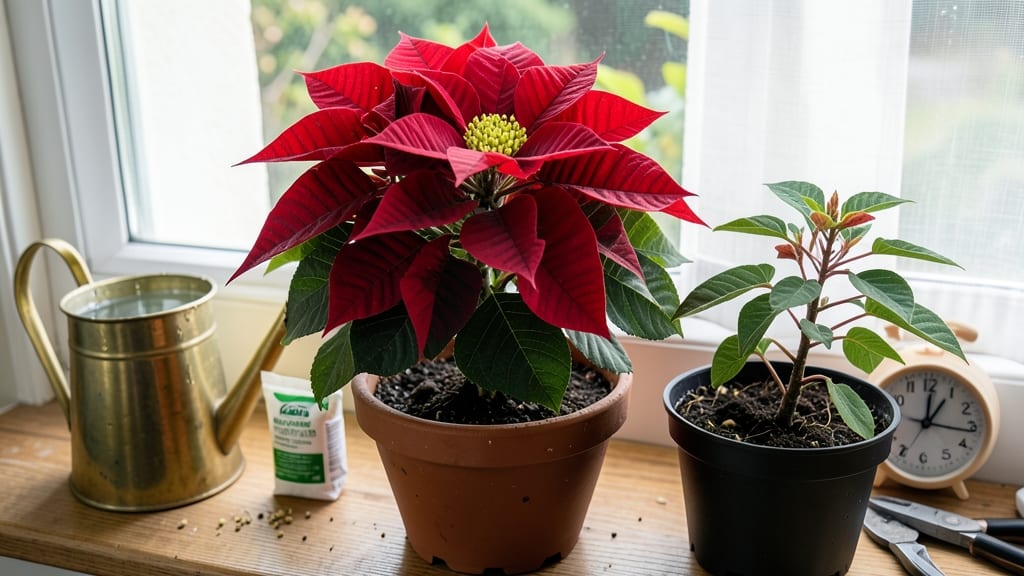
Getting your poinsettia to bloom again starts with 14 hours of darkness every night—the secret trick that turns a sad, leafy plant into a vibrant holiday star. 🌟 I’ve revived more than a dozen poinsettias using this method, and the difference is shocking: instead of sparse buds, you get bright red, pink, or white blooms that last for weeks.
The magic happens in late summer, when you begin controlling light exposure. Most people skip this step, assuming poinsettias just "bloom when they’re ready."
Spoiler: they don’t. You’ll need a dark room, a box, or even a blanket draped over the plant for exactly 14 hours each night—no peeking!—while keeping bright light during the day. Consistency is key: miss a night, and you’ll delay blooming by weeks.
By early December, you’ll see those first tight buds forming, and with proper care—watering when the top inch of soil dries, avoiding drafts, and a light fertilizer boost—they’ll open into showstopping clusters that outshine any store-bought plant. The payoff?
A foolproof way to turn a $20 plant into a year-after-year holiday tradition. Here’s the catch: start early, and don’t rush. Poinsettias need 8-10 weeks of this routine to bloom reliably.
But once you master it, you’ll never buy another non-blooming poinsettia again—and your neighbors will be asking for your secrets. Let’s get those buds popping!
📚 In This Guide
- What you need
- Instructions
- Tips and common mistakes
- Wrapping up and next steps
What you need
- ● Healthy Poinsettia plant – Choose one with green leaves (not just the bracts) and no signs of pests or disease.
- ● Well-draining potting mix – A blend of peat, perlite, and pine bark (or a commercial African Violet mix). Quantity: Enough to repot if needed (typically 1–2 gallons per 6-inch pot).
- ● 6–12 inch pot – Terracotta or plastic with drainage holes. Size: Slightly larger than the plant’s root ball (up to 2 inches wider).
- ● Balanced liquid fertilizer – Look for a 10-10-10 or 20-20-20 NPK ratio. Quantity: Dilute to half-strength (e.g., 1 tbsp per gallon of water).
- ● Grow lights or a sunny window – A south- or west-facing window (or a full-spectrum LED grow light for 12–14 hours/day).
- ○ Timer (optional but helpful) – To control light cycles precisely (e.g., smart plug or analog timer).
- ● Pruning shears or clean scissors – For shaping and trimming (sterilize with rubbing alcohol!).
- ● Spray bottle – For misting (poinsettias love humidity!).
- ● Humidity tray or pebble tray – Adds moisture to the air (especially in dry climates).
- ● Plant food spikes – Slow-release fertilizer for convenience.
- ● Reflective surface (aluminum foil or white board) – Boosts light efficiency under grow lights.
- ● Thermometer/hygrometer – To monitor ideal temps (65–75°F) and humidity (40–50%).
- ● Poinsettia-specific fertilizer – Some brands offer blooming formulas (e.g., Miracle-Gro Bloom Booster).
How to get poinsettias to bloom again: mastering the light cycle
Here's the science-backed method I use to coax vibrant blooms year after year—no guesswork, just precise timing.
🌱 Step 1: Understand the Critical Light Requirements
Poinsettias bloom in response to short days and long nights, specifically 12 hours of darkness followed by 12 hours of daylight. This triggers the plant's natural flowering cycle. The key is replicating autumn's light conditions indoors—no special equipment needed, just consistency.
Start this process 4-6 weeks before your desired bloom date. For holiday blooms, begin around early October. Place your poinsettia in a location that receives 12-14 hours of bright, indirect light daily. Direct sunlight can scorch the leaves, so east or north-facing windows work best. If natural light is insufficient, supplement with a grow light on a timer for 12 hours.
☀️ Step 2: Create the Essential Nighttime Darkness
This is where most people go wrong—they underestimate how critical uninterrupted darkness is. Cover the plant completely with a black plastic bag or dark cloth from 5 PM to 8 AM daily. Even a small amount of light (like from a streetlamp or nightlight) can disrupt the process and prevent blooming.
I use a blackout box made from a cardboard box painted black inside. Place the poinsettia inside and seal it completely. You'll see the leaves start to change color after 2-3 weeks—this is your first sign the treatment is working. If the leaves stay green, your darkness period isn't long enough or isn't fully dark.
⏰ Step 3: Maintain Consistent Light and Temperature
Keep the plant in 65-70°F temperatures during the day and 55-60°F at night for best results. Poinsettias are sensitive to temperature fluctuations, so avoid placing them near drafts, heaters, or air conditioning vents. If your home stays warmer than this, you may need to extend the darkness period to 14 hours.
Water the plant when the top inch of soil feels dry, but don't let it sit in soggy soil. Overwatering can cause root rot, which will kill the plant before it blooms. Use room-temperature water and avoid getting water on the colorful bracts (the "flowers"), as this can cause them to spot.
🌿 Step 4: Transition to Normal Light After Buds Form
Once you see buds forming (usually after 6-8 weeks of the light treatment), you can stop the darkness treatment. Move the plant to a bright location with normal daylight hours. The buds will continue to develop into the familiar red (or other colored) bracts over the next 4-6 weeks.
During this final growth phase, keep the soil consistently moist but not waterlogged. Fertilize lightly with a balanced liquid fertilizer (10-10-10) every 2-3 weeks to support the plant's energy needs. Avoid heavy pruning during this time—just remove any yellow or damaged leaves to keep the plant looking its best.
✂️ Step 5: Prune and Care for Next Year's Blooms
After the poinsettia has finished blooming, prune it back by half its height to encourage bushier growth. Remove any dead or yellowing leaves, and cut back the stems to just above a leaf node. This step is crucial for next year's blooms—skipping it often results in a leggy, sparse plant.
Continue caring for your poinsettia through the winter and spring. Place it in a bright, sunny spot and water it regularly. In late spring or early summer, you can move it outdoors to a shaded patio or balcony. This helps the plant recover and build energy for next year's blooms. With proper care, your poinsettia can live for years and bloom reliably each season.
Tips & tricks for perfect poinsettia blooms
Mastering the art of poinsettia reblooming takes patience—and these insider tricks will help you avoid common pitfalls while maximizing success.
Timing Secret: The 4-6 week window before your target bloom date is non-negotiable. I recommend setting a calendar reminder the moment you bring your poinsettia home—this ensures you don't accidentally start too late. For holiday blooms, October 1st is my personal deadline. If you miss this window, don't panic: just adjust your timeline accordingly, but be prepared for later blooms.
Light Control Technique: That 12-hour darkness period from 5 PM to 8 AM must be absolute. I've learned this the hard way—even a tiny gap in coverage (like a streetlight peeking through) can ruin weeks of progress. Use a second layer of blackout material if needed, and double-check all seams. For extra security, consider a small nightlight outside the box to alert you if someone accidentally turns on a light nearby.
Temperature Troubleshooting: If your home stays above 70°F during the day or above 60°F at night, extend your darkness period to 14 hours. I've had success with this in hot climates—just move the 5 PM start time earlier to 4 PM. The key is maintaining that 10°F difference between day and night temps, which mimics natural seasonal changes.
Visual Cues for Success: Watch for these three signs your treatment is working: 1) Leaves start developing reddish/pinkish hues after 2-3 weeks (not the colorful bracts yet—just leaf color change), 2) New growth appears bushier than usual, and 3) Small green buds form along the stems after 6-8 weeks. These visual cues tell me the plant is responding perfectly to the light cycle.
Pro Tips for Get A Poinsettia To Bloom Again
- Mastering the art of poinsettia reblooming takes patience—and these insider tricks will help you avoid common pitfall...
- Timing Secret: The 4-6 week window before your target bloom date is non-negotiable. I recommend setting a calendar re...
- Light Control Technique: That 12-hour darkness period from 5 PM to 8 AM must be absolute. I've learned this the hard ...
Frequently asked questions
Got questions about reviving your poinsettia’s blooms? You’re not alone! Here are answers to the most common concerns—from timing tricks to troubleshooting woes.
How long does it take for a poinsettia to rebloom after light treatment?
With consistent 14-hour darkness (nightly for 6–8 weeks), buds typically form in 4–6 weeks. Bright light during the day (6+ hours) speeds up the process. Patience is key—some varieties bloom faster than others!
Can I use artificial light (like grow lights) to trigger blooming?
Yes! LED grow lights (red/blue spectrum) work well, but mimic natural daylight cycles: 12–14 hours on, 10+ hours off. Avoid leaving lights on 24/7—this confuses the plant’s blooming signals. Place lights 6–12 inches above the foliage for best results.
Why did my poinsettia drop buds after it started blooming?
Bud drop usually means stress—common culprits include:
- Temperature swings (below 60°F or above 75°F).
- Drafts (AC vents, open windows).
- Overwatering (soggy roots = root rot).
- Sudden light changes (e.g., moving it indoors/outdoors).
What if my poinsettia won’t rebloom after light treatment?
Try these fixes:
- Check light exposure: Ensure it gets bright, indirect light (south/west windows are ideal).
- Adjust watering: Let the top inch of soil dry out between waterings.
- Fertilize lightly: Use a balanced 10-10-10 fertilizer every 4–6 weeks during growth.
- Prune strategically: Trim leggy stems to encourage bushier growth (but avoid heavy pruning mid-treatment).
Do poinsettias bloom better indoors or outdoors?
Indoors is easier for reblooming! Outdoors, they thrive in USDA Zones 9–11 as perennials, but most homeowners grow them as annuals inside. If moving outdoors, acclimate gradually to avoid shock—place them in partial shade first.
Still stumped? Tag us @[YourBrand] with your poinsettia’s progress—we love helping plants thrive!
Wrapping up and next steps
Getting your poinsettia to bloom again is totally doable with the right care and timing! Remember, light exposure (especially 12+ hours of darkness) and consistency are your best friends. Don’t rush—patience and attention to detail will reward you with stunning red (or pink, white, or even speckled!) blooms next season.
Ready to try? Start now by adjusting your poinsettia’s light schedule and keeping it happy with proper water and nutrients. Soon, you’ll be the proud owner of a re-blooming holiday star! 🌟