
Propagation
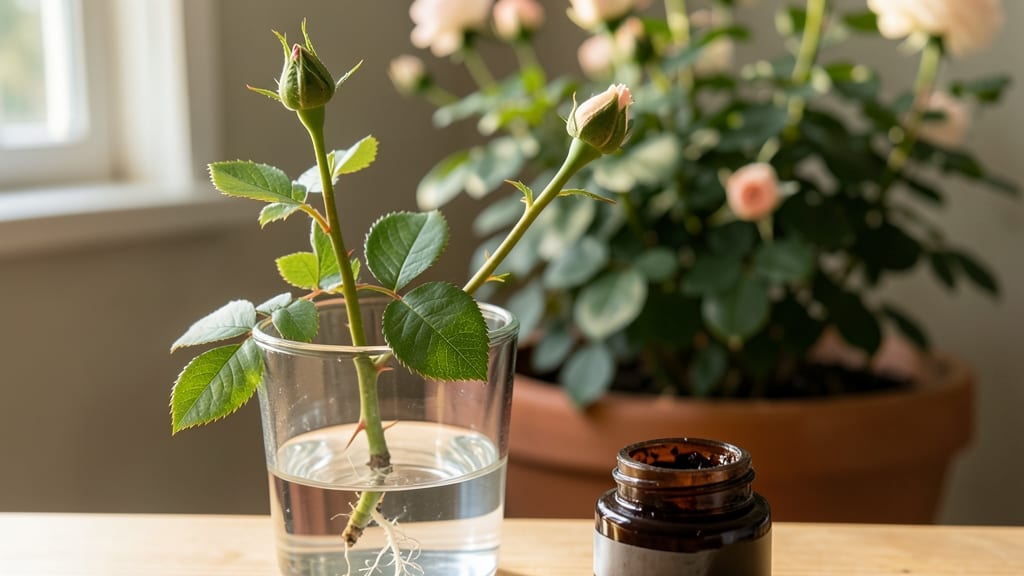
That bouquet on your kitchen counter could grow into a thriving rose bush—no green thumb required. 🌹 I've rooted dozens of roses this way, and the best part? You only need a glass of water, a sharp pair of scissors, and patience.
The magic happens when you turn those wilting stems into self-sufficient plants that'll reward you with blooms for years.
Start with healthy stems from your bouquet—look for ones with at least three sets of leaves and no signs of disease. Cut just below a leaf node (the little bump where leaves grow) at a 45-degree angle.
Remove all but the top two sets of leaves to reduce moisture loss, then place the cut end in a jar of room-temperature water. Change the water every 2-3 days to keep it fresh and prevent bacteria.
After about 3-4 weeks, you'll spot tiny white roots sprouting from the base. Once they reach about an inch long, it's time to plant! Choose a sunny spot, dig a hole deep enough to bury half the stem, and water thoroughly.
The first year focuses on root establishment—keep soil moist but not soggy, and avoid heavy feeding until new growth appears.
This method works for most hybrid tea roses, floribundas, and even some shrub roses. The key is consistency: don't rush the water stage, and protect young plants from harsh winds or extreme temperatures.
With a little care, you'll have a bush that outlasts any store-bought plant—and the best part? You grew it from something beautiful that was about to end up in the trash.
📚 In This Guide
- What you need
- Instructions
- Tips and common mistakes
- Wrapping up and next steps
What you need
- ● 1-3 healthy rose stems – Choose stems from a bouquet with at least 3-5 nodes (the little bumps where leaves grow). Avoid treated or sprayed roses.
- ● Clean, room-temperature water – Use filtered or distilled water if possible (tap water with chlorine can hinder rooting).
- ● Clear glass or jar – A 16-24 oz mason jar or vase works best to monitor root growth.
- ● Sharp scissors or pruning shears – Sterilize with rubbing alcohol to prevent bacterial infections.
- ○ Rooting hormone (optional) – Speeds up root growth; use a gel or powder designed for cuttings.
- ● Small pebbles or marbles – Place a few at the jar’s bottom to weigh down stems and keep them submerged.
- ● Spray bottle with water – Helps mist leaves to prevent wilting.
- ● Potting soil & small pot – For transplanting once roots are 2-3 inches long.
- ● Newspaper or dark paper bag – Creates humidity for young cuttings.
- ● A sunny windowsill or grow light – Roses need 6+ hours of indirect light daily.
- ● Patience! – Rooting can take 2-6 weeks, depending on the rose variety.
- ● Fresh roses – Avoid wilted or overly mature stems (they root poorly).
Step-by-Step instructions for growing a rose bush from a bouquet
Here's how I turn wilted roses into thriving bushes—no fancy tools needed.
🌱 Step 1: Select and Prepare the Stems
Choose healthy stems from your bouquet—look for ones with at least 3-4 buds and no flowers. Trim the bottom at a 45-degree angle just below a leaf node (where leaves grow out). This angled cut gives you more surface area for roots to form.
Remove all leaves from the lower half of the stem—they’ll rot in water and invite bacteria. I like to strip them off with my fingers, starting from the bottom up. Keep the top leaves intact so the plant can still photosynthesize while rooting.
💧 Step 2: Root the Stems in Water
Fill a clean glass or jar with room-temperature water until the stems are submerged about 2-3 inches. Change the water every 2-3 days to prevent bacterial growth. You’ll see tiny white roots forming at the base in 2-4 weeks—that’s your signal it’s working!
Place the container in bright, indirect light—like a windowsill with morning sun. Direct sunlight can overheat the water and stress the stems. I keep mine near my kitchen window where it gets gentle light all day. Avoid drafts or temperature swings, as roses are sensitive to sudden changes.
⏰ Step 3: Monitor and Encourage Root Growth
Watch for roots to grow at least 1-2 inches long before transplanting. You’ll notice the stems develop a slight woody texture at the base—this is a good sign. If the water gets cloudy before roots appear, dump it and refresh with clean water immediately.
Once roots are established, you can either keep the stems in water indefinitely (as a houseplant) or transplant them to soil. I like to give mine a few extra days in water to build stronger roots before moving them. This extra time makes all the difference in survival rate.
🪴 Step 4: Transplant to Soil
Fill a small pot with well-draining potting mix—roses hate soggy roots. Dig a hole deep enough to bury about half of the stem (where the roots are). Gently place the stem in the hole and firm the soil around it. Water lightly to settle everything in place.
Keep the soil consistently moist but not waterlogged for the first 2 weeks. You’ll see new leaves forming in 3-4 weeks—that’s your reward for patience! After that, treat it like a regular rose bush, giving it plenty of sunlight and occasional fertilizer.
Tips & tricks for perfect rose bush propagation
Real talk: Turning bouquet roses into thriving bushes is easier than you think—once you know these game-changing tricks.
Stem Selection Matters: In Step 1, focus on stems with at least 3-4 buds and no flowers. The thicker the stem (about pencil-width), the better chance of success. I've found that stems with slight green undertones at the base root faster than completely brown ones. Avoid stems with soft spots or mold—these won't make it.
The Angle Game: That 45-degree angle cut in Step 1 isn't just decoration—it's science! The angled cut creates more surface area for roots to form, and the cut should always be just below a leaf node. Think of it like creating a little landing pad for your future roots. If you're not confident with the angle, practice on a spare stem first.
Water Quality Tip: For Step 2, use filtered or distilled water if possible—tap water with chlorine can stress the stems. Change the water every 2-3 days as instructed, but also refresh it immediately if it gets cloudy before roots appear. I like to use small jars with narrow necks to minimize water exposure to air, which helps prevent bacterial growth.
Lighting Secret: Bright, indirect light is key in Step 2, but don't overlook the importance of consistency. I've had the best results with east-facing windows that give morning sun without afternoon heat. If you don't have good window options, a grow light on a timer for 12-14 hours a day works wonders. Just avoid anything that causes the water to get too warm—roses are sensitive to temperature swings.
Pro Tips for Grow A Rose Bush From A Bouquet
- Real talk: Turning bouquet roses into thriving bushes is easier than you think—once you know these game-changing tricks.
- Stem Selection Matters: In Step 1, focus on stems with at least 3-4 buds and no flowers.
- The Angle Game: That 45-degree angle cut in Step 1 isn't just decoration—it's science!
Frequently asked questions
about growing roses from a bouquet can save you time and frustration. Here are answers to the most common queries—because even gardeners need a little help sometimes!How long does it take for a rose cutting to root?
Most rose cuttings take 3 to 6 weeks to develop roots in water. Patience is key—keep the water fresh and watch for tiny root hairs forming at the base. If you see resistance when gently tugging the stem, roots are likely growing! Pro tip: Transplant to soil once roots reach about 1-2 inches long.
Can I grow roses from a bouquet with preservatives?
Yes, but success depends on the preservatives. Lightly treated bouquets (like those from grocery stores) may still root, but heavily treated roses (common in florist shops) often fail. For best results, choose organic or locally grown roses with minimal additives. If unsure, test a few cuttings!
What if my rose cutting rots instead of rootting?
Rotting is usually caused by bacterial growth or overwatering. If the stem turns mushy or smells bad, trim the affected part and replant the healthy section in fresh water. To prevent rot, use filtered or distilled water (chlorine can harm cuttings) and change it every 2-3 days. Keep it warm! A sunny windowsill (60-70°F) speeds up rooting.
Can I grow roses from a bouquet indoors year-round?
Indoor growing is perfect for small spaces, but you’ll need a bright, indirect light source (like a south-facing window or grow lights). Roses thrive in warmth, so avoid drafts. Just be patient—indoor roses may take slightly longer to root than outdoor cuttings. Once rooted, transplant to a pot with well-draining soil!
What if my rose cutting doesn’t bloom like the original?
Your new rose bush may not bloom the same way as the parent plant—especially if it’s a hybrid or grafted variety. Focus on healthy growth first (leaves, stems, and roots). With proper care, your cutting will eventually produce blooms, though they might differ in color or shape. Bonus: Some roses even surprise you with unexpected hues!
What’s the best time of year to try this?
Spring and early summer (March–July) are ideal because roses are naturally vigorous and easier to root. However, you can try year-round indoors with the right conditions. Avoid winter (unless you’re in a warm climate)—cold water slows rooting, and cuttings may struggle. Spring = best odds!
Wrapping up and next steps
Growing a rose bush from a bouquet is simpler—and more rewarding—than you might think!
With just a few stems, water, and patience, you can turn a fleeting gift into a thriving plant that blooms for years. Don’t wait for perfect conditions—just start! Once your cuttings root, transplant them into soil, and soon you’ll be enjoying roses straight from your own garden. Happy growing! 🌱✨
Next step: Share your progress with fellow gardeners or experiment with other floral cuttings—like hydrangeas or geraniums—to expand your green thumb!