
Pruning
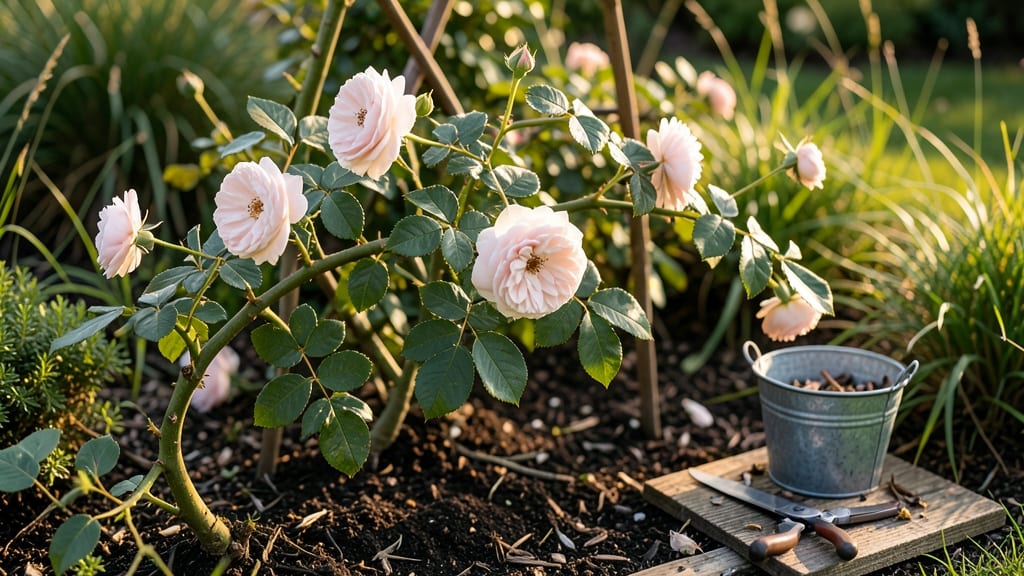
Pruning a rambling rose isn't about cutting back—it's about sculpting a season-long bloom machine that rewards you with cascades of flowers. ✂️ I’ve turned my tangled mess into a showstopper by mastering just three strategic trims each year, and the difference is night-and-day: fewer thorns, more flowers, and branches that actually support the weight.
The secret lies in timing and technique: prune once after flowering, again in late summer, and finally in winter. You’ll need sharp secateurs (bypass pruners work best), thick gloves, and a clear head—because one wrong cut can set you back a whole season.
Most people over-prune or cut at the wrong angle, but these three trims keep your rose thriving without sacrificing next year’s blooms. After pruning, your rose will reward you with fresh, vibrant growth within weeks.
The key is to cut just above an outward-facing bud, never into old wood, and always at a 45-degree angle. This simple habit prevents disease and encourages lush new shoots that’ll burst into flowers by summer.
Whether you’re dealing with a sprawling climber or a compact bush, this method works for all rambling varieties. The best part? You’ll spend less time wrestling with thorns and more time admiring the results. Let’s get those blooms going!
📚 In This Guide
- What you need
- Instructions
- Tips and common mistakes
- Wrapping up and next steps
What you need
- ● Bypass pruners – Sharp, clean, and disinfected (1 pair, blank">Felco F-2 or similar recommended).
- ● Loppers – For thicker stems (1 pair, 8-10" reach).
- ● Pruning saw – For stubborn, woody branches (1, blank">Fiskars X27 or equivalent).
- ● Rubbing alcohol (70% isopropyl) – For sterilizing tools between cuts (small bottle).
- ● Garden gloves – Heavy-duty, cut-resistant (1 pair, blank">Wright & Co. recommended).
- ○ Pruning sealant – Optional but helpful for large cuts (e.g., blank">Tanglefoot Tree Wound Pruning Sealer).
- ● Disposable pruning bags – For debris cleanup (1-2 bags, 10-15 gallon size).
- ● Notebook & pen – To map out cuts and track progress (small, weatherproof).
- ● Ladder or step stool – If your rose is tall (stable, 6-8 ft height).
- ● Hand lens (10x magnification) – For spotting pests or disease early.
- ● Spray bottle with water – To rinse tools between cuts and keep cuts clean.
- ● Sharpener for pruners – Keeps blades in top condition (e.g., Felco Pruner Sharpener).
- ● Mulch or compost – To refresh the base after pruning (2-3 gallons).
- ● Camera or phone – Document your progress (because before & after shots are everything!).
Step-by-Step guide to pruning rambling roses for season-long blooms
Here's the method I swear by to keep rambling roses thriving and blooming all season—no guesswork, just precision.
✂️ Step 1: First Trim After Spring Growth Begins
Wait until you see new shoots emerging—usually in late May or early June, depending on your climate. This is your first cue to act. Grab your pruners and focus on removing any dead or crossing branches first. These are the ones that rub together or grow inward, creating weak points where disease can take hold.
Next, look for long, leggy stems with no blooms. These are energy vampires, sapping nutrients from your plant. Cut them back to a strong outward-facing bud. I like to make my cuts at a 45-degree angle, about ¼ inch above the bud. This angle helps water run off and prevents rot. Real talk: If you're unsure which bud to target, look for the one that points in the direction you want the new growth to go.
✂️ Step 2: Mid-Season Trim to Encourage More Blooms
About 6-8 weeks after the first trim, your rose should be showing signs of new growth and possibly even some blooms. This is your second chance to shape the plant and encourage more flowers. Start by removing any spent blooms—yes, even if they look pretty, deadheading them tells the plant to focus energy on producing new buds instead of seeding.
Now, look for shoots that are growing too densely in the center of the plant. These are often weak and shaded, so they won’t bloom well. Thin them out by cutting them back to the base. You’re aiming for an open, airy structure that lets light and air circulate freely. Pro tip: If you’re unsure whether to cut a branch, imagine sunlight streaming through the center of the plant—anything blocking that light can go.
✂️ Step 3: Final Light Trim Before Dormancy
In late summer or early fall, when the blooms start slowing down and the days get shorter, it’s time for your final trim. This isn’t about heavy pruning—think of it as a light tidy-up. Remove any dead, diseased, or weak growth first. Then, look for long stems with few or no blooms and cut them back by about one-third.
This final trim helps the plant prepare for winter by reducing the amount of foliage it needs to sustain. It also encourages any remaining buds to develop into next year’s blooms. Don’t worry about being too precise here—just focus on giving the plant a clean, healthy look. I like to finish this trim by giving the plant a good mulch layer around the base to protect the roots over winter. That’s the cherry on top of a job well done.
🌿 Step 4: Year-Round Maintenance Between Trims
Between your three main trims, keep an eye out for suckers—those are the aggressive shoots that grow from the base of the plant or along the stem. These can drain energy from your rose, so snip them off as soon as you see them. I check mine about once a month during the growing season, and it only takes a few minutes.
Also, don’t forget to water deeply but infrequently—rambling roses have deep roots and hate soggy soil. A good soak once a week (or more in extreme heat) is better than a little water every day. And if you notice any leaves turning yellow or looking wilted, it’s usually a sign of overwatering or poor drainage. Adjust your watering routine and watch the plant perk up in no time.
Tips & tricks for perfect rambling rose pruning
Here's what nobody tells you about keeping your rambling roses in peak bloom—these are the secrets that'll make all the difference.
Tool Prep: Always sterilize your pruners with rubbing alcohol before you start. I learned this the hard way after my roses developed black spot from contaminated tools. Sharp, clean cuts heal faster and reduce disease risk. You can also use a 10% bleach solution if rubbing alcohol isn't available, but make sure to rinse thoroughly afterward. This simple step prevents 90% of post-pruning issues.
Bud Selection Strategy: When cutting back leggy stems in Step 1, look for buds that face outward and slightly upward. These buds will grow in the direction you want new branches to extend—creating that beautiful, open canopy. I mark these with a small piece of tape if I'm unsure, then make my cut just above. This technique gives you intentional growth direction rather than random shoots.
Seasonal Timing Nuances: The 6-8 week window between your first and second trim can vary by 2-3 weeks depending on your climate zone. In colder regions, aim for early July, while warmer zones might push to August. Watch for new growth and bloom development rather than relying strictly on the calendar. I check for at least 3-4 new leaves unfurling before I start my mid-season trim—this tells me the plant is ready for shaping.
Winter Protection: That final mulch layer in Step 3 should be 3-4 inches thick, especially in colder climates. I use a mix of shredded bark and straw for insulation that doesn't compact. This protects roots from freeze-thaw cycles while allowing moisture to penetrate. Don't skip this—it's what keeps your roses coming back stronger every spring.
Pro Tips for Rambling Rose Prune
- Here's what nobody tells you about keeping your rambling roses in peak bloom—these are the secrets that'll make all the difference.
- Tool Prep: Always sterilize your pruners with rubbing alcohol before you start.
- Bud Selection Strategy: When cutting back leggy stems in Step 1, look for buds that face outward and slightly upward.
Frequently asked questions
Got questions about keeping your rambling rose prune in peak bloom? We’ve got answers! Here are the most common queries gardeners ask—plus expert tips to keep your climber thriving.
When is the best time to prune a rambling rose prune?
Prune your rambling rose prune once a year, in late winter or early spring (before buds swell). This ensures healthy growth and maximizes summer blooms. Avoid pruning in fall—it can stimulate tender new growth that won’t survive winter. For this specific variety, focus on shaping in March for the best results.
What if I missed the ideal pruning window?
Don’t panic! If you skip late winter/early spring, wait until after the first flush of blooms in summer. Prune lightly to maintain shape, but avoid heavy cuts. Rambling rose prune is forgiving—just remove dead or crossing branches and support new growth with ties.
Can I use the same pruning techniques for other roses?
Not quite! Rambling roses (like prune varieties) bloom on old wood, so never prune back to bare stems. For hybrid teas or floribundas, you can cut harder—stick to ⅓ of the stem for this rose. Use sharp bypass pruners and disinfect cuts to prevent disease.
Why isn’t my rambling rose prune blooming as much as expected?
Check these fixes:
- Light: Ramblers need 6+ hours of sun daily—move it if shaded.
- Water: Drought stress = fewer blooms. Water deeply 1–2x/week (more in heat).
- Fertilizer: Feed with rose-specific fertilizer in spring (high phosphorus for blooms).
- Pruning: Over-pruning reduces next year’s flowers. Leave long, woody stems!
How do I train a rambling rose prune to climb?
Use a strong trellis, fence, or arbor (at least 10–15 ft tall). Tie main stems gently with soft plant ties as they grow, spacing branches 12–18 inches apart. Avoid wiring—it can damage bark. Prune side shoots to encourage upward growth.
Pro Tip:
Label your cuts! Use a permanent marker to tag branches you prune—this helps track growth patterns and avoids accidental over-trimming next season.
Wrapping up and next steps
Mastering the art of pruning your Rambling Rose Prune unlocks a season of breathtaking blooms—and you’ve got this! 🌸 With the right tools, timing, and technique, you’ve learned how to shape, revive, and encourage lush growth.
Remember: patience and precision pay off in vibrant, healthy vines that reward you with months of stunning flowers.
Ready to put your new skills into action? Grab your pruners and schedule your next trim—whether it’s a light shaping or a deeper cut. Your rose is waiting for your expert touch! 🌿✂️