
Shrubs
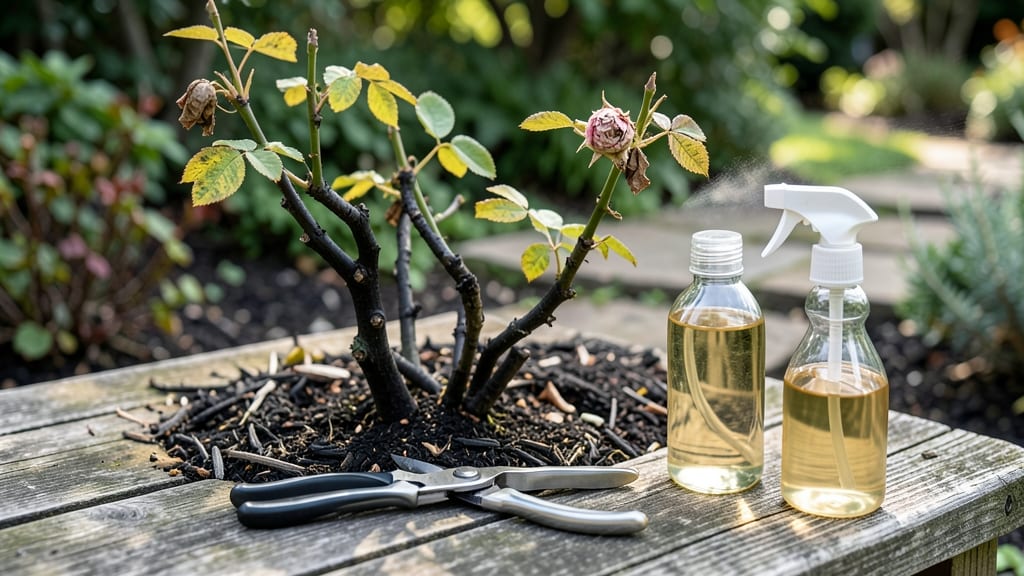
Your roses might look dead, but rose dieback treatment can bring them back to life—often in just a few weeks. 🌹 I’ve nursed back more than my share of wilted canes, and the key is acting fast before the damage spreads.
The first step? Identifying whether your roses are suffering from fungal rot, pest damage, or simple environmental stress—each needs a different fix.
Most dieback starts with blackened canes, yellowing leaves, or a mushy stem when you squeeze it. Fungal infections like black spot or canker are the usual culprits, but overwatering, poor drainage, or even harsh winter winds can trigger the same symptoms.
The good news? With the right pruning, fungicide (organic or chemical), and soil care, you can stop the rot and encourage fresh growth within 4-6 weeks.
Start by cutting back dead canes to healthy wood, then treat the wounds with copper fungicide or a baking soda spray. Amend the soil with compost to improve drainage, and water at the base—not overhead—to keep foliage dry.
Within weeks, you’ll see new buds forming, and your roses will look like they’ve had a second chance at life.
This method works for hybrid teas, floribundas, and even old garden roses. The secret is consistency—check your plants weekly for new signs of stress, and adjust your care routine as needed. Before you know it, those wilted canes will be bursting with blooms again.
Root Causes Of Rose Dieback
Understanding why your roses exhibit dieback—whether it’s blackened canes, wilting leaves, or sudden stem collapse—starts with identifying the underlying stressors. Roses are resilient, but when their health weakens, multiple factors can trigger dieback.
Below, we break down the most common culprits with clear explanations and actionable insights to help you diagnose the issue.
Fungal pathogens are the #1 cause of rose dieback, thriving in damp, humid conditions. These microscopic invaders weaken stems, block nutrient flow, and lead to cankers (sunken, discolored lesions) that eventually girdle and kill the cane.
Key Fungal Culprits & Their Signs
| Fungus | Symptoms | Ideal Conditions |
|---|---|---|
| Black Spot | Purple-black spots with yellow halos on leaves; canes may blacken at base. | Warm, wet weather (60–80°F with high humidity). |
| Botrytis (Gray Mold) | Gray fuzzy growth on stems, buds, or flowers; stems appear mushy and die. | Cool, damp nights with poor air circulation. |
| Canker (e.g., Cylindrocladium) | Sunken, dark lesions on canes; oozing sap or gum-like residue. | Overwatering, wounded stems, or dense foliage. |
Why It Happens: Fungi spores lie dormant in soil, mulch, or old plant debris. When conditions become favorable—such as after heavy rain, overhead watering, or stagnant air—they infect through wounds (pruning cuts, thorns, or insect bites) and spread rapidly. Black spot, for example, can defoliate a rose in weeks, leaving it vulnerable to secondary infections.
💡 Pro Tip:
- Prune infected canes 6 inches below the lesion (sterilize tools with 70% isopropyl alcohol).
- Improve airflow by spacing plants 3–4 feet apart and avoiding thick mulch piles.
- Apply fungicides (copper-based or neem oil) preventatively in spring and after rain.
Roses hate soggy roots. While they need consistent moisture, excess water deprives roots of oxygen, leading to root rot (a fungal or bacterial infection) and stem collapse. Poor drainage—common in clay soil or containers without holes—exacerbates the problem.
How Overwatering Triggers Dieback
- Oxygen Starvation: Roots suffocate in waterlogged soil, unable to absorb nutrients or transport them upward.
- Fungal Growth: Waterlogged conditions favor pathogens like Phytophthora (root rot), which attack weakened roots.
- Nutrient Leaching: Overwatering washes away essential minerals, causing nutrient deficiencies (e.g., yellowing leaves from nitrogen loss).
Signs to Watch For:
- Mushy, black roots when pulled gently from the soil.
- Stems that snap easily or ooze when cut.
- Yellowing leaves that persist despite fertilization.
🔥 Fix It Now:
- Test your soil’s drainage by digging a 12-inch hole, filling it with water, and timing how long it takes to drain. If it takes >4 hours, amend with perlite, sand, or compost.
- Water deeply but infrequently—aim for 1–1.5 inches per week (including rain), and water at the base, not the leaves.
- Raise beds or containers to improve drainage, and ensure pots have drainage holes.
Roses rely on healthy canes to transport water and nutrients. When stems are crushed, girdled, or improperly pruned, they become entry points for disease and weaken the plant’s structure.
Common Damaging Scenarios
- Lawnmower or String Trimmer Injuries: A single nick can sever vascular tissue, causing dieback above the wound.
- Improper Pruning Cuts: Cutting too close to the bud or leaving stubs invites bacterial infections (e.g., Pseudomonas syringae).
- Girdling from Weeds or Vines: Strangling growth (like ivy or bindweed) restricts sap flow, leading to cane death.
Why It Happens: Roses seal wounds slowly—unlike trees, they don’t form protective callus tissue quickly. A dirty or dull pruner can crush stems, while over-pruning removes too much foliage, reducing the plant’s ability to photosynthesize and recover.
✨ Prevention Checklist:
- Prune in dry weather (fungi spread faster when tools are wet).
- Use sharp, sterilized shears and make cuts at a 45-degree angle, ¼ inch above a healthy bud.
- Remove competing plants within 2 feet of your roses to prevent girdling.
While less obvious than fungi, pests like Japanese beetles, rose slugs (sawfly larvae), and aphids weaken roses by feeding on leaves and stems. Their damage creates entry points for disease and stresses the plant, making it susceptible to dieback.
Pests That Accelerate Dieback
| Pest | Damage | Tell-Tale Signs |
|---|---|---|
| Japanese Beetles | Skeletons leaves; chew on flower buds and young canes. | Irregular holes in leaves; frass (chewed debris). |
| Rose Slugs | Defoliate roses in days; saw off buds and leaves. | Black, slug-like larvae; chewed leaves with "notches." |
| Aphids | Suck sap, causing curls, yellowing, and sticky honeydew (attracts sooty mold). | Clusters of tiny green/black insects on new growth. |
Why It Happens: Pests transmit bacteria (e.g., Erwinia bacteria from beetles) and reduce the rose’s energy reserves. A heavily infested rose may wilt, drop buds, or develop blackened canes as it diverts resources to repair damage.
👨🍳 Take Action:
- Handpick beetles into soapy water early in the day (they’re sluggish when cool).
- Use neem oil or insecticidal soap for aphids and sawfly larvae (apply in evening to avoid harming bees).
- Install row covers in early summer to block beetles before they lay eggs.
Roses are not drought-tolerant and struggle when pushed beyond their comfort zone. Extreme heat, frost, or sudden drought can cause cellular damage, leading to cane dieback.
How Climate Triggers Dieback
- Heat Stress (Above 90°F): Leaves scorch (brown edges), and canes may split or blacken due to rapid moisture loss.
- Frost Damage: Blackened buds and stems occur when temperatures drop below 28°F, disrupting cell function.
- Drought: Roots shrink and die if soil dries out completely, causing wilting and cane collapse.
🌡️ Recovery Tips:
- Mulch heavily (3–4 inches of organic mulch) to retain moisture and regulate soil temperature.
- Water deeply during heatwaves (early morning is best to reduce evaporation).
- Protect from frost with frost cloth or row covers in late fall/winter.
While rare, over-application of fertilizers (especially high-nitrogen or salt-based) can burn roots and foliage, leading to dieback. Similarly, herbicides or pesticides misapplied to roses can cause toxic damage.
Signs of Chemical Stress
- Brown, crispy leaf edges (nitrate burn).
- Yellowing between leaf veins (potassium deficiency from over-salting).
- Wilting despite moist soil (root damage from herbicides like glyphosate).
🚨 Avoid These Mistakes:
- Follow label rates for fertilizers—less is often more for roses.
- Test soil pH (ideal: **6.0–6
Revive Your Roses Step by Step
Now that you understand the root causes of rose dieback—whether it’s fungal infections, pests, environmental stress, or poor pruning—it’s time to roll up your sleeves and bring your roses back to life! 🌿💪 Below are practical, actionable solutions tailored to each common cause, plus tips to keep your roses thriving long-term.
Fix: Clean, protect, and restore balance.
- Prune Infected Canes Immediately 🔪 - Use sterilized pruners (wipe with rubbing alcohol between cuts) to remove all blackened, spotted, or mushy canes—don’t leave any behind.
Cut 6 inches below the affected area to ensure the fungus doesn’t spread. - Pro Tip: 💡 Bag and dispose of infected canes in the trash (not compost) to prevent reinfection.
- Apply Fungicide 🛡️
- Spray copper-based fungicide (like Bordeaux mixture) or a neem oil solution (1 tbsp neem oil + 1 tsp mild soap per quart of water) every 7–10 days until new growth appears.
- For powdery mildew, mix 1 tsp baking soda + 1 quart water + a drop of dish soap and spray early in the morning (avoid evening dampness).
- Improve Airflow & Light 🌞
- Thin out crowded canes and space roses 3–4 feet apart to reduce humidity.
- Morning sunlight (6+ hours) helps leaves dry faster, deterring fungi.
- Soil Remediation 🌱
- Mix 2 inches of compost into the topsoil to boost microbial activity.
- Add mycorrhizal fungi (available at garden centers) to strengthen root health.
Fix: Starve, trap, and smother pests naturally.
- Handpick & Drown 🕷️
- Japanese beetles? Drop them into soapy water. Do this daily for 2–3 weeks.
- Aphids? Blast them off with a strong stream of water (early morning).
- Use Physical Barriers 🛡️
- Cover roses with floating row covers (lightweight fabric) to block beetles.
- Sticky traps (yellow cards) can catch flying pests.
- Introduce Beneficial Insects 🐞
- Release ladybugs or lacewings (sold at garden centers) to eat aphids.
- Plant marigolds or nasturtiums nearby to repel pests naturally.
- Neem Oil Spray 🌿
- Mix 1 tbsp neem oil + 1 tsp soap per gallon of water and spray every 5–7 days until pests vanish.
Fix: Adjust care to match the season.
- Water Deeply & Consistently 💧
- Drought? Water deeply 2–3 times per week (1–2 inches per week) at the base of the plant (not leaves).
- Heatwave? Mulch with 3–4 inches of organic mulch (straw or wood chips) to retain moisture.
- Shade Cloth for Extreme Heat ☀️
- If temps exceed 90°F (32°C), drape 30–50% shade cloth over roses for a few hours daily.
- Frost Protection ❄️
- Lightly cover canes with burlap or frost blankets on cold nights.
- Avoid watering before frost—wet leaves freeze and damage tissue.
- Adjust Fertilizer 🌱
- Stop high-nitrogen fertilizers in summer—they encourage tender growth that burns in heat.
- Switch to a balanced 10-10-10 or low-phosphorus fertilizer in fall to harden canes for winter.
Fix: Prune like a pro—timing, technique, and tools matter!
- Prune at the Right Time ⏰
- Late winter/early spring (just before new growth) for major pruning.
- Light trimming (deadheading) can happen throughout the growing season.
- Use the Right Cuts ✂️
- Cut just above an outward-facing bud (45° angle) to encourage bushy growth.
- Avoid leaving stubs—always cut cleanly 1/4 inch above the bud.
- Sterilize Tools 🧼
- Wipe pruners with rubbing alcohol before and after each plant to prevent disease spread.
- Thin Out Crowded Canes 🌿
- Remove 1–2 oldest canes each year to improve airflow.
- Keep 3–5 strong, healthy canes per bush for optimal growth.
- 💡 Test soil pH (ideal: 6.0–6.5) and amend with lime (to raise) or sulfur (to lower).
- 🌡️ Monitor humidity—avoid overhead watering in the evening.
- ✨ Mulch annually with compost or wood chips to suppress weeds and retain moisture.
- 🎯 Inspect weekly for early signs of pests/disease—catch problems before they spread!
Final Thought: 🌟 With the right care, most roses rebound quickly—especially if you act fast. Start with pruning and fungicide, then adjust watering and protection based on your climate. Your roses will be blooming stronger than ever in no time!
Frequently asked questions
How can I tell if my rose's dieback is from fungus or pests?
Check for blackened canes with sunken lesions or gray fuzzy growth—these are fungal signs. Look for chewed leaves (Japanese beetles) or sticky residue (aphids) for pests. Fungal issues often start at the base or spread upward, while pest damage is usually localized to leaves or buds.
Can I save a rose bush if half the canes are already dead?
Yes! Prune the dead canes 6 inches below the damage and treat with fungicide. If at least 3 healthy canes remain, your rose can regrow. Focus on improving airflow, soil drainage, and consistent watering at the base—new growth should appear within 4-6 weeks.
Is neem oil safe to use on roses with open buds?
Neem oil is safe for roses, including buds, but apply it in the evening to avoid harming pollinators. Use a 1% solution (1 tbsp neem oil + 1 tsp soap per gallon of water) and avoid spraying when bees are active. It won’t harm buds but may deter pests.
How often should I fertilize roses after treating dieback?
Wait 4-6 weeks after treatment before fertilizing. Use a balanced 10-10-10 or low-nitrogen fertilizer (like 5-10-5) to avoid stressing recovering roots. Apply every 6-8 weeks during the growing season, but reduce in fall.
Will pruning too late in the season cause more dieback?
Pruning after early summer can stimulate new growth that won’t harden before winter, risking frost damage. Stick to light trimming (deadheading) in late summer/fall. Save major pruning for late winter/early spring when the plant is dormant.