
Lawn
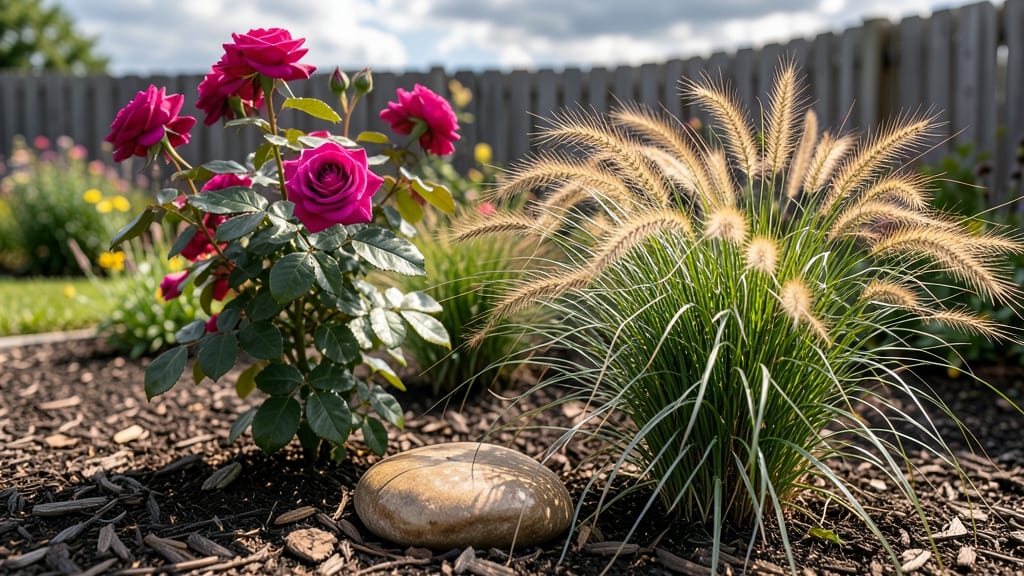
Combining roses and fountain grass creates a garden that feels like a living painting. 🌹 Their contrasting textures—soft petals against feathery plumes—bring unexpected harmony to any space, whether you're going for cottage charm or modern minimalism.
The secret lies in their complementary heights: roses reach upward while fountain grass spills gracefully, framing them like a natural frame. This pairing works best when you place fountain grass at the front of borders, where its cascading form softens the edges while roses take center stage.
For maximum impact, choose varieties with similar bloom times—like 'Knock Out' roses with 'Karl Foerster' fountain grass—to create a cohesive seasonal display. The fragrance from roses even enhances the airy, slightly sweet scent of fountain grass on warm evenings.
You'll end up with a low-maintenance combination that thrives in full sun and well-drained soil. The fountain grass acts as a natural windbreak for roses while its golden tones complement pink, red, or white blooms beautifully.
Just avoid planting them too close—give fountain grass at least 3 feet of space to spread naturally. Perfect for mixed borders, container arrangements, or even as a dramatic focal point along pathways. Here's how to make them work together seamlessly in your design.
📚 In This Guide
- What you need
- Instructions
- Tips and common mistakes
- Wrapping up and next steps
What you need
- ● Rose fountain grass plants – 1-3 plants (depending on desired coverage; spacing 12–18 inches apart for full effect). Choose healthy, established plants (3–4 feet tall) from a nursery or online supplier.
- ● Well-draining soil – A mix of native soil + compost (70% soil, 30% compost) or sandy loam to prevent root rot. pH 6.0–7.5 is ideal.
- ● Organic mulch – 2–3 inches of shredded bark, pine straw, or wood chips to retain moisture and suppress weeds.
- ● Slow-release fertilizer – Balanced 10-10-10 or 20-20-20 (apply 1 tbsp per plant at planting time and again in early spring).
- ● Watering can or hose with a gentle spray nozzle – For deep, infrequent watering (avoid overhead sprinklers to prevent fungal issues).
- ● Garden trowel or spade – For digging planting holes (depth: twice the width of the root ball).
- ● Pruning shears – To trim dead fronds or shape growth in late winter or early spring.
- ● Garden gloves – Protect your hands from sharp grass edges.
- ● Soaker hose – For efficient watering during dry spells (place 6–12 inches from the base).
- ● Stakes or decorative pots – If growing in containers, use 1–2 stakes per plant for support as it matures.
- ● Full sun to partial shade (6+ hours of sunlight daily for best growth).
- ● Protect from strong winds (plant near a fence or wall if needed).
- ● Patience! Rose fountain grass grows 2–3 feet per year and reaches full elegance in 2–3 years.
Step-by-step instructions for growing rose fountain grass
Here's how to create your own fragrant, cascading rose fountain grass display that'll be the star of any garden corner.
🌱 Step 1: Select and Prepare Your Containers
Choose containers that are at least 12-18 inches deep with drainage holes—this grass has deep roots and hates soggy feet. I like using terracotta pots or hanging baskets for that elegant cascade effect. Make sure each container has a saucer underneath to catch any excess water that drains out.
Before adding soil, wash your containers thoroughly with soapy water to remove any chemical residues. This is especially important if you're reusing pots from last season. Rinse well and let them dry completely in the sun for a few hours. The reason we do this is to prevent any potential fungal issues that could harm your new plants.
🌿 Step 2: Create the Perfect Growing Medium
Fill each container with a mix of 50% potting soil and 50% perlite or coarse sand. This combination provides excellent drainage while still holding enough moisture for the grass's needs. I like to add a handful of compost to each container to give the plants a nutrient boost right from the start.
Gently fluff the soil mixture with your hands to create air pockets. You want it to be light and fluffy, not compacted. This helps the roots establish quickly and prevents waterlogging. Tap the container gently on the table to settle the soil slightly, but don't pack it down too firmly.
✂️ Step 3: Plant the Rose Fountain Grass
Remove your rose fountain grass plants from their nursery pots and gently loosen the roots if they appear root-bound. You'll know they need loosening if you see a tight mass of roots circling the bottom of the pot. Plant them at the same depth they were growing in their nursery containers—this helps prevent transplant shock.
Space your plants about 12-18 inches apart in each container, depending on the mature size of your specific variety. For a fuller look, you can plant two smaller plants in a large container. Water each plant thoroughly after planting to help settle the soil around the roots and remove any air pockets.
☀️ Step 4: Position for Optimal Growth
Place your containers in a location that receives full sun to partial shade—at least 4-6 hours of direct sunlight daily. This grass loves bright light but can tolerate some afternoon shade, especially in hotter climates. The ideal spot is where it can get morning sun and some afternoon shade if temperatures often exceed 85°F.
If you're growing in a hanging basket, make sure the container is sturdy enough to support the mature plant weight. You'll see the grass start to cascade beautifully after a few weeks of growth. Rotate the containers every few days to ensure even growth—you'll notice one side getting leggy if it's always facing the same direction.
💧 Step 5: Water and Maintain Regular Care
Water your rose fountain grass when the top 1-2 inches of soil feel dry to the touch. This typically means watering every 2-3 days during warm weather, but adjust based on your specific climate and container size. The key is to keep the soil consistently moist but never soggy—this grass is drought-tolerant once established but prefers consistent moisture when young.
Fertilize every 4-6 weeks during the growing season with a balanced, water-soluble fertilizer. I like to use a 10-10-10 formula diluted to half strength. Stop fertilizing in late summer to allow the plants to prepare for winter. You'll see lush, vibrant growth when you're providing the right nutrients—look for deep green color and healthy new shoots.
Tips & tricks for perfect rose fountain grass
These simple strategies will help you grow lush, fragrant rose fountain grass that cascades beautifully—without the common pitfalls.
Container Selection: For the best drainage and airflow, choose containers with drainage holes that are at least 12-18 inches deep. Terracotta pots work beautifully, but if you prefer hanging baskets, make sure they're sturdy enough to support the mature plant weight. I've seen lightweight baskets collapse under the weight of fully grown grass—trust me, it's not pretty.
Soil Mix Matters: The 50/50 mix of potting soil and perlite or coarse sand is non-negotiable for this grass. The perlite creates those crucial air pockets that prevent waterlogging, while the potting soil provides the nutrients your plants need. Pro tip: Add a handful of compost when mixing—it gives your grass that extra boost of nutrients right from the start.
Planting Depth and Spacing: When planting, keep the same depth as the nursery pot to prevent transplant shock. For spacing, remember that mature plants can spread 12-18 inches wide, so give them room to grow. If you're planting two in a large container, space them about 6-8 inches apart for that fuller look without overcrowding.
Sunlight Strategy: The 4-6 hours of direct sunlight requirement is crucial, but don't forget to rotate your containers every few days. This prevents the plants from leaning toward the light, which can make them look leggy. I like to set a reminder on my phone to rotate them—it's easy to forget in the hustle of daily life.
Pro Tips for Rose Fountain Grass
- These simple strategies will help you grow lush, fragrant rose fountain grass that cascades beautifully—without the common pitfalls.
- Container Selection: For the best drainage and airflow, choose containers with drainage holes that are at least 12-18 inches deep.
- Soil Mix Matters: The 50/50 mix of potting soil and perlite or coarse sand is non-negotiable for this grass.
Frequently asked questions
How fast does Rose Fountain Grass grow?
This ornamental grass grows at a moderate pace, typically adding 6–12 inches per year. With proper care, it can reach its mature height of 2–3 feet in about 2–3 years. For faster results, divide mature clumps every 3–4 years to encourage bushier growth.
Does Rose Fountain Grass need full sun?
While it thrives in full sun (6+ hours daily), it’s adaptable! In hot climates, partial shade (morning sun + afternoon shade) prevents browning. Just expect slightly slower growth and less vibrant foliage. Test your spot—if leaves look pale, it’s likely not getting enough light.
How often should I water Rose Fountain Grass?
Water deeply once or twice a week during the first growing season to establish roots. Once established, it’s drought-tolerant but benefits from occasional watering during dry spells. Pro tip: Overwatering causes root rot—ensure soil drains well!
Can I grow Rose Fountain Grass in containers?
Yes! It’s a great container plant, especially for small gardens or patios. Use a pot at least 12–18 inches wide with drainage holes. Choose a well-draining potting mix and repot every 2–3 years. Just keep in mind it may outgrow containers over time.
How do I protect Rose Fountain Grass in winter?
In USDA Zones 5–7, mulch the base with 2–3 inches of straw or shredded leaves to insulate roots. In colder zones (below 5), cut back dead foliage in early spring. Avoid heavy mulch in humid areas—it can cause fungal issues. Most varieties are hardy to -10°F!
What if my Rose Fountain Grass turns brown?
Brown tips often mean underwatering, overwatering, or sunburn. Check soil moisture (stick your finger 1–2 inches down—dry? Water!). If leaves scorch in summer, provide afternoon shade. For winter browning, wait until spring to trim—it’s normal dormancy!
Wrapping up and next steps
Transforming your outdoor space with rose fountain grass is a rewarding way to add beauty, fragrance, and texture to your lawn. Whether you’re a seasoned gardener or just starting out, this versatile plant brings effortless elegance with minimal upkeep—perfect for cascading over walls, borders, or containers. 🌸
Ready to elevate your garden? Start small—plant a single pot or section to test the look and feel before expanding. With patience and care, your rose fountain grass will thrive, creating a lush, fragrant oasis that’s sure to impress!