
Pests and Diseases
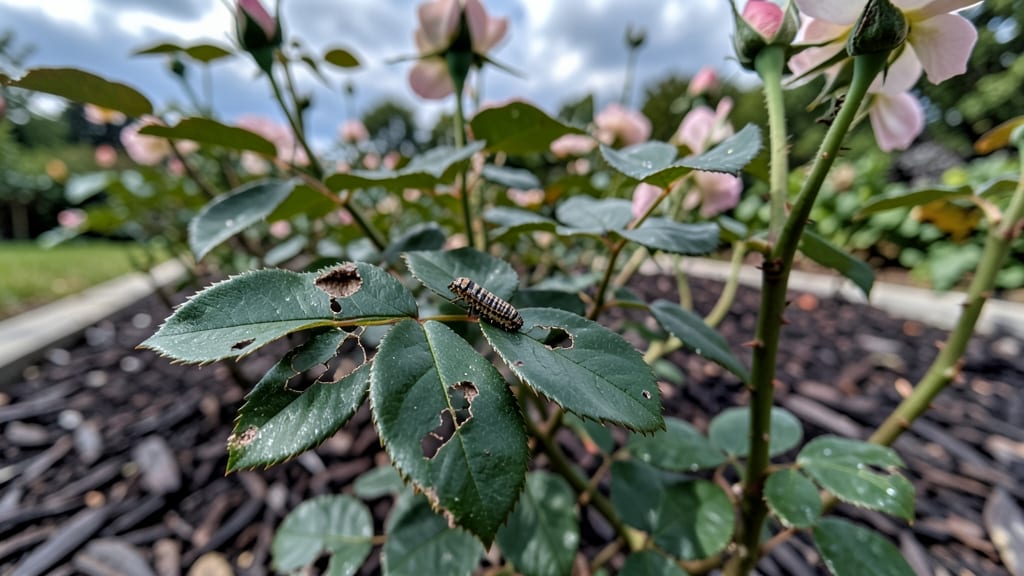
What causes holes in rose bush leaves can range wildly—from Japanese beetles to windburn—turning your prized plants into Swiss cheese overnight. The good news? Most causes have simple fixes once you know what’s chewing on your roses.
Start by checking the edges: ragged holes mean pests, while smooth cuts suggest wind or mechanical damage. Japanese beetles leave skeletonized leaves, while slugs create irregular slits. Even fungal infections can weaken leaves enough for holes to form. You’ll fix the problem faster if you act early.
Neem oil stops beetles, diatomaceous earth handles slugs, and pruning damaged stems keeps your roses healthy. Prevention is easier than cleanup—once you spot the pattern, you’ll catch it before next season. This guide covers all seven culprits, from pests to weather, with organic solutions that actually work.
Let’s get your roses back to full, hole-free glory.
The Hidden Culprits Behind Leaf Damage
When your rose bush leaves start looking like Swiss cheese, it’s rarely just bad luck—there’s usually a clear reason behind those pesky holes. Understanding why these holes appear is the first step to saving your roses.
Below, we break down the most common causes, from sneaky pests to environmental stress, with the science behind the damage.
Some of the most frustrating leaf holes come from insects that literally eat your roses. These pests don’t just nibble—they leave behind jagged edges, skeletonized leaves, or even chewed-out holes. Here’s who’s likely to blame:
🐞 Rose Slugs & Sawfly Larvae
- What they do: These caterpillar-like pests (not true slugs) skeletonize leaves, leaving behind a lace-like pattern of veins and holes. Sawfly larvae, in particular, cluster on new growth, while rose slugs (actual caterpillars) target older leaves.
- Why it happens: They feed on leaf tissue, excreting frass (tiny black droppings) as they go. Their chewing disrupts photosynthesis, weakening the plant.
- How to spot them: Look for green or brown, worm-like larvae (up to 1 inch long) on the undersides of leaves or along stems. Frass buildup is a dead giveaway.
🐛 Japanese Beetles
- What they do: These shiny, metallic-green beetles chew irregular, ragged holes along leaf edges, often starting at the top of the plant and working their way down.
- Why it happens: Adult beetles feed during the day, while their grubs (white, C-shaped larvae) attack roots in the soil. Their feeding triggers a plant stress response, making roses more susceptible to disease.
- How to spot them: Adult beetles are easy to see—look for half-moon-shaped notches in leaves and clusters of beetles on flowers.
🕷️ Spider Mites (Tiny but Devastating)
- What they do: While mites don’t create large holes, their stippling (tiny white or yellow dots) can turn leaves porous over time, making them prone to tearing.
- Why it happens: These microscopic pests suck plant sap, causing cells to die and creating weak spots. Severe infestations lead to leaf drop and holes from physical stress.
- How to spot them: Check the undersides of leaves for fine webbing and tiny moving dots (use a magnifying glass). Leaves may also appear bronze or speckled.
Not all leaf damage comes from chewing pests—some pathogens infect the plant, causing tissue to die and fall out, leaving holes behind. These issues thrive in warm, humid conditions and can spread quickly if left unchecked.
🍄 Black Spot Disease
- What it does: This fungal disease creates dark, circular spots with yellow halos that eventually develop holes as the infected tissue dies.
- Why it happens: The fungus Cercospora rosae thrives in wet, shaded conditions. It spores spread via wind, water, or tools, infecting leaves through stomata (tiny pores). The fungus blocks nutrient flow, causing cells to collapse.
- How to spot it: Look for black, velvety spots with feathery edges on upper leaf surfaces. Severe cases lead to premature leaf drop and holes where spots have fallen out.
🦠 Bacterial Leaf Spot
- What it does: Caused by Xanthomonas or Pseudomonas bacteria, this disease creates water-soaked spots that turn brown and papery, eventually falling out.
- Why it happens: Bacteria enter through wounds (like thorns or pruning cuts) or natural openings. They multiply in moist conditions, producing toxins that kill plant cells. Unlike fungi, bacteria spread via contaminated tools, rain splashes, or infected plant debris.
- How to spot it: Spots start yellow and greasy, then turn brown with a raised, crusty edge. Holes form as dead tissue sloughs off.
Sometimes, the problem isn’t alive at all—extreme conditions can physically damage leaves, making them vulnerable to holes from wind, hail, or even improper care.
🌪️ Wind & Hail Damage
- What it does: Strong winds or hail can tear leaves into irregular shapes, leaving behind jagged holes or shredded edges.
- Why it happens: Roses with thin, tender leaves (common in new growth) are especially susceptible. Wind also increases transpiration (water loss), stressing the plant and making it more prone to secondary infections.
- How to spot it: Look for uneven, torn edges without frass or webbing. Damage is often randomly distributed across the bush.
☀️ Heat & Sun Scorch
- What it does: Intense heat or direct sunlight can cause dry, brown patches that eventually turn into holes as tissue dies.
- Why it happens: Excessive sunlight leads to oxidative stress, where chlorophyll breaks down faster than the plant can replace it. Leaves may also curl or crisp, making them brittle and prone to tearing.
- How to spot it: Damage appears on sun-exposed leaves, often with brown, papery edges that crumble easily. It’s common in late summer when heat spikes.
💧 Overwatering & Poor Drainage
- What it does: Waterlogged soil leads to yellowing leaves with brown, mushy spots that can fall out, leaving holes.
- Why it happens: Overwatering suffocates roots, cutting off oxygen and nutrients. This triggers anaerobic conditions, where harmful bacteria thrive, rotting leaf tissue from the inside out.
- How to spot it: Check for soggy soil, wilting despite wet conditions, and leaves that feel soft or slimy. Holes may have a waterlogged, discolored ring around them.
Sometimes, well-meaning gardeners accidentally harm their roses with over-application of chemicals or improper techniques. Here’s how it happens:
💧 Herbicide or Fertilizer Burn
- What it does: Misapplied herbicides (especially glyphosate) or over-fertilizing can cause bleached, crispy patches that turn into holes as tissue dies.
- Why it happens: Chemicals disrupt cell membranes, causing cells to burst or dry out. Fertilizer burn occurs when salts accumulate in the soil, osmotically drawing water out of leaves until they collapse.
- How to spot it: Look for brown, necrotic patches with sharp edges (like a burn). It often starts on older leaves first.
🪒 Pruning Gone Wrong
- What it does: Aggressive pruning or cutting too close to the stem can leave jagged wounds that heal poorly, sometimes developing holes as tissue dies back.
- Why it happens: Pruning removes protective layers, exposing the plant to pathogens or environmental stress. Over-pruning also reduces the plant’s ability to photosynthesize, weakening leaves.
- How to spot it: Holes appear near pruning cuts** or along stems where branches were removed. The edges may look charred or uneven.
Quick Fixes for Hole-Riddled Rose Leaves
Now that you’ve identified the culprit behind those pesky holes in your rose bush leaves, it’s time to take action! 🚀 The good news? Most issues are fixable with the right approach.
Below, we’ve mapped out practical, step-by-step solutions for each common cause—plus prevention tips to keep your roses lush and healthy long-term.
Fix It Fast: 🔥 1. Handpick & Squish (For Japanese Beetles & Large Pests)
- When? Early morning or late evening when pests are sluggish.
- How? Fill a bucket with soapy water, then shake beetles or caterpillars into it. Wear gloves—no one wants a beetle buffet!
- Pro Tip: 💡 Check the undersides of leaves and new growth where beetles love to hide.
🍳 2. Spray with Insecticidal Soap or Neem Oil - Mix: 1 tbsp insecticidal soap or neem oil + 1 quart of water + a drop of dish soap (helps it stick). - Apply: Spray directly on pests (not just leaves) until damp.
Repeat every 3–5 days for severe infestations. - Why It Works: Breaks down pests’ protective wax layer, dehydrating them.
👨🍳 3. Introduce Beneficial Bugs
- Ladybugs, lacewings, and parasitic wasps eat aphids and beetle larvae. Buy them online or attract them with dill, fennel, or marigolds planted nearby.
🥘 4. Use Row Covers (For Beetles & Moths)
- When? During beetle peak season (June–August).
- How? Drape fine mesh netting over bushes. Secure edges with stakes or rocks.
Prevent Future Attacks: ✅ Prune regularly to remove infested leaves. ✅ Avoid over-fertilizing—soft new growth attracts pests. ✅ Plant pest-repelling herbs like basil, mint, or rosemary nearby.
Stop the Spread Now: 🔪 1. Prune & Dispose of Infected Leaves
- How? Cut off only the damaged parts (not whole branches) with sterilized pruners (wipe with rubbing alcohol).
- Dispose: Bag and trash infected leaves—do not compost them!
🌡️ 2. Improve Air Circulation
- Space bushes 3–4 feet apart.
- Thin out crowded canes to let sunlight and air reach the center.
- Avoid overhead watering—use a soaker hose or drip irrigation.
🎯 3. Apply Fungicide (Organic or Chemical)
- Organic Options:
- Baking soda spray: 1 tsp baking soda + 1 quart water + few drops of soap. Spray every 7–10 days.
- Copper fungicide (follow label instructions).
- Chemical Options: Chlorothalonil or myclobutanil for severe cases.
Prevent Recurrence: 💡 Water in the morning so leaves dry quickly. 💡 Mulch properly (2–3 inches of organic mulch) to prevent soil splashing. 💡 Choose resistant varieties like ‘Knock Out’ roses if fungal diseases are recurrent.
Repair & Protect: ⏰ 1. Trim Jagged Edges
- Use clean, sharp pruners to snip off ragged holes for a cleaner look.
- When? After storms or high winds.
🌿 2. Shield from Harsh Weather
- Windbreaks: Plant tall grasses, shrubs, or a fence to block strong winds.
- Hail protection: Cover bushes with frost cloth during hail forecasts (rare but possible in storm-prone areas).
Long-Term Care: ✨ Stake tall roses in windy areas to prevent flopping. ✨ Avoid pruning right before storms—new growth is more vulnerable.
Keep Critters Away: 🥕 1. Fence It In
- Height: At least 8 feet tall for deer, 2–3 feet for rabbits.
- Material: Hardware cloth (not chicken wire—animals can chew through it).
🌟 2. Use Repellents
- Spray-on repellents (like Liquid Fence) with capsaicin or garlic.
- Homemade mix: Blend hot peppers, garlic, and water, strain, and spray on leaves.
Alternative Tactics: 💡 Plant sacrificial crops (like lettuce) around roses to distract browsers. 💡 Motion-activated sprinklers startle animals away.
Keep Your Roses Thriving: 📊 1. Feed Smart
- Spring: Use a balanced fertilizer (10-10-10) to encourage strong new growth.
- Fall: Switch to a low-nitrogen, high-phosphorus fertilizer (like 5-10-10) to harden off plants for winter.
💪 2. Water Wisely
- Deep watering (1–2 inches per week) encourages deep roots.
- Avoid wetting leaves to prevent fungal growth.
🌱 3. Mulch Like a Pro
- Type: Wood chips or straw (keep 2–3 inches away from the stem).
- Why? Retains moisture, regulates soil temp, and deters pests.
Final Reminder: 🌟 Act fast—the sooner you treat the problem, the quicker your roses will bounce back! With these fixes, your bushes should be hole-free and flourishing in no time. 🌹
Frequently asked questions
Why do rose leaves get holes but no visible pests?
Holes without visible pests could mean spider mites (tiny, web-spinning critters) or environmental stress like wind damage. Check leaf undersides for fine webbing or stippling (tiny dots). If no pests, inspect for uneven edges—wind tears leaves randomly, while mites create porous, speckled damage.
Can overwatering really cause holes in rose leaves?
Yes! Overwatering creates waterlogged soil, suffocating roots and causing brown, mushy spots that fall out as holes. Look for soggy soil and leaves that feel slimy. Fix it by improving drainage and watering only when the top 1-2 inches of soil are dry.
How do I tell if holes are from pests vs. disease?
Pest holes have jagged edges with frass (droppings) or chewed patterns, while disease holes come from spots that fall out (like black spot fungus). Examine the hole’s edges: ragged = pests, smooth/crusty = disease. Prune infected leaves immediately and sterilize tools with rubbing alcohol.
Will neem oil work on all rose leaf pests?
Neem oil is effective against Japanese beetles, sawfly larvae, and spider mites, but it won’t kill slugs or deer. For slugs, use diatomaceous earth or beer traps. For deer, install 8-foot fences with hardware cloth. Always reapply neem oil every 7-10 days for best results.
Can I save my roses if most leaves are already full of holes?
Prune only the worst-damaged leaves (never more than 1/3 of the bush at once) and focus on strengthening the plant. Boost growth with balanced fertilizer, improve airflow, and protect remaining leaves with row covers if pests are severe. New growth will fill in quickly!