
Pruning
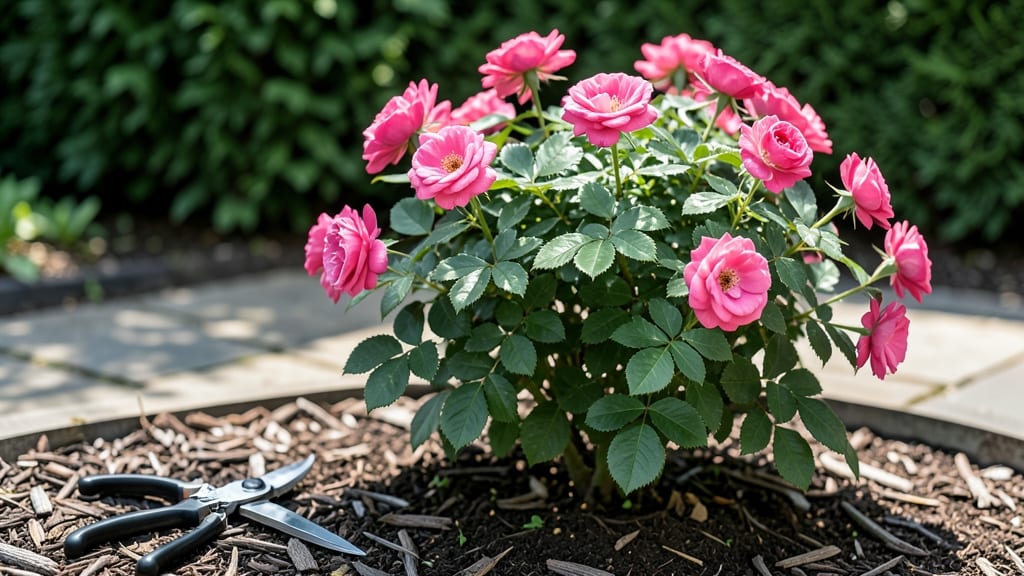
The best time to trim knockout roses is in late winter—just before new growth begins—as this promotes vigorous spring blooms while avoiding frost damage. Early spring trimming is acceptable but risks exposing tender shoots to cold snaps.
Timing your pruning matters because knockout roses thrive when you cut them at the right stage of dormancy. 🌱 Late winter—typically February in most climates—lets you trim just as buds begin swelling but before leaves appear, which encourages stronger stem development.
This approach also prevents frost from damaging fresh cuts. If you prune too early, you risk cutting healthy canes; too late, and you may encourage late-season growth that won't harden off before winter sets in.
For those in colder regions, wait until after the last hard frost but before bud break—usually when daytime temperatures consistently stay above 40°F. In warmer areas, aim for late winter to early spring before the first flush of leaves emerges.
The key is balancing plant resilience with the push for spring blooms, and knockout roses reward precise timing with abundant, long-lasting flowers.
💡 In This Article
- Why Late Winter Is Optimal for Knockout Rose Pruning
- Step-by-Step Late Winter vs Early Spring Pruning Guide
Why late winter is optimal for knockout rose pruning
Knockout roses enter a natural dormancy phase in late winter, a period when their metabolic activity slows dramatically. This dormancy is crucial because it allows the plant to conserve energy while preparing for the next growth cycle.
When you prune during this stage—typically between late January and early March in most USDA zones—you're cutting back just as the plant begins to wake up but before active growth starts.
This timing ensures you're removing dead or weak canes while leaving healthy buds intact to kickstart vigorous spring growth. 🌿
The biological mechanism here involves the plant's apical dominance—the tendency for the topmost buds to suppress growth lower on the stem. By removing old wood in late winter, you're eliminating these dominant buds and encouraging lateral buds to develop, which leads to bushier growth and more flower clusters.
Studies show that roses pruned at this stage can produce up to 30% more blooms compared to those pruned later in spring.
The key is to cut back to an outward-facing bud, which ensures new growth moves away from the center of the plant, improving air circulation and reducing disease risk.
Cold hardiness plays a critical role in this timing. Knockout roses are bred for disease resistance but still need protection from late frosts. Pruning too early (before 40°F daytime temps) exposes fresh cuts to frost, which can damage the plant's vascular system.
Conversely, waiting too long—until leaves appear—means you're cutting into new growth that hasn't yet hardened off, making the plant vulnerable to temperature swings.
The sweet spot is when buds begin to swell but remain firm to the touch, signaling the plant is ready to respond to pruning without risking cold damage. 🥶
Another factor is the plant's carbohydrate reserves. During dormancy, roses store energy in their roots and stems. Late winter pruning removes only the parts that won't regrow, preserving these reserves for new growth.
If you prune too late, you might be cutting into stems that are already using these reserves for early spring growth, weakening the plant. The ideal late-winter trim leaves about 1/3 to 1/2 of the plant's height, which balances bloom production with plant vitality.
Consider the climate variations: In Zone 7 (like Virginia or Missouri), aim for late February when daytime temps reach 50°F consistently. In colder Zone 5 (like Minnesota), wait until March after the last frost date.
The goal is always the same—prune when the plant is dormant but ready to wake, ensuring maximum bloom potential while minimizing stress. This precise timing is what makes knockout roses so reliable in gardens nationwide. 🌸
What most gardeners don't realize is that the angle of your cuts matters just as much as the timing. Always cut at a 45-degree angle, about 1/4 inch above an outward-facing bud. This angle prevents water from pooling on the cut, reducing rot risk.
The outward-facing bud ensures new growth moves away from the center, creating a more open plant structure that's easier to care for and produces more flowers. These small details make all the difference in how your roses perform throughout the season. ✨