
Flowers
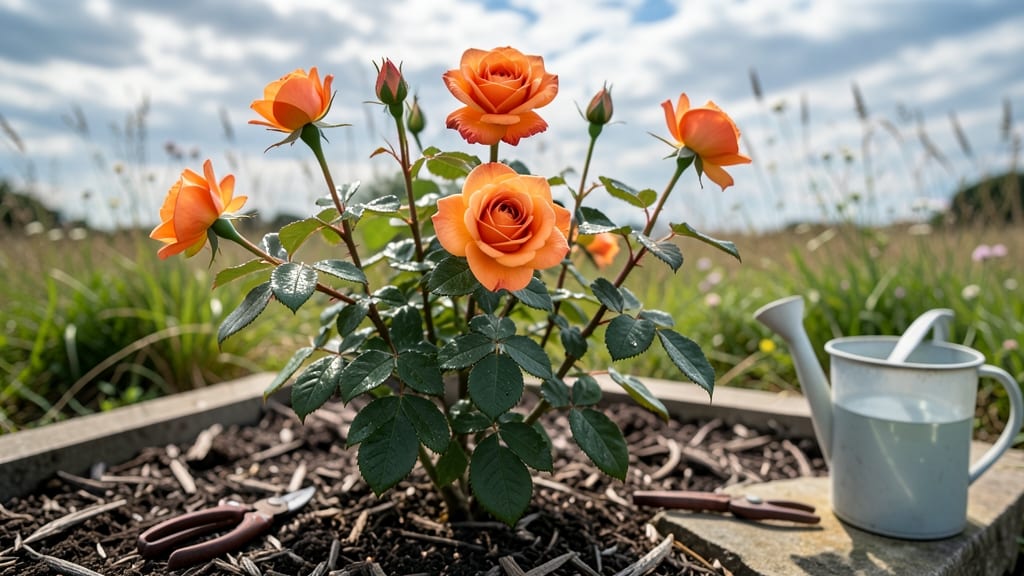
There are orange roses that range from peachy hues to deep coral tones, though pure bright orange roses are uncommon in nature. Popular hybrid varieties like 'Orange Triumph' and 'Orange Sensation' offer stunning color options for gardeners.
True orange roses are rare because nature favors red and yellow pigments separately, not their perfect blend. 🌸 Gardeners often achieve deeper orange shades through careful hybridization, combining yellow roses with hints of red.
These vibrant roses thrive in full sun and well-drained soil, making them perfect for summer gardens or bold bouquets. The 'Sunset Grapefruit' variety, for instance, produces striking coral blooms that last all season long.
For those seeking the brightest orange hues, floribundas like 'Orange Sensation' deliver abundant blooms with a cheerful pop of color. These varieties also pair beautifully with purple or white roses to create eye-catching color contrasts. Just remember that orange roses need consistent watering and occasional deadheading to encourage continuous flowering.
💡 In This Article
- Why True Orange Roses Are Rare in Nature
- Best Orange Rose Varieties for Gardens and Bouquets
Why true orange roses are rare in nature
Nature rarely produces a true bright orange rose because of how plant pigments work. Roses primarily contain two types of pigments: anthocyanins (responsible for reds and purples) and carotenoids (responsible for yellows and oranges). The challenge lies in combining these pigments in perfect balance to create that vivid orange hue.
Most roses lean heavily toward red or yellow, with orange shades appearing as a rare middle ground that requires precise genetic manipulation.
The science behind this involves how these pigments interact at the cellular level.
Anthocyanins thrive in acidic environments and produce deep reds, while carotenoids dominate in more neutral conditions, creating yellows. 🌸 For an orange rose, you need both pigments working together in specific concentrations—a balance that nature doesn't often achieve naturally.
This is why most "orange" roses you see are actually peach, coral, or salmon shades rather than the bright orange we associate with citrus fruits.
Gardeners and breeders have worked for decades to achieve deeper orange tones through selective hybridization. By cross-pollinating yellow roses with those containing subtle red undertones, they can coax out more intense orange hues.
For example, the 'Orange Triumph' hybrid tea rose was developed by carefully selecting parent plants that carried both yellow and red pigment traits. This process often takes multiple generations, as the desired color must be stabilized through consistent breeding.
Another factor is how sunlight affects pigment development. Roses exposed to full sun often develop more intense colors due to increased carotenoid production.
However, even with optimal growing conditions, achieving a true bright orange remains difficult because the genetic pathways for red and yellow pigments don't easily combine. 🌞 The result is that what we call "orange" roses are usually variations of peach, apricot, or coral—shades that are closer to nature's comfort zone.
Color stability also plays a role in why true orange roses are rare. Many hybrid roses that appear orange in bud often fade to pink or yellow as they mature.
Breeders must carefully select plants that maintain their color throughout the blooming cycle, adding another layer of complexity to creating a reliable orange variety. This selective process explains why only a handful of true orange roses exist today, despite the demand for bold, eye-catching colors in gardens.
For those who want to grow orange roses, understanding this pigment science helps set realistic expectations. While you might not find a rose that matches a ripe orange fruit, varieties like 'Sunset Grapefruit' and 'Orange Sensation' come remarkably close.
These hybrids represent years of careful breeding to bridge the gap between nature's limitations and our desire for vibrant garden colors.