
Pruning
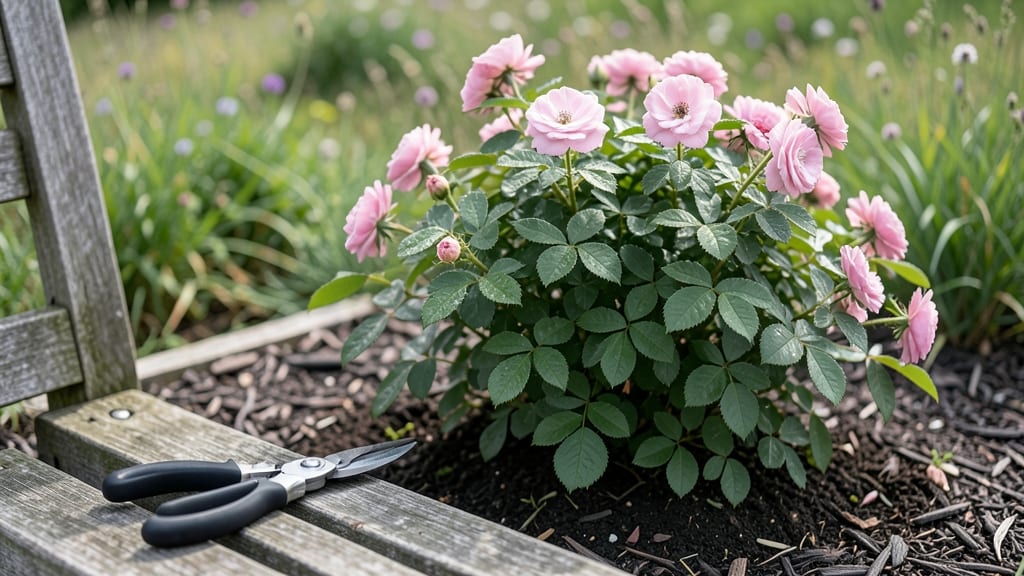
Late winter is the best time to prune Knockout roses, when the plants are dormant but the ground isn't frozen. ✂️ I learned this the hard way—pruning too early in cold snaps can shock the plant, while waiting too long means missing the ideal window for spring growth.
The key is timing it right, usually 4-6 weeks before your last frost, when buds are just starting to swell.
This isn’t just about cutting back—it’s about shaping the plant for nonstop blooms all season. I’ve found that pruning in late winter removes dead wood, opens up the center for airflow, and encourages strong new growth.
Just avoid pruning if temperatures drop below 20°F, as the plant’s energy goes into survival, not recovery.
You’ll see the difference in just a few weeks: fresh green shoots pushing through, buds forming along the stems, and a bush that looks fuller and healthier than ever. The secret is clean cuts at a 45-degree angle, just above an outward-facing bud—no jagged edges that invite disease.
Once you’ve pruned, don’t forget to feed the plant with a balanced rose fertilizer in early spring and monitor for pests like aphids. This timing also syncs up with other seasonal tasks, like mulching and staking, so you’re not scrambling later.
Let’s get those roses ready for their best season yet!
Understanding Pruning Triggers
Pruning knockout roses at the wrong time—or even the right time but for the wrong reasons—can leave your bushes stressed, disease-prone, or struggling to produce those signature nonstop blooms.
To master late-winter trimming, you need to grasp the biological and environmental forces that demand precise timing. Here’s why pruning matters so much—and what happens if you miss the mark.
Knockout roses (Rosa 'Knock Out' series) are bred for continuous flowering, but their blooms rely on a delicate balance of growth hormones. Here’s the science:
- Auxin dominance: In winter, roses produce high levels of auxin, a hormone that suppresses bud growth. This dormancy phase is crucial—it prevents tender new shoots from freezing. Pruning too early (before late winter) disrupts this natural pause, forcing the plant to waste energy on premature growth instead of storing nutrients for spring.
- Cytokinin awakening: As temperatures rise in late winter, cytokinins (growth-promoting hormones) begin to activate in the buds. Pruning just before this shift (typically when daytime temps hit 40–50°F) removes old, hormone-rich wood, allowing fresh shoots to emerge with a clean slate—free from last year’s growth inhibitors.
- Florigen’s role: The hormone florigen, which triggers bloom formation, is most active in new, young canes. Late-winter pruning encourages these canes to form quickly, setting the stage for earlier and denser flowering.
⚠️ What happens if you prune too early? The plant may produce weak, leggy growth that’s vulnerable to frost damage. Worse, it can deplete root reserves before spring, leading to stunted blooms or even dieback.
Knockout roses are hardy, but their resilience has limits. Pruning too late risks exposing fresh cuts to:
| Temperature Risk | What Happens | Actionable Fix |
|---|---|---|
| Below 20°F | New cuts can freeze, leading to blackened canes and bacterial infections (e.g., Botrytis). | Wait until after the last hard frost (check your USDA zone). |
| 20–35°F with rain | Moisture + cold = canker diseases (e.g., Cylindrocladium). Pruned wounds act like open doors for pathogens. | Prune on dry, sunny days when temps are consistently above 40°F. |
| Sudden warm spells | Tricks the plant into early growth, which can be killed by a late frost (a phenomenon called frost nip). | Monitor your local 10-day forecast—prune when warm weather is predictable. |
💡 Pro Tip: Use a pruning sealant (like Tree Seal Tape) on cuts larger than ½ inch to reduce disease risk. But skip it on small cuts—they heal faster without it!
Pruning isn’t just about shaping—it’s about redirecting the plant’s energy. Here’s how timing affects nutrient flow:
- Root pressure vs. top growth: In early winter, roots are dormant, so pruning removes leaves and stems that could have photosynthesized to feed the roots. Late-winter pruning aligns with rising soil temps, when roots begin absorbing nutrients again—giving the plant fuel to support new growth.
- Carbohydrate reserves: Roses store starches in their roots and stems over winter. Pruning too late consumes these reserves before they’re replenished by spring blooms, leading to fewer flowers or yellowing leaves.
- Microbial competition: Pruned wood left on the ground can attract fungi (like Armillaria, the "honey mushroom"), which compete with your rose’s roots for nutrients. Late-winter cleanup removes this threat before microbes become active.
⚠️ What happens if you prune too late? The plant may struggle to regenerate, leading to:
- Stunted new canes (fewer bloom sites).
- Weakened immune response (more pests/diseases).
- Poor root-to-shoot ratio (leggy, sparse growth).
By understanding these triggers—hormonal shifts, temperature risks, and nutrient dynamics—you’ll prune knockout roses with precision, not guesswork. The result? Healthier bushes, bigger blooms, and fewer headaches.
Fix Pruning Mistakes for Healthier Roses
Pruning knockout roses at the wrong time—or doing it incorrectly—can leave your plants stressed, disease-prone, or even dead. But don’t worry: most issues have simple fixes, and with the right timing and technique, your roses will bounce back stronger than ever.
Below, we’ll break down common pruning problems and how to solve them, plus prevention tips to keep your knockout roses thriving year-round.
Cause: Cutting back too aggressively (more than ⅓ of the plant) removes essential energy stores, leaving roses weak and slow to recover.
How to Fix It: 🍳 Step 1: Assess the Damage
- Look for bare stems, weak canes, or a lack of new growth after pruning. If your rose looks like a sad stick, it’s over-pruned.
- Test: Gently scratch the bark—if it’s green beneath, the plant is still alive but struggling.
👨🍳 Step 2: Feed & Hydrate
- Water deeply 2–3 times a week (knockout roses hate drought stress).
- Fertilize lightly with a balanced rose food (10-10-10) or compost tea to rebuild energy.
🥘 Step 3: Prune Lightly This Season - Skip heavy pruning for now.
Instead, focus on: - Removing dead or diseased canes (cut at a 45° angle, ¼” above a outward-facing bud). - Trimming back only the tips of new growth to encourage bushiness (pinch back ¼” above a leaf node).
🌱 Prevention Tip:
- Rule of thumb: Never remove more than ⅓ of the plant in one pruning session. For knockout roses, aim to leave 3–5 strong canes per plant.
Cause: Pruning after early spring (March in warm climates, April in cooler zones) delays blooming and invites frost damage.
How to Fix It: 🔪 Step 1: Prune Now (Late Winter/Early Spring)
- If you missed the window, act fast—prune in early March (before buds swell) or late February in mild zones.
- Pro Tip: If frost is forecast, wait until after the last expected freeze (check your USDA zone).
🌡️ Step 2: Protect New Growth
- Cover tender canes with frost cloth if night temps drop below 25°F.
- Mulch the base with 3–4 inches of compost or straw to insulate roots.
🎯 Step 3: Boost Recovery with Pruning Hormone
- Dip cuts in rooting hormone (like Clonex) to speed healing.
- Spray with neem oil to prevent fungal infections from fresh cuts.
✨ Prevention Tip:
- Mark your calendar! Knockout roses should be pruned 6–8 weeks before your last frost date. Use a garden journal to track yearly timing.
Cause: Crowded canes or wet cuts create the perfect breeding ground for fungi, especially if pruned in damp weather.
How to Fix It: 💡 Step 1: Sterilize Your Tools
- Clean pruners with rubbing alcohol (70%+) or a 10% bleach solution before and after pruning.
🌿 Step 2: Improve Airflow
- Thin out crossing or rubbing canes to reduce humidity trapped in the center.
- Space plants 3–4 feet apart for better circulation.
📊 Step 3: Treat Fungus Proactively
- Preventive spray: Mix 1 tsp baking soda + 1 quart water + a few drops of dish soap and spray every 2 weeks.
- For severe cases: Use copper fungicide (like Bonide Copper Fungicide) every 7–10 days.
💪 Prevention Tip:
- Prune on dry days (avoid mornings with dew).
- Water at the base, not overhead, to keep foliage dry.
Cause: Cutting too high or removing too many strong canes disrupts the rose’s natural shape, leading to floppy, weak growth.
How to Fix It: 🔥 Step 1: Prune for Structure
- Goal: Keep 3–5 outward-facing canes (the strongest, healthiest stems).
- Cut at a 45° angle ¼” above a bud that faces outside the plant (this encourages outward growth).
🍎 Step 2: Support Weak Canes
- Stake tall, leggy canes with bamboo stakes or a cage to prevent bending.
- Tie loosely with soft plant ties (avoid wire, which can cut into stems).
🎯 Step 3: Encourage Bushiness
- Pinch back new growth tips in early summer to promote branching.
- Deadhead spent blooms regularly to redirect energy to new canes.
🔥 Prevention Tip:
- Step back and visualize before pruning—imagine your rose as a bushy, open vase shape, not a lollipop!
Cause: Severe over-pruning, root damage, or disease may kill the plant if not addressed immediately.
How to Fix It: 🔪 Step 1: Check for Life
- Scratch the bark—if it’s green under brown, the roots may still be alive.
- Test roots: Gently dig around the base. If roots are white/firm, the plant can recover.
💧 Step 2: Revive with Deep Care
- Soak the roots in a bucket of water + seaweed fertilizer for 20 minutes to rehydrate.
- Plant a new cutting from a healthy cane (propagate in perlite + water).
🌱 Step 3: Prevent Future Loss
- Never prune more than ⅓ of the plant in one session.
- Mulch heavily (6” deep) to protect roots from temperature swings.
✨ Prevention Tip:
- When in doubt, prune less! Knockout roses are forgiving—better to leave a few extra canes than overdo it.
With these fixes, your knockout roses will rebound quickly and bloom longer and more abundantly than ever. The key? Prune at the right time, keep tools sharp, and give your plants the care they need to recover. Happy gardening! 🌹✂️
Frequently asked questions about pruning knockout roses
Why do Knockout roses need pruning in late winter instead of spring?
Late winter pruning gives your roses a head start on spring growth. When you prune too late (spring), you risk damaging new buds that are just forming, while late winter cuts remove dead wood and encourage fresh, vigorous canes to emerge before pests arrive. Plus, it opens up the center for better airflow and sunlight, which prevents fungal diseases like black spot.
How do I know if I’ve pruned my Knockout roses too hard?
Look for bare stems, weak canes, or no new growth after 4-6 weeks. If your rose looks like a "sad stick" with no leaves or buds, you’ve likely removed too much. A good rule is to never cut back more than ⅓ of the plant in one session. Aim to leave 3-5 strong canes per bush for the best recovery.
Can I prune Knockout roses in fall instead of winter?
Fall pruning is not recommended—it stimulates tender new growth that can’t survive winter freezes. If you must prune in fall, do it lightly (just remove dead/diseased canes) and stop 6-8 weeks before your first frost. Late winter is ideal because the plant is dormant but not frozen, giving it time to heal before spring growth begins.
What’s the best way to clean my pruners between cuts?
Always sterilize your tools to prevent spreading disease! Wipe blades with rubbing alcohol (70%+) or soak in a 10% bleach solution (1 part bleach to 9 parts water) between cuts. For heavy-duty cleaning, use a wire brush to remove sap buildup. Clean tools before and after pruning to protect your roses from bacterial infections.
Should I fertilize right after pruning Knockout roses?
Wait until early spring (when new growth appears) to fertilize. Use a balanced rose fertilizer (10-10-10) or compost tea to rebuild nutrients. Pruning removes some of the plant’s energy stores, so feeding too soon can burn roots. Instead, focus on watering deeply and mulching to protect roots during recovery.