
Flowers
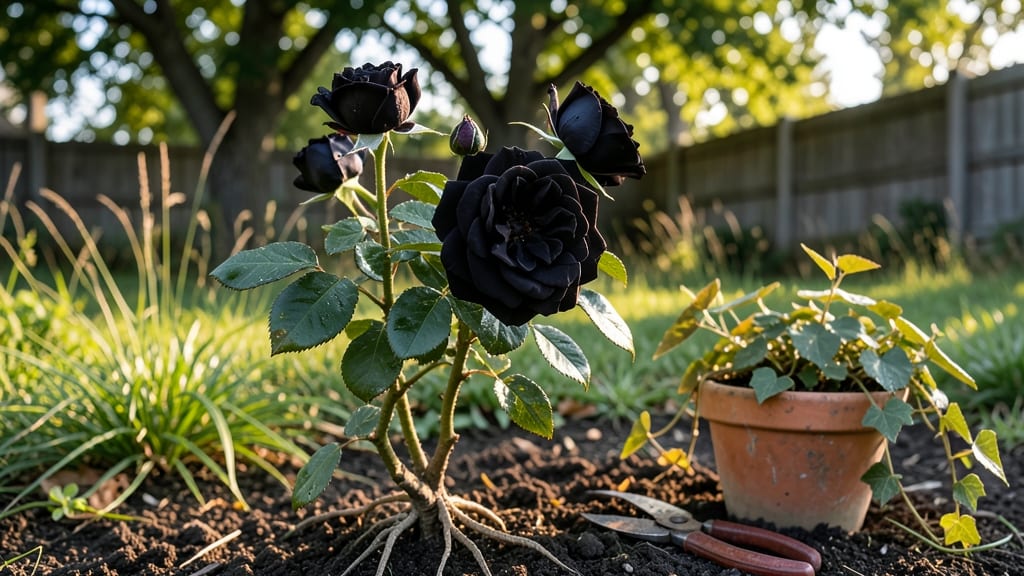
Black dahlia roses bring drama to any garden with their velvety petals and deep, mysterious hue. 🌹 These striking blooms aren’t just a statement—they’re a conversation starter that transforms even a simple border into a showstopper.
Their rich color pairs beautifully with silver foliage, purple blooms, and soft greens, creating a moody yet elegant contrast.
For maximum impact, plant them where they’ll be the focal point—along pathways, near seating areas, or as a dramatic backdrop for lighter flowers. In containers, they’ll draw eyes to patios or entryways, while in borders, they’ll anchor a romantic or dark-themed garden.
Just remember: their bold presence works best when balanced with softer textures to avoid overwhelming the space.
📚 In This Guide
- What you need
- Instructions
- Tips and common mistakes
- Wrapping up and next steps
What you need
- ● Black Dahlia Rose Tubers: 3–5 high-quality tubers (look for ‘Black Dahlia’ or ‘Black Baccara’ varieties for the darkest petals).
- ● Well-draining potting mix: 5–10 gallons (depending on container size), blended with perlite or coconut coir for aeration.
- ● Containers or garden bed: Containers: 12–18" deep pots with drainage holes (1 per tuber).
- ● Garden beds: Full sun (6+ hours daily), loose, fertile soil with a pH of 6.0–7.0.
- ● Slow-release fertilizer: 1 cup (8 oz) of 10-10-10 or rose-specific granules per container/bed.
- ● Mulch: 2–3 inches of shredded bark or straw to retain moisture and regulate temperature.
- ● Garden trowel or transplant spade (for digging/planting).
- ● Pruning shears (sterilized with rubbing alcohol).
- ● Watering can or hose with gentle spray nozzle (avoid soaking tubers).
- ● Gloves (to protect hands from thorns and soil).
- ○ pH testing kit (optional but helpful for soil adjustments).
- ● Epsom salt (1 tbsp/month for magnesium boost).
- ● Rose-specific liquid fertilizer (for mid-season feeding).
- ● Cage or trellis (to support tall stems, especially in containers).
- ● Black or dark-colored mulch (enhances the dramatic color contrast!).
Step-by-step guide to growing black Dahlia roses
Here's how to cultivate these dramatic blooms with rich, velvety petals that command attention.
🌱 Step 1: Select and Prepare Tubers for Planting
Black Dahlia roses grow from dormant tubers, not seeds. Choose healthy, firm tubers with multiple "eyes" or growth nodes. Soak them in lukewarm water for 6-8 hours to rehydrate and encourage root growth. You'll see the eyes plump up and turn slightly green—this is your signal they're ready to plant.
After soaking, inspect each tuber carefully. Discard any that feel mushy, have mold, or lack growth nodes. Use a sharp knife to trim away any damaged areas, leaving clean cuts. This prevents rot from spreading once planted. I like to treat the cut surfaces with a bit of cinnamon powder for natural antifungal protection.
☀️ Step 2: Plant in Well-Draining Soil with Full Sun
Black Dahlia roses thrive in full sun (6-8 hours daily) and soil that drains quickly but retains moisture. Mix the 3 gallons of premium potting mix with 1 cubic foot of perlite or coarse sand to improve drainage. These roses hate soggy roots, which leads to tuber rot.
Plant tubers 2-3 inches deep, with the eyes facing upward. Space them 18-24 inches apart to allow for their dramatic, bushy growth. Water immediately after planting to settle the soil around the tubers. You'll know you've done it right when the soil surface looks slightly firm but still loose enough to push a finger into.
💧 Step 3: Water and Fertilize for Strong Growth
Keep the soil consistently moist but never waterlogged during the growing season. Water when the top 2 inches of soil feel dry, which typically means 2-3 times per week depending on your climate. Black Dahlias are heavy feeders, so mix 1 tablespoon of balanced 10-10-10 fertilizer into the soil at planting, then apply a liquid fertilizer every 4-6 weeks during active growth.
Watch for new shoots emerging from the soil surface—this usually happens within 4-6 weeks of planting. Once shoots reach 6 inches tall, you can begin staking them. These roses grow tall and top-heavy, so use 3-4 foot stakes tied loosely with soft twine to support the stems without restricting growth.
✂️ Step 4: Prune and Deadhead for Continuous Blooms
Pinch back the first set of true leaves when the plant reaches 12 inches tall to encourage bushier growth. This is where you'll see the plant start to branch out—it's a critical step for getting those lush, velvety blooms. Remove any weak or leggy stems immediately to redirect the plant's energy toward stronger growth.
Deadhead spent blooms by cutting back to the nearest set of healthy leaves. This encourages the plant to produce more flowers instead of focusing on seed production. I like to do this on a cloudy day or in the late afternoon to reduce stress on the plant. You'll notice new buds forming within 2-3 weeks after deadheading.
🪴 Step 5: Prepare for Winter Dormancy and Storage
When frost threatens, cut the stems back to 2 inches above the soil line and leave the tubers in the ground if your climate allows. In colder regions, carefully dig up the tubers, shake off excess soil, and cure them in a dry, dark place for 2-3 weeks. This helps them enter dormancy properly.
Store the cured tubers in a cool (40-50°F), dry place with good air circulation. I use a mesh bag with a bit of peat moss to keep them from drying out completely. Label each tuber with the variety—after a few seasons, they all start to look alike! With proper storage, your Black Dahlia roses will be ready to plant again next spring, producing even more dramatic blooms.
Tips & tricks for growing black Dahlia roses
These expert insights will help you cultivate dramatic, velvety blooms that thrive season after season.
Soaking Success: The 6-8 hour soak is your first critical step—don't rush it! Use lukewarm water (around 70°F) to encourage root growth without shocking the tubers. I've found that adding a pinch of sea salt to the soaking water helps prevent bacterial growth while the tubers rehydrate. After soaking, gently squeeze each tuber to check for excess moisture—damp but not dripping is ideal. This prevents rot during planting.
Soil Mix Matters: The combination of 3 gallons premium potting mix with 1 cubic foot perlite creates the perfect balance for Black Dahlias. I recommend adding a handful of worm castings to this mix for extra nutrients. These roses are particularly sensitive to soggy roots, so if your soil drains too slowly, consider adding an additional 1/2 cubic foot of coarse sand. Test your mix by filling a container, watering it, and checking drainage—water should flow through within 10-15 minutes.
Planting Depth Visual: When planting tubers 2-3 inches deep, use your knuckles as a guide—they're typically about 2 inches across. Position the eyes slightly above the soil line (about 1/2 inch) to ensure they'll emerge above ground. I've learned the hard way that burying them too deep can prevent proper sprouting. After planting, give the soil a gentle press with your hand to ensure good tuber-soil contact without compacting it too tightly.
Fertilizer Timing: The initial 1 tablespoon of 10-10-10 fertilizer at planting provides essential nutrients, but the 4-6 week liquid fertilizer schedule is where you'll see dramatic results. I've found that applying a weak solution (half-strength) every 3 weeks works better than full-strength every 6 weeks—this prevents fertilizer burn while maintaining consistent growth. Always water thoroughly before and after applying liquid fertilizer to help distribute nutrients evenly.
Pro Tips for Black Dahlia Roses
- These expert insights will help you cultivate dramatic, velvety blooms that thrive season after season.
- Soaking Success: The 6-8 hour soak is your first critical step—don't rush it!
- Soil Mix Matters: The combination of 3 gallons premium potting mix with 1 cubic foot perlite creates the perfect balance for Black Dahlias.
Frequently asked questions
about growing and caring for black dahlia roses—because even the darkest blooms need a little light!What’s the best time to plant black dahlia roses?
Plant them in early spring after the last frost when soil temps reach at least 60°F (15°C). If using tubers, wait until 2-3 weeks before the last frost to ensure they sprout before cold snaps. In warmer climates, fall planting (6-8 weeks before first frost) also works!
Are black dahlia roses truly black, or is that just a trick of the light?
They’re deep burgundy or near-black in full sun, but their true color is a rich velvety maroon! The "black" effect comes from their ultra-dark petals and how they absorb light. For the darkest look, plant them in full sun (6+ hours/day) and pair with lighter foliage to make them pop.
How often should I water black dahlia roses?
Water them deeply 1-2 times per week, aiming for 1-2 inches of water per session. Mulch around the base (2-3 inches) to retain moisture and prevent soil temperature swings. Avoid wetting the foliage to reduce fungal risks like black spot—water at the soil line instead!
Do black dahlia roses survive winter, or do I need to dig them up?
In USDA Zones 8-10, they’re perennial and can overwinter with heavy mulch. For colder zones (below Zone 7), dig up tubers in fall, trim stems, and store in dry peat moss or sand at 35-45°F (2-7°C) until spring. Pro tip: Label your tubers to avoid mix-ups!
What flowers pair well with black dahlia roses for a dramatic look?
Try these striking combos for contrast:
- White or pale pink dahlias – Creates a "moonlit" effect.
- Silver foliage plants (like Artemisia) – Makes dark blooms stand out.
- Bright yellow or orange marigolds – Adds warmth to cool tones.
- Lavender or purple salvia – Enhances the "mystical" vibe.
Why are my black dahlia roses wilting or getting brown spots?
Common culprits:
- Underwatering – Soil should stay evenly moist but not soggy.
- Overwatering/fungal issues – Brown spots = black spot or powdery mildew. Prune affected leaves and space plants for airflow.
- Pests – Check for aphids or Japanese beetles; blast off with water or use neem oil.
- Heat stress – Wilting in hot weather? Mulch thicker and water early morning.
Wrapping up and next steps
Black Dahlia roses are more than just a stunning floral masterpiece—they’re a symbol of mystery, elegance, and passion. Whether you’re crafting them for a romantic gesture, a bold centerpiece, or a creative project, these velvety petals bring drama and depth to any space.
Now that you’ve mastered the techniques and troubleshooting tips, it’s time to let your creativity bloom! 🌹✨
Ready to take the next step? Experiment with color variations, mix textures, or even create a full bouquet. Share your masterpiece with the world—your unique touch could inspire others to dive into the magic of black Dahlia roses too!