
Flowers
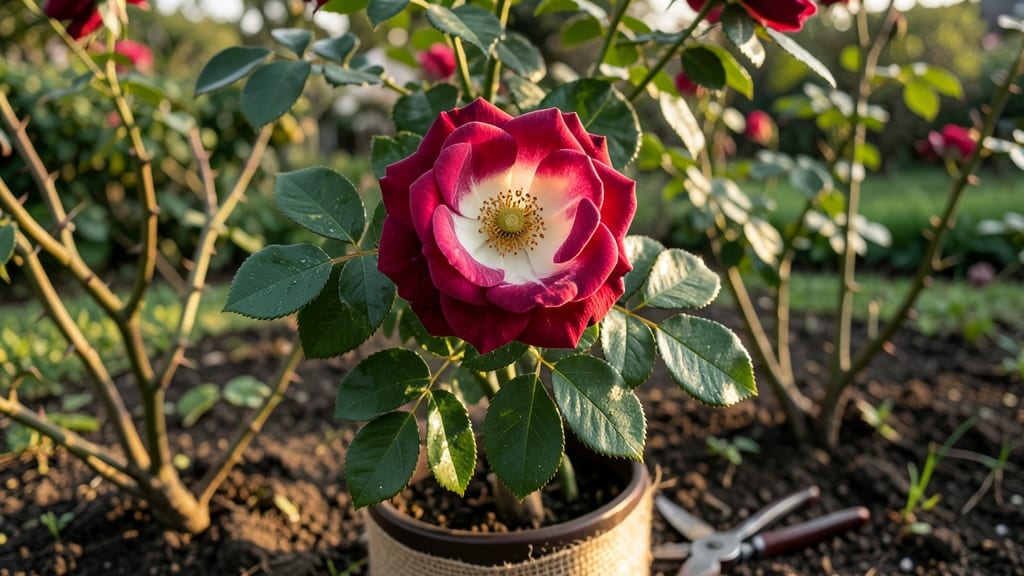
The center of a rose is called the rose bloom’s reproductive core, where the stamens (male reproductive parts) and pistil (female reproductive part) work together. This central structure produces seeds and pollen, playing a crucial role in the rose's ability to reproduce and maintain its species characteristics.
The center of a rose isn't just decorative—it's the heart of the flower's life cycle. 🌹 The stamens (those slender yellow or red filaments) produce pollen, while the pistil (the central green structure) receives it to create seeds.
This reproductive hub determines whether your rose will rebloom or fade. Understanding this core helps gardeners time pruning for maximum blooms and recognize healthy growth patterns.
Different rose varieties show this center in unique ways: hybrid teas often have tightly packed stamens, while climbers may display more exposed pistils. The ovary at the base of the pistil eventually becomes the rose hip, packed with vitamin C-rich seeds.
When pruning, focus on removing spent centers—this redirects the plant's energy toward new growth and vibrant blooms.
💡 In This Article
- Botanical Anatomy of a Rose’s Central Core
- Identifying Rose Centers for Pruning and Gardening
Botanical anatomy of a rose’s central core
The rose's central core is a marvel of botanical engineering, where reproduction happens through a precise interplay of structures. At its heart lies the pistil, the female reproductive organ, which consists of the stigma (pollen-catching surface), style (a slender tube), and ovary (where fertilization occurs).
Surrounding the pistil are the stamens—typically 50-200 per bloom—each topped with a pollen-producing anther on a filament. Hybrid tea roses often have tightly clustered stamens, while climber varieties like 'New Dawn' may display more exposed reproductive parts.
Here's how the process works: When pollen lands on the stigma, it travels down the style to fertilize the ovules inside the ovary.
This fertilization triggers seed development while the ovary matures into a rose hip, packed with vitamin C-rich seeds. 🌱 The stamens' pollen production peaks in the morning, which is why bees and other pollinators are most active during these hours. This timing ensures optimal pollination chances for the flower.
The ovary's position at the base of the pistil is crucial—it protects developing seeds while positioning them for easy dispersal when the hip matures.
What makes this anatomy fascinating is how it varies by rose type. Hybrid teas, bred for large blooms, often have double flowers where stamens are reduced or transformed into petal-like structures, making them less fertile.
In contrast, wild roses like the Rosa rugosa have open centers with abundant stamens and pistils, maximizing their reproductive potential. 🌺 This structural diversity explains why some roses bloom profusely while others produce fewer, larger flowers—it's all about how their reproductive centers are designed to balance showiness with fertility.
The ovary's transformation into a rose hip is particularly interesting. After fertilization, the ovary swells into a bright red or orange fruit containing hundreds of tiny seeds. Each seed carries the rose's genetic blueprint, allowing it to propagate through birds that eat the hips and disperse the seeds.
This dual-purpose structure—both reproductive and nutritious—shows nature's efficiency in combining functions within a single part. The hip's high vitamin C content also suggests an evolutionary adaptation to support animal dispersal in colder climates.
For gardeners, understanding this anatomy explains why some roses need more careful pollination. Cut-flower varieties with heavily doubled blooms may require hand-pollination to set hips, while open-centered roses rely on natural pollinators.
This knowledge helps explain why your prized hybrid tea might not produce hips—its reproductive focus is on showy blooms rather than seed production. 🌿 The balance between petal count and reproductive structures defines each rose's unique growing habits and care requirements.
Consider these key reproductive structures when selecting roses:
- Stamens: Typically 50-200 per bloom, producing pollen that must reach the stigma
- Pistil components: Stigma (pollen receiver), style (pollen conduit), ovary (seed producer)
- Ovary development: Transforms into rose hips containing 50-100 seeds each
- Pollination timing: Peak activity occurs between 8-10 AM when pollen is most viable