
Blooming
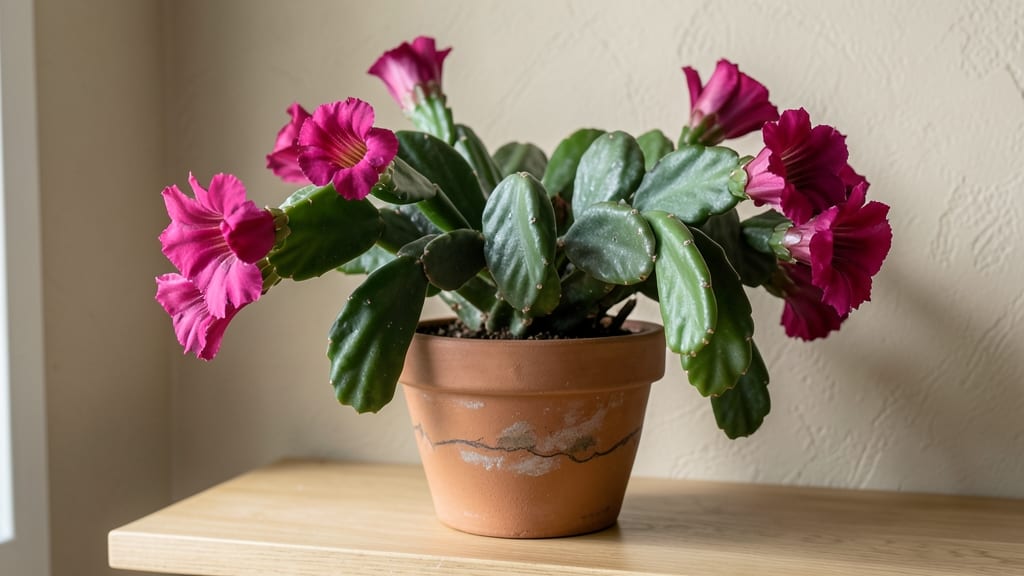
The Christmas cactus bloom time is a magical moment when days grow short and nights stretch long—typically from late November through January. 🌟 I’ve watched mine burst into vibrant reds and pinks every holiday season, and the secret isn’t magic—it’s light control.
These plants read the calendar through daylight hours, so timing your care is everything.
To trigger blooms, move your plant to a spot with 12-14 hours of darkness starting in early October. Cool temperatures (around 55-65°F) and bright indirect light during the day do the rest.
Most people overlook the darkness requirement, which is why their cactus holds onto buds or never blooms at all.
You’ll see buds form in 6-8 weeks, followed by flowers that last for weeks. The key is consistency—keep watering light (never soggy) and avoid drafts. Even a single night of warm air can delay blooming, so patience is your best tool.
If your cactus skips blooming, it’s usually a sign of too much light or inconsistent care. Next year, treat it like a seasonal star: dim the lights, stay patient, and enjoy the show when it arrives—right on schedule.
📚 In This Guide
- What you need
- Instructions
- Tips and common mistakes
- Wrapping up and next steps
What you need
- ● Christmas cactus plant – A healthy, mature plant (3+ years old) with at least 4-6 segments (flat, paddle-like leaves). Pro tip: Look for buds or early signs of growth! 🌱
- ○ Bright, indirect light source – A south- or east-facing window, or a grow light (10,000–15,000 lux, 12–14 hours/day). Optional: A timer for consistency! ⏱️
- ● Watering can or spray bottle – With a narrow spout to avoid overwatering. Note: Bottom-watering trays work too!
- ● Well-draining potting mix – A blend of 50% peat moss, 30% perlite, and 20% coarse sand (or a pre-mixed cactus/succulent mix). Skip the heavy garden soil! 🚫
- ○ Thermometer/hygrometer – To monitor temps (ideal: 60–70°F (15–21°C)) and humidity (40–50%). Optional: A humidifier for dry climates. 🌡️
- ● Fertilizer – A balanced liquid fertilizer (10-10-10 or 20-20-20), diluted to half-strength. Use sparingly! 💧
- ● Grow light kit – LED or fluorescent (e.g., Sylvania Gro-Lux) for low-light setups.
- ● Misting spray bottle – For maintaining humidity during bloom triggers.
- ● Plant food booster – Phosphorus-rich fertilizer (e.g., 5-10-5) to encourage budding.
- ● Decorative pot with drainage holes – Terracotta or ceramic (12–16 inches wide) to complement your holiday decor!
- ● Plant labels – To track watering/light schedules if you’re experimenting with multiple triggers.
How to time your Christmas cactus blooms using light
Here's the light-based trick I've used for years to get vibrant blooms every December.
☀️ Step 1: Understand Your Plant's Natural Light Needs
Christmas cacti need 12-14 hours of darkness daily for 6-8 weeks before blooming. This mimics their natural short-day cycle in the Brazilian rainforest. Place your plant in a spot with bright, indirect light during the day—think east or north-facing windows. Direct afternoon sun can scorch the leaves, so avoid south-facing windows.
Watch for color changes in the pads: healthy ones stay deep green with slight red-purple edges. If they turn pale or stretch toward the light, move it closer to the window. The key is finding that balance—enough light for growth but no harsh rays.
⏰ Step 2: Start the Darkness Treatment 6-8 Weeks Before Desired Bloom
For December blooms, begin the 14-hour dark period in early October. Place your plant in a dark closet, under a box, or use a blackout curtain from 5 PM to 7 AM. No peeking! Even a flashlight can disrupt the process. I cover mine with a dark towel secured with a rubber band for easy access.
You'll notice the first signs of change after 3-4 weeks—the pads will start developing pink or purple buds along the edges. This is your plant's way of saying, "I'm getting ready!" Keep the routine consistent, and you'll see full blooms right on schedule.
🌱 Step 3: Adjust Light During the Bloom Period
Once buds form, reduce the darkness to 12 hours (8 PM to 8 AM). This helps the flowers open fully and last longer. Keep the plant in bright, indirect light during the day—just avoid temperature swings. Christmas cacti hate drafts, so keep them away from doors or AC vents.
Water lightly during this phase—just enough to keep the soil slightly moist but never soggy. Overwatering now can cause buds to drop. I use the finger test: stick your finger an inch into the soil. If it's dry, water; if it's damp, wait a day.
💧 Step 4: Maintain Post-Bloom Care for Next Year
After blooming, let the plant rest. Reduce watering to once every 2-3 weeks and keep it in moderate light (no direct sun). This helps it store energy for next year's flowers. In late spring, you can fertilize lightly with a balanced houseplant food to encourage new growth.
This is also the time to rotate the pot a quarter turn weekly so the plant grows evenly. You'll see new pads forming along the edges—these are your future blooms! Prune any leggy stems now to encourage bushier growth next season.
Tips & tricks for perfect Christmas cactus blooms
Here's what nobody tells you about getting flawless color from your Christmas cactus—these tricks make all the difference.
Darkness Consistency: The 14-hour dark period from 5 PM to 7 AM is non-negotiable for December blooms. I use a blackout curtain on my window instead of moving the plant—it's easier to remember and prevents accidental light exposure. Even a tiny flashlight can disrupt the process, so I set a reminder on my phone as a backup. This consistency is what triggers those vibrant blooms every year.
Light Quality Matters: Bright, indirect light during the day is crucial—think east-facing windows or north-facing spots. I've learned the hard way that south-facing windows can scorch the pads, turning them yellow or crispy. If your plant starts stretching toward the light, it's not getting enough intensity. A simple grow light on a timer works well if natural light is insufficient.
Bud Development Watch: After 3-4 weeks of the darkness treatment, you'll see pink or purple buds forming along the edges. This is your plant's way of signaling success! I mark my calendar when I first notice these buds because it means I'm on track for the full bloom schedule. If buds don't appear after 4 weeks, check your darkness timing—even a few minutes of light can delay blooming.
Post-Bloom Energy Storage: After blooming, reduce watering to once every 2-3 weeks and keep the plant in moderate light. This resting period is when your Christmas cactus stores energy for next year's flowers. I rotate the pot weekly to prevent uneven growth, and this simple habit has kept my plants bushier and more productive for years.
Pro Tips for Christmas Cactus Bloom Time
- Here's what nobody tells you about getting flawless color from your Christmas cactus—these tricks make all the differ...
- Darkness Consistency: The 14-hour dark period from 5 PM to 7 AM is non-negotiable for December blooms. I use a blacko...
- Light Quality Matters: Bright, indirect light during the day is crucial—think east-facing windows or north-facing spo...
Frequently asked questions
Got questions about your Schlumbergera’s bloom time? You’re not alone! Here are answers to the most common concerns—plus a few pro tips to keep those vibrant blooms coming.
Why isn’t my Christmas cactus blooming at the right time?
Timing depends on light exposure. If your cactus bloomed in winter but now flowers erratically, it may be getting too much direct sunlight (causing stress) or inconsistent 12-hour dark periods. Adjust lighting to mimic fall/winter conditions—even in summer!
Can I force a Christmas cactus to bloom outside its usual season?
Trick your plant by replicating fall-like conditions:
- Move it to a cool (60–65°F) spot with 12+ hours of darkness nightly for 6–8 weeks.
- Avoid bright light during this period—dim or indirect light works best.
- After 2 months, reintroduce bright, indirect light to trigger blooms.
What temperature is best for blooming?
Christmas cacti thrive in moderate temps (60–75°F), but cooler nights (55–60°F) encourage blooming. Avoid drafts, heaters, or AC vents—sudden temperature swings can stress the plant and drop buds. A sunny windowsill in winter or a shaded patio in summer often works best.
My buds formed but fell off—what went wrong?
Bud drop usually means environmental stress. Check for:
- Overwatering (soggy soil = root rot). Let soil dry slightly between waterings.
- Too much light (bleached buds) or too little (weak stems). Aim for bright but indirect light.
- Drafts (e.g., near doors/windows). Keep it stable!
How do I keep my Christmas cactus blooming year-round?
Rotate light and dark cycles like seasons:
- Fall/Winter (Bloom Time): 12+ hours of darkness, cool temps.
- Spring/Summer (Recovery): Bright indirect light, normal watering (don’t overdo it!).
Wrapping up and next steps
Your Christmas cactus thrives on light cues—just a few tweaks to its environment can unlock stunning, year-round blooms! 🌸 By mastering short days, cool nights, and bright indirect light, you’ll turn your plant into a vibrant centerpiece whenever you desire.
The key? Patience and consistency—your efforts will pay off in bursts of color that brighten every season.
Ready to keep the magic going? Try experimenting with gradual light adjustments or share your progress with fellow plant lovers—your blooming success might inspire others! 🌱✨