
Blooming
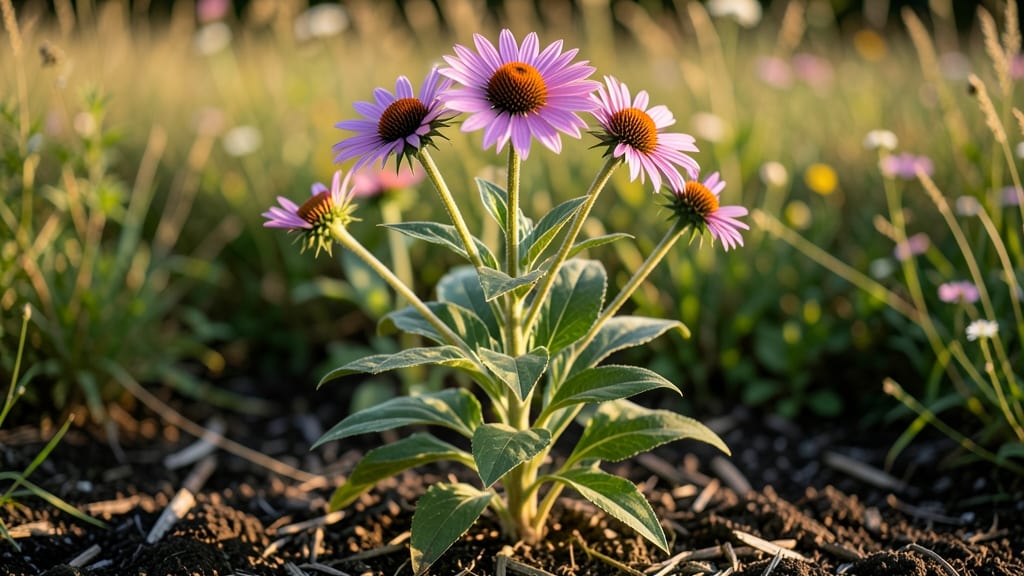
Summer-blooming perennials like coneflowers (July–September), black-eyed Susans (June–August), and daylilies (June–August) thrive in full sun and heat with minimal upkeep once their roots establish.
These hardy plants aren't just pretty—they're built to survive summer's intensity. 🔥 Coneflowers, for example, develop deep taproots that access water during droughts, while black-eyed Susans have waxy leaves that reduce moisture loss.
Daylilies go one step further by continuing to bloom even when temperatures hit 90°F+, making them ideal for hot climates. The key to their success lies in their ability to balance water needs with heat tolerance, which is why they often outperform annuals during peak summer months.
What's interesting is how their blooming patterns complement each other. Coneflowers provide late-summer color when many other perennials are fading, while black-eyed Susans offer a cheerful mid-summer display. This staggered blooming creates continuous interest in your garden without requiring constant replanting.
I've found that pairing these with drought-resistant ground covers like creeping thyme can further extend their summer performance while reducing maintenance.
💡 In This Article
- How Heat and Sunlight Affect Summer-Blooming Perennials
- Best Summer Perennials by Climate Zone and Soil Needs
How heat and sunlight affect summer-blooming perennials
Summer-blooming perennials survive intense heat through specialized adaptations that minimize water loss while maintaining photosynthesis. The most critical factor is root depth—plants like coneflowers develop taproots that can reach 3-5 feet below ground, accessing moisture during droughts.
This deep root system acts like a natural irrigation system, allowing them to thrive even when surface soil dries out. 🔥 In contrast, shallow-rooted annuals often wilt because they can't reach deeper water sources during heatwaves.
Leaf structure plays a crucial role too. Many heat-tolerant perennials have waxy leaf coatings that reduce water evaporation by up to 40% compared to smooth leaves. Black-eyed Susans, for example, have slightly curled leaf edges that create microclimates, trapping moisture near the plant.
The undersides of their leaves often appear silvery due to fine hairs that reflect sunlight and reduce heat absorption. This adaptation is similar to how cacti survive in deserts—by minimizing exposure to direct solar radiation.
Soil type dramatically impacts heat tolerance because it affects water retention and temperature regulation. Sandy soils drain quickly but heat up faster, while clay holds moisture longer but can suffocate roots if compacted.
The ideal scenario for summer perennials is loamy soil—a balanced mix that retains moisture while allowing good drainage.
I've noticed that adding 2-3 inches of organic mulch (like shredded bark) can maintain soil temperatures 5-10°F cooler than exposed ground, creating a more stable environment for roots during peak summer afternoons.
Another fascinating adaptation is how these perennials manage their blooming cycles. Many, like daylilies, produce flowers on stems that emerge from the base rather than the tips. This means even if the top growth gets scorched by heat, new blooms continue forming from protected buds.
The flowers themselves often have light-colored petals that reflect sunlight, preventing overheating while still attracting pollinators. This dual strategy—protected growth points and heat-reflective blooms—explains why these plants can continue flowering even when temperatures exceed 95°F.
What most gardeners overlook is how humidity levels interact with heat tolerance. In dry climates (like USDA zones 7-10), perennials with waxy leaves thrive, while in humid regions (zones 4-6), plants with broader leaves can handle summer heat better because they lose moisture more slowly through transpiration.
This is why black-eyed Susans perform exceptionally well across nearly all zones—they've evolved to balance both heat and moisture challenges through their leaf structure and root systems.
For practical application, consider that morning sunlight is far less damaging than afternoon sun during summer. Plants receive intense UV radiation between 10 AM and 4 PM, which can scorch leaves even when temperatures are moderate.
That's why many heat-tolerant perennials have anthocyanin pigments (the compounds that give them their deep colors) that act as natural sunscreen, protecting chlorophyll from UV damage. 💫 This explains why purple coneflowers often appear darker in full sun—they're actively protecting themselves from solar stress.