
Light Requirements
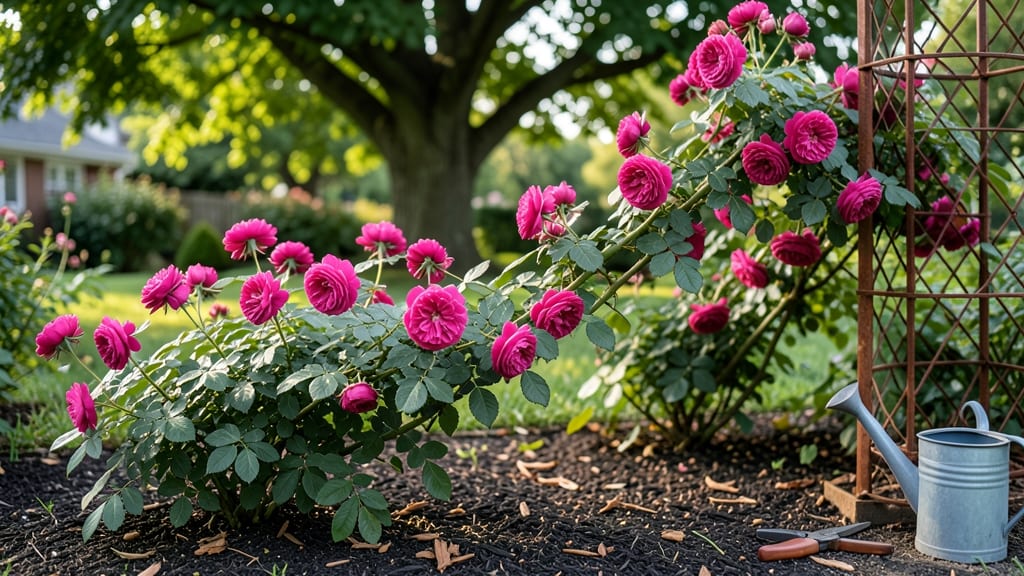
Growing climbing roses in partial shade lets you enjoy fragrant blooms even where full sun isn't available. 🌿 I've turned my east-facing fence into a floral masterpiece by choosing the right varieties and giving them just the right care—no sunburnt leaves or sparse blooms in sight.
The secret starts with shade-tolerant varieties like 'Blaze', 'Zéphirine Drouhin', or 'New Dawn'. These roses handle 3-6 hours of morning sun while protecting delicate blooms from afternoon heat. The soil must drain well but stay consistently moist—think rich, organic matter mixed with perlite to keep roots happy.
With proper pruning (cutting back dead wood in early spring and shaping in late winter), you'll see vigorous new growth and continuous blooms from spring through fall. The fragrance alone makes it worth the effort—imagine wafting roses while you sip coffee on your porch.
This method works for trellises, arbors, or even container growing. You'll end up with a lush, fragrant vine that outperforms many roses in full sun. Let's get those blooms thriving!
📚 In This Guide
- What you need
- Instructions
- Tips and common mistakes
- Wrapping up and next steps
What you need
- ● Climbing rose plants: Choose disease-resistant varieties like 'New Dawn' or 'Blaze' (2–3 plants for optimal coverage).
- ● Well-draining soil: Mix 2 parts garden soil with 1 part compost or aged manure (avoid heavy clay).
- ● Organic mulch: 2–3 inches of wood chips or straw to retain moisture and suppress weeds.
- ● Fertilizer: Balanced rose fertilizer (10-10-10) or slow-release granules (follow package rates).
- ● Epsom salt: 1 tablespoon per plant monthly for magnesium boost.
- ● Pruning shears: Sharp, clean pair (sterilize with rubbing alcohol between cuts).
- ● Trellis or arbor: 6–8 ft tall, sturdy structure (metal, wood, or PVC).
- ● Garden gloves: Heavy-duty to protect from thorns.
- ● Watering can or hose: Drip irrigation preferred for consistent moisture.
- ● Support ties: Soft plant ties or Velcro straps (avoid wire that can damage stems).
- ○ pH test kit (optional): Ideal soil pH: 6.0–6.5 (amend with lime or sulfur if needed).
- ○ Fungicide (optional):strong> Copper-based spray for preventive care in humid climates.
- ● Location: Partial shade (3–6 hours of sunlight daily; avoid deep shade).
- ● Spacing: Plant 3–4 ft apart for airflow and growth.
- ● Water access: Consistent moisture (1–2 inches per week; adjust for heat).
- ● Patience: Climbing roses thrive with 2–3 years to establish fully!
How to grow climbing roses in partial shade
Here's how to coax fragrant, thriving vines from roses that get only morning sun or dappled light.
🌱 Step 1: Choose the Right Variety for Low-Light Conditions
Not all climbing roses tolerate partial shade, so pick varieties bred for it like 'Blaze', 'Zéphirine Drouhin', or 'New Dawn'. These handle 3-6 hours of direct sun daily while still blooming prolifically. Avoid heavy, repeat-blooming types—they demand full sun to perform.
Check your site's light patterns first. If your spot gets only morning sun, choose a variety that blooms early in the season. For filtered light all day, opt for a repeat bloomer that tolerates lower light. The key is matching the rose's natural growth habit to your light conditions.
🪴 Step 2: Plant in Well-Draining, Moisture-Retentive Soil
Climbing roses need soil that drains quickly but holds moisture—think of it as a sponge that wrings out easily. Amend your native soil with 3 inches of compost and 20% perlite or coarse sand to improve drainage. Roses in partial shade are more prone to root rot, so this step prevents soggy roots.
Dig a hole twice as wide as the root ball but no deeper. Position the rose so the graft union sits 2-3 inches above soil level. This prevents it from being buried too deep, which can cause disease. Water deeply before planting to help roots settle into moist soil.
☀️ Step 3: Install Support and Position for Best Light Exposure
Set up your trellis, arbor, or fence before planting—roses hate being transplanted once established. For partial shade, angle the support slightly toward the sunniest part of your yard. This ensures the vines stretch toward light without growing lopsided. Use 3-4 inch diameter posts for stability, especially in windy areas.
Train the main stem along the support immediately after planting. This establishes growth direction and prevents tangled, unruly vines later. Watch for new shoots growing toward the light—these are your strongest canes. Prune any that grow away from the support to focus energy on the main structure.
💧 Step 4: Water Deeply and Mulch to Retain Moisture
Water newly planted roses 1-2 inches per week, more in extreme heat. Partial shade roses need consistent moisture because their roots work harder to find light. Water at the base in the morning to reduce evaporation and fungal risks. You'll know it's enough when soil 6 inches down feels damp.
Spread 3 inches of organic mulch around the base, keeping it 6 inches away from the stem. This locks in moisture and regulates soil temperature. Replenish mulch annually—it breaks down faster in partial shade where less sun dries it out. Avoid dark mulches that heat up under limited light.
✂️ Step 5: Prune Strategically for Health and Blooms
Prune in early spring before new growth starts. Remove 1/3 of the oldest canes to encourage new, vigorous growth. Cut just above an outward-facing bud to promote air circulation and prevent disease. In partial shade, you'll prune less aggressively—roses need their leaves to photosynthesize efficiently.
Deadhead spent blooms regularly, but don't cut back into old wood. This keeps energy flowing to the plant instead of seed production. Watch for suckers growing from the base—remove them immediately. They drain energy from the main vine and reduce flowering potential.
Tips & tricks for thriving climbing roses in partial shade
Here's what I wish I knew before planting my first climbing rose in partial shade—these tricks make all the difference.
Variety Selection Matters: The 3-6 hours of direct sun mentioned in Step 1 is non-negotiable for climbing roses like 'Blaze' or 'Zéphirine Drouhin'. These varieties have adapted to lower light conditions, while traditional climbers will struggle. I learned this the hard way when my 'New Dawn' thrived in morning sun but my 'Iceberg' (a full-sun variety) barely survived. Observe your site's light patterns for at least a week before selecting—morning sun spots work best for early bloomers.
Soil Science is Critical: That 3 inches of compost and 20% perlite mix in Step 2 isn't just about drainage—it's about creating the perfect air-soil balance for partial shade roses. I've found that adding a handful of worm castings to the mix gives an extra nutrient boost, especially in the first growing season. The key is keeping the soil moist but never soggy—think of it as a sponge that wrings out easily. If your soil stays damp for more than 24 hours after watering, you need more perlite.
Support Strategy for Light-Seeking Vines: When positioning your trellis in Step 3, think about the sun's arc across your yard. Angle the support slightly toward where the sun will be strongest, even if it's just morning light. I've seen roses grow completely lopsided when their support was perpendicular to the light source. Also, use those 3-4 inch diameter posts—they prevent the trellis from leaning into the sun, which can shade the lower parts of the vine.
Watering Wisdom: The 1-2 inches per week guideline in Step 4 is perfect, but timing matters just as much. I've found that watering in the early morning (before 9 AM) gives the roots time to absorb moisture before the sun heats the soil. In partial shade, I often water every 5-6 days instead of weekly, especially during summer heatwaves. The soil should feel damp 6 inches down—if it's dry at that depth, it's time to water again.
Pro Tips for Climbing Rose Partial Shade
- Here's what I wish I knew before planting my first climbing rose in partial shade—these tricks make all the difference.
- Variety Selection Matters: The 3-6 hours of direct sun mentioned in Step 1 is non-negotiable for climbing roses like 'Blaze' or 'Zéphirine Drouhin'.
- Soil Science is Critical: That 3 inches of compost and 20% perlite mix in Step 2 isn't just about drainage—it's about creating the perfect air-soil balance for partial shade roses.
Frequently asked questions
Got questions about growing climbing roses in partial shade?
Here are answers to the most common ones to help you cultivate thriving, fragrant vines with ease!
What does "partial shade" mean for climbing roses?
Partial shade typically means 3–6 hours of direct sunlight daily, with the rest of the time in dappled light or shade. Climbing roses can tolerate this, but avoid deep, dense shade (like under a thick tree canopy), which may reduce blooms. East- or north-facing walls are ideal for partial shade lovers!
When is the best time to plant climbing roses in partial shade?
Plant in early spring or fall for best results. Avoid summer heatwaves, which stress roots. If planting in containers, spring is safest—just ensure the pot has drainage and you’re using well-draining soil. Pro tip: Water deeply after planting to help roots establish!
Will climbing roses bloom as well in partial shade?
Yes, but expect fewer blooms than full sun. Choose repeat-blooming varieties like 'Blaze' or 'Zéphirine Drouhin' for better performance. Prune lightly in early spring to encourage air circulation, which boosts flower production. Mulch with compost to support root health!
What are good alternatives if my space is too shady?
If your spot gets less than 3 hours of sun, try shade-tolerant climbers like:
Yellowing leaves often signal overwatering, poor drainage, or nutrient deficiency. Check soil moisture—roses hate soggy roots! Amend soil with compost and ensure the pot (if used) has drainage holes. Yellow edges? Likely chlorosis (iron deficiency)—use a chelated iron supplement or mulch with sulfur-rich compost. Yes! Use a trellis, arbor, fence, or sturdy post—just ensure it’s at least 6–8 feet tall for mature vines. Avoid climbing on smooth walls or metal poles (they’ll struggle to grip). For containers, a wire cage or obelisk works well. Pro tip: Tie canes gently with soft ties to prevent damage!
These handle shade better than roses but still add vertical interest!
Why are my climbing roses’ leaves yellowing in partial shade?
Do climbing roses need trellises or can they climb anything?
Wrapping up and next steps
Growing climbing roses in partial shade is a rewarding way to add romance and beauty to your garden—even if your space isn’t sun-drenched! 🌿 With the right variety, soil prep, and care, these fragrant vines will thrive and bloom year-round.
Remember, the key is balancing shade with airflow, choosing shade-tolerant cultivars, and keeping an eye on moisture and pests.
Ready to transform your garden? Start by selecting a few partial-shade-loving roses from our recommendations and sketch a simple trellis or arbor plan. Then, grab your gloves and get planting—your future blooms will thank you! 🌸