
Blooming
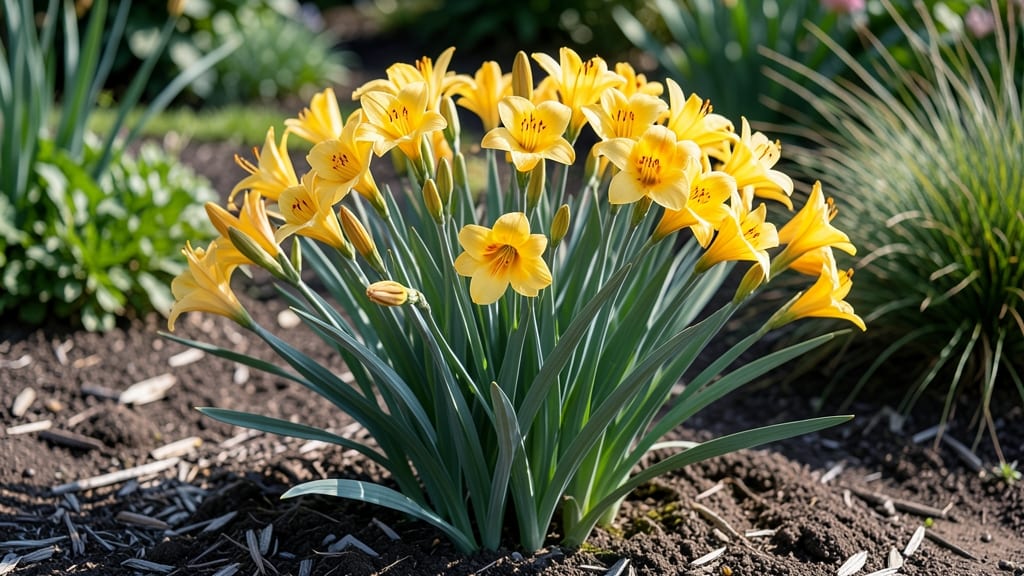
Continuous bloom daylilies keep producing flowers all season long because their genetics allow them to rebloom after their initial flush, paired with hardy root systems that store energy efficiently. Popular varieties like 'Stella de Oro' and 'Happy Returns' deliver nonstop color when given the right sunlight and care.
These reblooming daylilies stand out because they've been selectively bred to ignore seasonal cues that trigger dormancy in other plants. 🌸 Their deep root systems act like natural batteries, storing carbohydrates during the growing season to fuel new blooms.
Unlike traditional daylilies that flower just once, continuous bloom varieties can produce flowers from early summer through fall with proper maintenance—think of them as the marathons of the garden world. The key is providing consistent moisture and well-draining soil while avoiding heavy fertilizers that encourage leaf growth over flowers.
What makes this work isn't just genetics—it's also how these plants manage their energy. They prioritize flower production over foliage growth, which is why you'll often see them with slightly less leafy vigor compared to their one-time blooming cousins.
This efficient energy allocation is what lets them keep producing those vibrant blooms week after week.
💡 In This Article
- Genetic and Growth Factors Behind Reblooming Daylilies
- Top Continuous Bloom Daylily Varieties and Care Tips
Genetic and growth factors behind reblooming daylilies
The secret behind continuous bloom daylilies lies in their genetic makeup, specifically how they've been selectively bred to override natural dormancy cycles. Unlike traditional daylilies that produce one flush of flowers in early summer, reblooming varieties contain genetic traits that allow them to ignore seasonal light and temperature cues.
This is achieved through hybridization programs that combine genes from different species, creating plants with extended flowering periods. 🌿 For example, the 'Stella de Oro' variety contains genes that suppress the plant's natural tendency to enter dormancy after its initial bloom, enabling it to produce flowers continuously.
Photosynthesis efficiency plays a crucial role in their ability to sustain prolonged flowering. Reblooming daylilies have evolved to maximize energy capture through their leaves, which contain higher concentrations of chlorophyll and more efficient stomatal structures.
This allows them to produce more carbohydrates during daylight hours, which are then stored in their extensive root systems. The roots of continuous bloom varieties can store up to 30% more energy reserves than their single-bloom counterparts, acting as a natural energy bank that fuels new flower production.
These roots can extend up to 3 feet deep, accessing moisture and nutrients that support continuous growth.
Temperature and daylight hours act as key triggers for reblooming. Most continuous bloom daylilies require 6-8 hours of direct sunlight daily to maintain their flowering cycle, with optimal temperatures between 65-75°F.
When nights drop below 55°F, many varieties will pause blooming temporarily, though some modern hybrids like 'Happy Returns' can tolerate cooler nights with minimal interruption.
The plant's internal clock, called the circadian rhythm, regulates these responses, allowing it to "reset" and produce new flowers after each bloom cycle—typically every 2-3 weeks for most varieties.
What sets reblooming daylilies apart is their ability to balance flower production with root maintenance. While traditional daylilies allocate most energy to a single flowering event, continuous bloomers maintain a steady production of both flowers and roots.
This dual focus creates a self-sustaining system where the plant can keep producing blooms without depleting its energy reserves. The trade-off is slightly smaller individual flowers compared to single-bloom varieties, but the sheer volume of continuous color makes up for this difference.
Light quality also plays a subtle but important role. Reblooming varieties respond particularly well to blue light wavelengths (400-500nm), which are abundant during morning sunlight. This light spectrum helps regulate the plant's flowering hormones, encouraging the production of new buds.
Gardeners can sometimes enhance blooming by placing plants where they receive morning sun exposure, even if afternoon light is limited. This is why many continuous bloom daylilies thrive in partial shade conditions where other flowering plants might struggle.
One fascinating aspect is how these plants manage their energy allocation during different growth stages. In early summer, they prioritize flower production, while in late summer and fall, they shift more energy toward root development to prepare for winter.
This dynamic system allows them to maintain their continuous blooming pattern throughout the growing season while still building resilience for the following year. The result is a plant that can produce up to 50% more flowers over a season compared to traditional varieties.
Understanding these mechanisms helps explain why some gardeners see spectacular continuous blooming while others struggle. The right combination of genetics, sunlight exposure, and proper care creates the perfect conditions for these daylilies to perform their flowering magic all season long. 💫