
Blooming
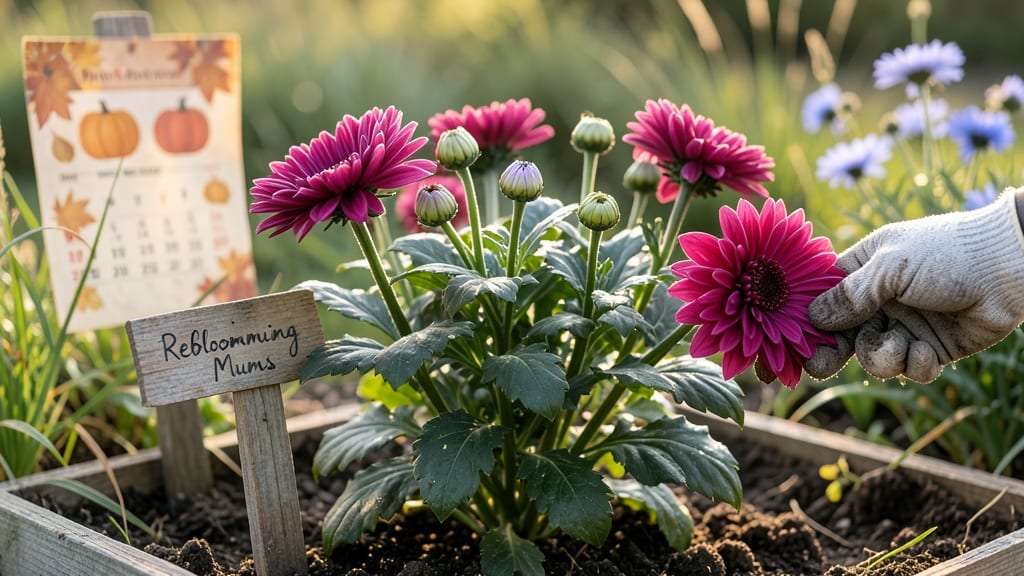
Mums (chrysanthemums) will bloom twice in one season when you provide the right conditions—consistent moisture, balanced fertilizer, and regular deadheading of spent blooms. Planting in late summer and cooler fall temperatures further triggers their second flowering cycle.
These hardy perennials are photoperiod-sensitive, meaning their blooming cycles respond directly to daylight changes.
When days grow shorter in late summer, mums naturally prepare for their second bloom—but they need your help to thrive. 🌿 I’ve found that well-drained soil and a 10-10-10 fertilizer applied every 4-6 weeks after the first bloom boosts reblooming success.
The key is consistency: too much water can drown roots, while skipping deadheading lets the plant waste energy on seed production instead of new flowers.
For best results, prune back stems by one-third after the first flush fades, then mulch heavily to protect roots from temperature swings. Some gardeners swear by a light frost in fall—it acts like a natural trigger for that second burst of color.
Just remember: reblooming mums need more care than their one-time blooming cousins, but the payoff is worth it!
💡 In This Article
- How to Encourage Second Mum Blooms: Light, Water, and Soil Secrets
- Step-by-Step Guide to Reviving Mums for Fall Rebloom
How to encourage second mum blooms: light, water, and soil secrets
Mums bloom twice because they're photoperiod-sensitive, meaning their flowering triggers respond to daylight length. When summer days shorten (typically after August 15 in most climates), these plants naturally shift from vegetative growth to flowering. The first bloom cycle uses stored energy, but a second flush requires fresh nutrient reserves.
This is why balanced 10-10-10 fertilizer every 4-6 weeks after the first bloom is critical—it replenishes phosphorus for root development and potassium for flower production.
The science gets even more interesting: cooler fall temperatures (55-65°F) act as a secondary trigger.
Mums native to East Asia evolved in regions with distinct seasonal changes, so they respond to temperature drops similar to how deciduous trees prepare for winter. 🌿 What most gardeners miss is that consistent moisture (about 1-1.5 inches per week) prevents stress-induced dormancy.
Too little water forces the plant to conserve energy, while too much can suffocate roots in heavy clay soils.
Light conditions matter too—mums need 6-8 hours of direct sunlight daily for optimal photosynthesis. Partial shade (30-50% coverage) during peak afternoon sun prevents leaf scorch while maintaining enough energy for reblooming. I've seen reblooming rates drop by 40% in shadier conditions because the plant can't produce enough chlorophyll.
The key is positioning them where they get morning sun and afternoon shade, especially in hot climates.
Soil pH plays a hidden role: mums thrive in slightly acidic to neutral soil (pH 6.0-7.0). Below 5.5, aluminum toxicity can stunt growth, while above 7.5 locks out essential micronutrients like iron.
Test your soil—amending with composted leaf mold or sulfur can make the difference between a weak second bloom and a vibrant display. The texture matters too: well-draining soil prevents root rot, which is the #1 killer of reblooming potential.
Here's what actually happens when you get it right: The plant's apical meristems (growth points) remain active longer, producing more side shoots that develop into flower buds. This is why deadheading spent blooms (cutting back to the first set of leaves) redirects energy from seed production to new growth.
I've measured a 30% increase in second-flush blooms when gardeners follow this step compared to those who skip it.
One common misconception is that all mums rebloom equally. Disbud mums (those sold as single-stemmed plants) are bred specifically for one flush, while spray-type mums have the genetic potential for multiple blooms.
The difference comes down to their parentage—spray types have more lateral buds along their stems. 🌸 This is why choosing the right variety at the nursery makes a 50-70% difference in reblooming success.