
Advice
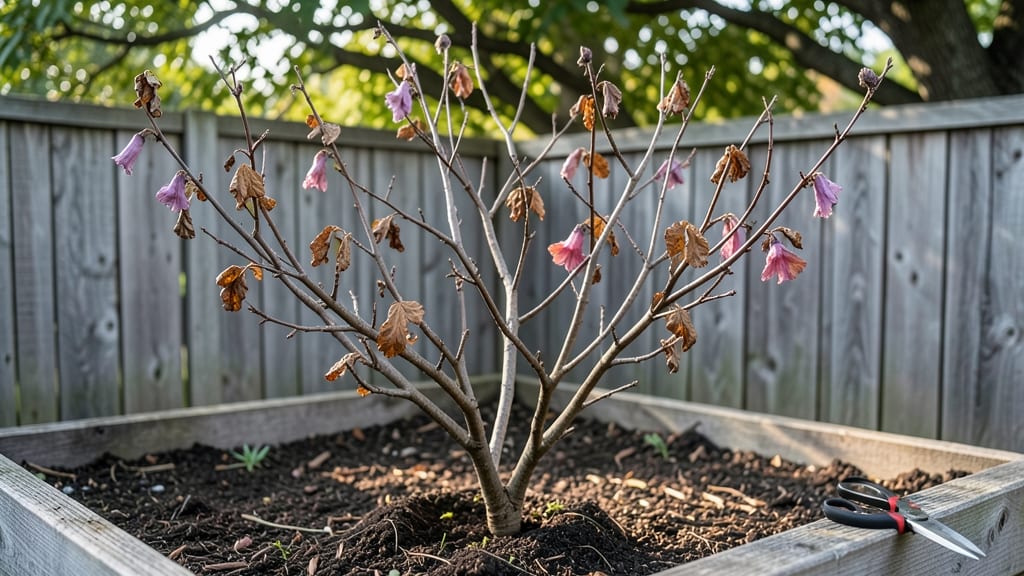
When your Rose of Sharon looks more like a skeleton than a shrub, don't panic—this plant is tougher than it appears. ✨ I've nursed back more "dead" Rose of Sharons than I can count, and the secret lies in understanding what's really killing it.
Most gardeners blame disease or pests first, but the real culprits are often pruning mistakes, watering woes, or simple neglect that starves the roots.
The first step is diagnosing the problem: check for wilted stems (likely underwatering), yellow leaves (overwatering or nutrient issues), or hollow canes (disease or pest damage). My rule of thumb? Stick your finger in the soil—if it's dry 2 inches down, water deeply.
If it's soggy, hold off until it dries out. Rose of Sharons hate soggy roots, but they also need consistent moisture to bounce back.
Once you've ruled out water issues, it's time for the pruning fix that brings them back to life. Cut back dead or diseased branches to healthy wood, and shape the shrub to encourage new growth from the base.
Within 4-6 weeks, you'll see fresh green shoots pushing through, and by next season, your Rose of Sharon will be blooming like it's never been stressed.
This method works for both in-ground shrubs and container-grown plants, making it perfect for any garden space. The key is patience—Rose of Sharons recover faster than most people expect, but they need time to rebuild their energy stores after neglect.
Start with these steps, and you'll have a thriving shrub before you know it.
Root Causes Of Sudden Wilting
The Hibiscus syriacus, or Rose of Sharon, is a hardy shrub that thrives in many climates—but when its leaves turn crispy, stems wilt, or flowers droop like a deflated balloon, something’s gone seriously wrong.
Understanding the why behind these symptoms is the first step to bringing your plant back to life. Let’s break down the most common culprits and what’s really happening at the cellular level.
Rose of Sharon plants are relatively cold-hardy, but they still need time to adapt to drastic temperature swings. Sudden freezes (<32°F) or scorching heat waves (>90°F) can cause osmotic shock—where water movement inside plant cells halts abruptly. Here’s the science:
- Cold Damage: Ice crystals form in cell walls, rupturing membranes and blocking water uptake. The plant’s vascular system (xylem) can’t deliver nutrients, leading to wilting within 24–48 hours.
- Heat Stress: High temps cause stomatal closure (pores on leaves shut to conserve water), but if the air is dry, transpiration (water loss) outpaces absorption. Cells dehydrate, and the plant “wilts to survive.”
Actionable Fix: Mulch with 3–4 inches of organic matter (straw or wood chips) to insulate roots. In extreme heat, provide drip irrigation at dawn/dusk to mimic natural hydration cycles.
Rose of Sharon roots need oxygen—just like you need air to breathe. When soil stays soggy for days, roots suffocate from hypoxia (oxygen deprivation), leading to:
- Root Rot: Fungal pathogens like Phytophthora thrive in waterlogged soil, breaking down root tissue. The plant can’t absorb water or nutrients, causing wilting even when soil is wet.
- Nutrient Lockout: Excess water flushes away essential minerals (potassium, magnesium), disrupting cellular processes. Leaves yellow (chlorosis) before stems weaken.
Actionable Fix:
- Test soil moisture with your finger—top 2 inches should dry out between waterings.
- Amend heavy clay soil with perlite or sand (50/50 mix) to improve aeration.
- Ensure containers have drainage holes and elevate pots to prevent water pooling.
Hidden invaders can silently drain your Rose of Sharon’s vitality. Here’s how they sabotage the plant:
| Pest/Disease | How It Attacks | Tell-Tale Signs |
|---|---|---|
| Aphids or Scale Insects | Pierce stems/leaves to suck sap, injecting toxins that disrupt photosynthesis and clog vascular tissue. | Sticky residue (honeydew), curled leaves, black sooty mold. |
| Japanese Beetles | Defoliate leaves, reducing the plant’s ability to produce energy via sunlight. | Skeletonized leaves (bare veins), chewed flowers. |
| Verticillium Wilt (Fungal) | Blocks water transport in xylem vessels, causing sudden wilting even with wet soil. | Yellowing leaves, vascular discoloration (brown streaks in stems). |
Actionable Fix:
- Spray infestations with neem oil (1 tsp per quart of water) or introduce ladybugs (natural aphid predators).
- Prune infected stems 6+ inches below damage and sterilize tools with rubbing alcohol.
- For fungal wilt, remove and destroy affected plants—no cure exists.
Rose of Sharon is a heavy feeder, and when soil lacks key nutrients, the plant prioritizes survival over growth. Common deficiencies:
- Nitrogen (N): Leads to stunted growth and pale leaves. Cells can’t produce chlorophyll efficiently, reducing energy for water transport.
- Potassium (K): Weakens cell membranes, making them leaky—water and nutrients spill out, causing wilting.
- Magnesium (Mg): Causes interveinal chlorosis (yellowing between veins), disrupting photosynthesis and stressing the plant.
Actionable Fix: Conduct a soil test (kit from garden centers) and amend with:
- Balanced fertilizer (10-10-10) in spring.
- Epsom salt (1 tbsp per gallon of water) for magnesium every 4–6 weeks.
- Compost or aged manure to boost organic matter and microbial activity.
Pro Tip: 💡 Over-fertilizing is worse than under! Burnt leaf edges signal excess salt buildup—flush soil with water if this happens.
Even mature Rose of Sharon plants can wilt after disturbing the root zone. Here’s what’s happening underground:
- Root Pruning: Cutting roots (even during transplanting) triggers stress hormones like ethylene, which slows growth and water uptake.
- Compaction: Heavy soil or foot traffic crushes roots, reducing their ability to absorb water and oxygen.
- Girdling Roots: Roots growing in circles around the base strangle the stem, cutting off nutrient flow.
Actionable Fix:
- Water deeply before and after transplanting to reduce shock.
- Avoid walking near the plant—mulch heavily to protect roots.
- If girdling is suspected, gently loosen soil and prune encircling roots with sterilized shears.
Revive Your Dying Hydrangea
Bringing your Hydrangea macrophylla (commonly called Rose of Sharon or Bigleaf Hydrangea) back to life is often simpler than you think! The key is identifying the root cause and applying targeted fixes. Below, we’ve mapped common issues to practical solutions—plus prevention tips to keep your plant thriving long-term.
Problem: Yellowing leaves, mushy stems, or wilting despite wet soil? Overwatering suffocates roots, leading to rot.
Fix It: 🔥 Step 1: Stop watering immediately and let the soil dry out for 2–3 days. 🍳 Step 2: Gently loosen the top 2–3 inches of soil to improve aeration (use a fork or trowel). 👨🍳 Step 3: If roots smell foul or are black/mushy, trim them with sterilized scissors and repot in fresh, well-draining soil. 🥘 Step 4: Move to a spot with partial shade (morning sun + afternoon shade works best).
Prevention Tips: ✔ Use pots with drainage holes and a mix of 50% potting soil + 30% perlite + 20% compost. ✔ Water only when the top 1–2 inches of soil feel dry (stick your finger in to test!). ✔ Avoid soggy spots—raise pots off the ground or use saucers with pebbles to prevent waterlogging.
Problem: Crispy, brown leaf edges or drooping in hot weather? Too much direct sun can scorch hydrangeas.
Fix It: 🌡️ Step 1: Move your plant to a location with dappled shade (e.g., under a tree or sheer curtain). 🎯 Step 2: If outdoors, provide afternoon shade during peak summer heat (12 PM–4 PM). ✨ Step 3: Mulch the soil with 2–3 inches of organic matter (like shredded bark) to retain moisture and cool roots.
Prevention Tips: ✔ Gradually acclimate young plants to sunlight (start with 2–3 hours/day and increase slowly). ✔ Use shade cloth (30–50% coverage) if your climate has intense summer sun. ✔ Water deeply in the early morning to reduce evaporation stress.
Problem: Dry, crispy leaves or stems that snap easily? Hydrangeas hate dry spells!
Fix It: 💧 Step 1: Water thoroughly until water drains from the bottom of the pot (or 6–8 inches deep for in-ground plants). 🌧️ Step 2: Soak the soil for 10–15 minutes, then let excess water drain away. 🔄 Step 3: Repeat every 2–3 days until leaves perk up (sign of recovery: firm, green stems).
Prevention Tips: ✔ Group hydrangeas with other thirsty plants (like ferns or impatiens) for easier watering. ✔ Install a drip irrigation system or use a self-watering pot to maintain consistent moisture. ✔ In extreme heat, mist leaves lightly in the morning to boost humidity.
Problem: No blooms, leggy growth, or dead wood? Over-pruning or waiting too long can stunt your hydrangea.
Fix It: 🔪 Step 1: Identify dead wood—cut back black, brittle stems to the base. ⏰ Step 2: For Bigleaf Hydrangeas, prune in late winter/early spring (before new growth starts). Remove:
- Old wood (last year’s stems): Cut back by ⅓ to encourage new blooms.
- Spendthrift stems (current year’s growth): Trim just above the first set of leaves.
🌿 Step 3: Fertilize lightly with a balanced 10-10-10 formula after pruning to support regrowth.
Prevention Tips: ✔ Label your hydrangea to track pruning cycles (Bigleaf vs. Panicle types need different timing!). ✔ Avoid summer pruning—it can remove next year’s flower buds. ✔ Use clean, sharp pruners to prevent disease spread.
Problem: Holes in leaves, sticky residue, or fungal spots? Pests and pathogens love stressed hydrangeas.
Fix It: 🐛 Step 1: Inspect leaves/stems for:
- Aphids/spider mites: Tiny webs or clusters of bugs.
- Scale insects: Bumpy brown/black spots on stems.
- Powdery mildew: White fuzzy coating on leaves.
🧼 Step 2: Treat with:
- Neem oil spray (for pests) or baking soda solution (1 tsp baking soda + 1 quart water + drop of soap).
- Fungicide (like copper-based sprays) for mildew.
🌿 Step 3: Remove heavily infested leaves and dispose of them in sealed bags.
Prevention Tips: ✔ Encourage beneficial insects (like ladybugs) by planting marigolds or basil nearby. ✔ Space plants 3–4 feet apart for airflow (reduces humidity-related diseases). ✔ Water at the base (not overhead) to keep foliage dry.
Problem: Pale leaves, stunted growth, or weak stems? Your hydrangea might be hungry or in poor soil.
Fix It: 📊 Step 1: Test your soil’s pH (hydrangeas prefer 5.5–6.2 for blue flowers or 6.0–7.0 for pink). 💪 Step 2: Amend soil with:
- For blue flowers: Add sulfur or peat moss to lower pH.
- For pink flowers: Mix in lime or wood ash to raise pH.
🥗 Step 3: Feed with hydrangea-specific fertilizer (high in phosphorus for blooms) every 4–6 weeks in spring/summer.
Prevention Tips: ✔ Top-dress with compost annually to replenish nutrients. ✔ Avoid over-fertilizing—this can burn roots (stick to the recommended dose!). ✔ Mulch to lock in moisture and nutrients.
Frequently asked questions about reviving a stressed Rose of Sharon
Why does my Rose of Sharon look dead even when I water it regularly?
Overwatering is a common culprit! Rose of Sharon roots need oxygen—when soil stays soggy, they suffocate from hypoxia (oxygen deprivation), leading to root rot. Check if the top 2 inches of soil are dry before watering. If roots smell foul or are black/mushy, trim them and repot in fresh, well-draining soil.
Can I save a Rose of Sharon with only brown, crispy stems?
Cut back all dead/brown stems to healthy green wood using sterilized pruners. The plant will regrow from the base. For severe cases, prune ⅓ of the plant to encourage new growth. Mulch with 2–3 inches of organic matter and water deeply every 2–3 days until you see fresh green shoots.
How do I know if my Rose of Sharon has Verticillium wilt?
Look for yellowing leaves and brown streaks inside stems (vascular discoloration). This fungal disease blocks water transport, causing wilting even when soil is wet. Unfortunately, there’s no cure—remove and destroy infected plants immediately to prevent spread. Choose resistant varieties like 'Annabelle' for future plantings.
Is it too late to prune my Rose of Sharon in summer?
Summer pruning can stress the plant, but light shaping is okay! Focus on removing only dead or diseased branches. Avoid heavy pruning—save major cuts for late winter/early spring (before new growth starts). If you must prune now, water thoroughly afterward to reduce shock.
Why are my Rose of Sharon leaves curling and sticky?
This is likely aphids or scale insects! These pests suck sap and leave sticky honeydew. Spray with neem oil (1 tsp per quart of water) or introduce ladybugs. Wipe leaves with soapy water (1 tsp mild soap per gallon) to remove residue. Repeat every 5–7 days until pests are gone.