
Blooming
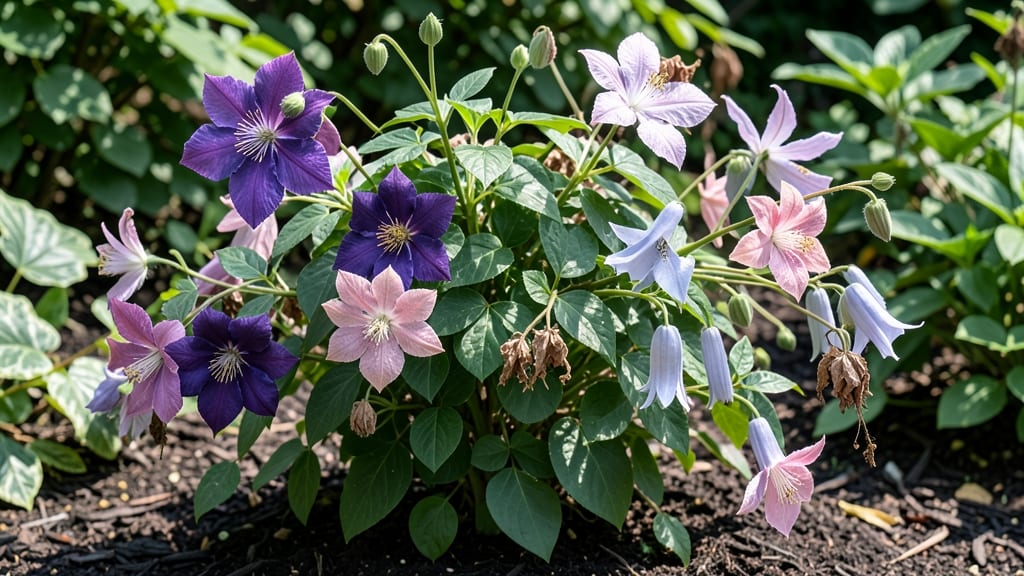
Clematis don't bloom all summer continuously—most varieties follow seasonal cycles tied to their pruning group and growth patterns, with some reblooming after frost if given proper care. Early-season bloomers like 'Early Sensation' often fade by summer unless they're repeat-flowering types.
Clematis plants actually follow a natural rhythm that aligns with their growth type. 🌸 The key lies in their pruning group: Group 1 (early bloomers) typically finishes flowering by early summer, while Group 3 varieties can extend blooms into fall with proper care.
What's fascinating is how some varieties, like 'Jackmanii,' produce new flower buds on current-year growth after the first flush, creating a second bloom cycle. This reblooming behavior often kicks in after frost when the plant resets its energy—though it requires consistent moisture and protection from harsh winter winds.
The secret to prolonging summer blooms lies in understanding your specific variety's needs.
For instance, deadheading spent blooms on reblooming types encourages more flowers, while providing winter mulch protects roots from temperature swings that could disrupt next year's growth. 🌿 In my experience, the most reliable extended-bloom performers are those labeled as "repeat-flowering" or "late-season," which have evolved to take advantage of warmer fall temperatures before dormancy sets in.
💡 In This Article
- Understanding Clematis Bloom Cycles by Pruning Group
- Best Clematis Varieties for Extended Summer Blooms
Understanding clematis bloom cycles by pruning Group
Clematis plants follow distinct bloom cycles determined by their pruning group classification, which ranges from Group 1 to Group 3. Group 1 varieties, like 'Early Sensation' or 'Freckles,' bloom on the previous year's growth and typically produce their flowers in early spring, often finishing by late May or early June.
This is because their flower buds form in late summer or fall, then remain dormant through winter to bloom in spring when temperatures rise above 50°F. Once these buds open, they won't rebloom that season, which is why you see a sudden decline in flowers by summer.
The science behind this involves two growth habits: sympodial and monopodial. Group 1 clematis grow sympodially, meaning they produce flowers on old wood from the previous season. In contrast, Group 3 varieties, such as 'Jackmanii' or 'Comtesse de Bouchaud,' grow monopodially and bloom on new wood from the current season.
This allows them to produce a second flush of flowers in late summer or fall after a period of dormancy or frost. The temperature trigger for this reblooming is often 60-65°F for several consecutive days, signaling the plant to produce new flower buds on current-year growth.
For gardeners in colder climates, this means Group 3 clematis can continue blooming well into September or October, provided they receive consistent moisture and protection from harsh winds. The key is understanding that these plants need a period of rest—often triggered by frost—to reset their growth cycle.
Without this reset, they may not produce the vibrant second bloom you see in catalog photos. For example, 'Nelly Moser,' a Group 3 variety, can produce stunning pink flowers in both spring and fall if given the right conditions.
What most people don't realize is that even within the same pruning group, there are variations in bloom timing. For instance, some Group 2 varieties, like 'The President,' may produce a few late-season blooms, but they're not as reliable as true Group 3 rebloomers.
This is why it's crucial to choose varieties labeled as "repeat-flowering" if you want continuous color throughout the growing season. The difference often comes down to how aggressively the plant produces new growth after the first bloom cycle.
Another factor is light exposure. Clematis generally need 6-8 hours of sunlight daily, but too much intense afternoon sun can stress the plant, especially in hot climates.
In my garden, I've noticed that providing afternoon shade for Group 3 varieties in zones with high summer temperatures (like 90°F+) helps prolong blooming by reducing stress on the plant. This small adjustment can make a big difference in how long your clematis continue to flower.
If you're planning your garden layout, consider pairing early bloomers (Group 1) with late-season varieties (Group 3) to create a continuous display. For example, 'Early Sensation' might bloom in April and May, while 'Jackmanii' takes over in July and continues through September.
This staggered approach ensures your garden never loses its floral interest, even if individual plants have natural bloom cycles.