
Blooming
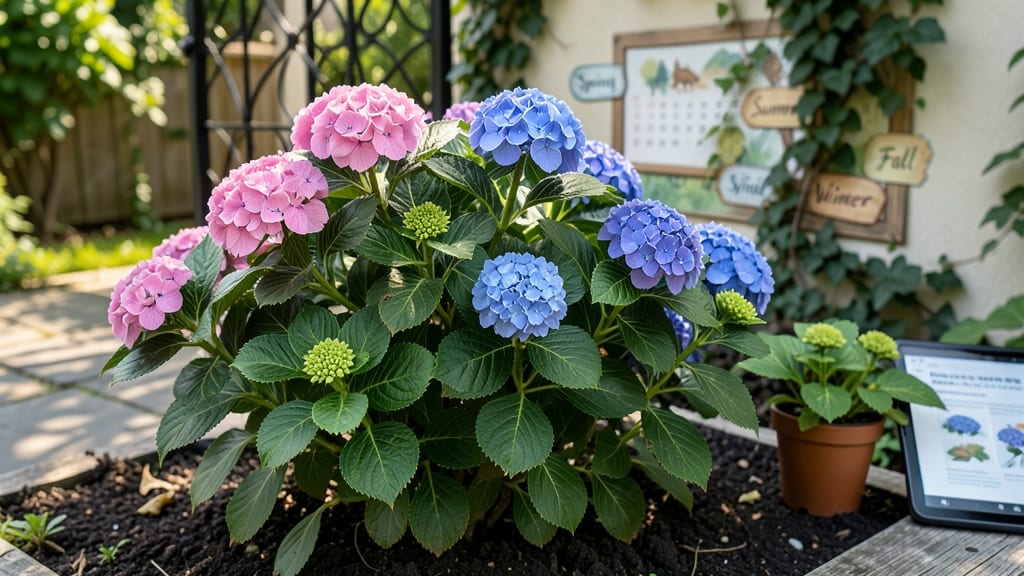
Hydrangeas do not bloom all year—most varieties flower seasonally from late spring through summer, with some reblooming types lasting into fall. Their bloom cycles depend on species, climate, and proper care.
Hydrangeas thrive on seasonal cues like temperature shifts and daylight changes, which trigger their natural blooming rhythms. 🌸 The Hydrangea macrophylla (mophead or lacecap) typically blooms once in late spring to early summer, while Hydrangea paniculata (panicle) varieties often rebloom in late summer if pruned correctly.
Even everblooming types need rest periods—overwintering helps them recharge for next season's display.
Climate plays a huge role: cooler regions may see shorter bloom windows, while milder zones can extend them. I’ve seen panicle hydrangeas in my garden last from July through October with minimal deadheading, proving that variety and location matter more than you’d think.
💡 In This Article
- Why Hydrangeas Bloom Seasonally: Climate and Species Factors
- Extending Hydrangea Blooms: Pruning and Care Tips
Why hydrangeas bloom seasonally: climate and species factors
Hydrangeas follow strict seasonal rhythms because their blooming is triggered by a combination of temperature shifts and daylight hours. Most varieties enter dormancy in winter, requiring chilling temperatures (30-40°F) for 4-6 weeks to break dormancy and initiate flower buds in spring.
This process is similar to how deciduous trees prepare for winter—hydrangeas store energy in their roots and stems, only to restart growth when conditions are right. 🌱
The two most popular types, Hydrangea macrophylla (like Endless Summer) and Hydrangea paniculata (like Limelight), respond differently to these cues. Macrophylla blooms on old wood (last year's growth), so its flowers form in late summer/early fall for a spring display.
Meanwhile, Paniculata blooms on new wood, allowing for extended blooms if pruned correctly in late winter or early spring. This difference explains why some hydrangeas seem to bloom longer than others.
Daylight length also plays a crucial role. Hydrangeas are photoperiod-sensitive, meaning they detect changes in daylight hours to time their blooming. In regions with shorter winters, like the Pacific Northwest, hydrangeas may bloom earlier and more prolifically than in hotter climates where summer heat can stress the plants.
For example, Endless Summer hydrangeas in California might bloom from May to September, while the same variety in New England could bloom from June to August due to cooler temperatures.
Climate extremes can disrupt this natural cycle. Prolonged heatwaves above 90°F can cause buds to drop prematurely, while sudden freezes can damage emerging flowers.
I’ve noticed that panicle hydrangeas in my zone 7 garden often produce a second flush of blooms in late summer if given consistent moisture and partial shade during heatwaves. This adaptability shows how these plants balance their internal clocks with environmental cues.
Even "everblooming" varieties like Endless Summer aren’t truly year-round bloomers. They simply produce flowers on both old and new wood, creating an extended display. However, they still need a dormant period to recharge.
Skipping this rest can lead to weaker blooms or even no flowers the following season—a common mistake among gardeners eager for continuous color. 💫
So while hydrangeas can’t bloom all year, understanding their natural rhythms helps you time care practices for maximum impact. For instance, fertilizing in early spring (when buds form) and mulching to regulate soil temperature can extend their bloom windows by weeks. The key is working with nature, not against it.