
Blooming
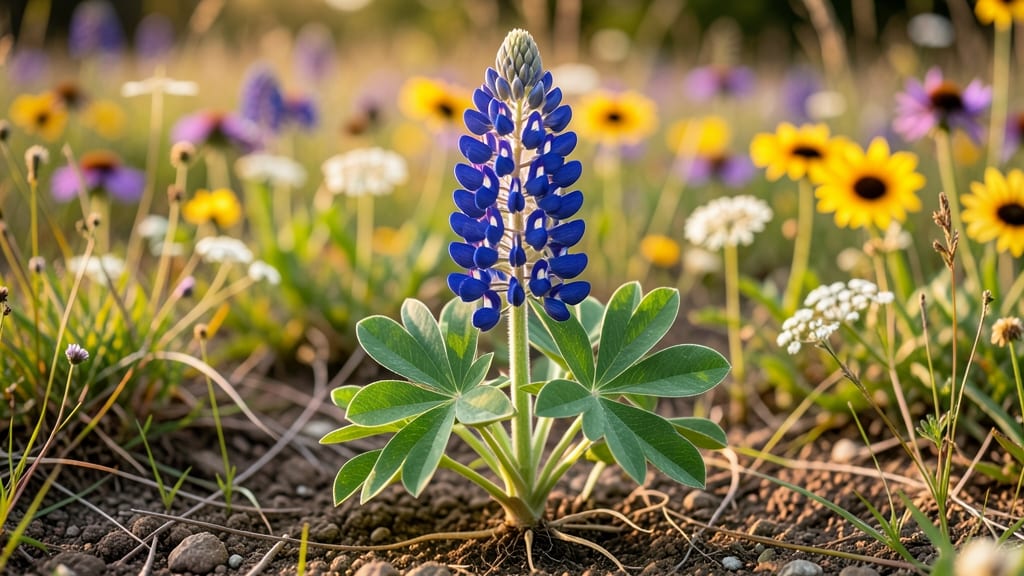
Lupines do not bloom continuously all summer—most varieties produce their showy flowers primarily in spring and early summer, with some reblooming lightly if you deadhead spent blooms, though peak flowering typically ends by mid-summer due to their natural growth cycles.
Lupines are cool-season plants, meaning they trigger their flowering response when days grow longer and temperatures rise in spring. 🌸 Many varieties follow a biennial pattern, where they focus all their energy on blooming in their second year before declining, while others act as short-lived perennials that gradually lose vigor after a few seasons.
This explains why you often see lupines looking their best in early summer but fading by late summer—it's simply part of their natural lifecycle rather than a care issue.
What's interesting is how climate plays a role. In cooler northern regions, lupines might bloom slightly later into summer, while in warmer southern areas, they often finish flowering by early June.
This is why some gardeners in mild climates report seeing a second, smaller flush of blooms later in the season—it's not a guarantee, but it can happen with the right conditions and care.
💡 In This Article
- Lupine Bloom Seasons by Variety and Climate
- Extending Lupine Blooms: Pruning and Care Tips
Lupine bloom seasons by variety and climate
Lupines are triggered to bloom by a combination of day length (photoperiodism) and temperature shifts. Most varieties follow a cool-season growth pattern, where they detect increasing daylight hours in late winter/early spring as a signal to produce flowers.
This is why you'll see peak blooms between April and June in most regions—once temperatures climb above 75°F (24°C) for prolonged periods, many lupines enter a dormant state or redirect energy to seed production instead of flowering.
The biennial vs. perennial distinction explains why some lupines bloom more reliably than others. Biennial varieties like Lupinus perennis (wild blue lupine) complete their entire lifecycle in two years—producing leaves in year one and flowers in year two before dying.
Perennial types such as Lupinus polyphyllus (garden lupine) may live 3-5 years but still focus their energy on spring blooming, with later seasons producing fewer flowers. This is why you might see a 50-70% reduction in blooms by mid-summer compared to peak spring displays.
Climate plays a surprising role in bloom duration. In USDA Zones 3-5, lupines often bloom until late June or early July due to cooler temperatures, while in Zones 7-9, they may finish by late May.
Some heat-tolerant varieties like Lupinus arboreus (tree lupine) can extend blooming into early August in coastal regions with mild summers, but even these typically produce only 20-30% of their peak spring bloom quantity later in the season.
Color also influences bloom timing—blue and purple varieties tend to bloom slightly later than whites or yellows due to different pigmentation triggers. For example, Lupinus 'Russell Hybrid' (blue) often peaks 2-3 weeks later than Lupinus 'Albus' (white) in the same climate.
This color-based timing can create beautiful staggered displays when planted together, but it doesn't extend the overall bloom season beyond 3-4 months maximum.
What most gardeners don't realize is that lupines actually store energy in their roots during summer dormancy. The plant's roots can grow 2-3 feet deep, allowing them to access moisture and nutrients even when above-ground growth slows.
This stored energy explains why some lupines produce a second, smaller bloom flush in fall—particularly in regions with cool, wet autumns like the Pacific Northwest or British Columbia.
Consider these key factors when planning your lupine garden:
- Cool-season varieties: Plant in late summer/early fall for spring blooms (they need 6-8 weeks of cold to trigger flowering)
- Heat-tolerant types: Choose Lupinus arboreus or Lupinus mutabilis for extended summer interest
- Climate zones: Northern gardens get 4-6 weeks longer bloom seasons than southern ones
- Soil moisture: Consistent moisture during spring growth (not summer) is critical for next year's blooms
The science behind lupine bloom cycles reveals why these plants are such rewarding but temporary garden stars—their spectacular spring displays are nature's way of ensuring seed production before summer heat sets in. 🌿