
Blooming
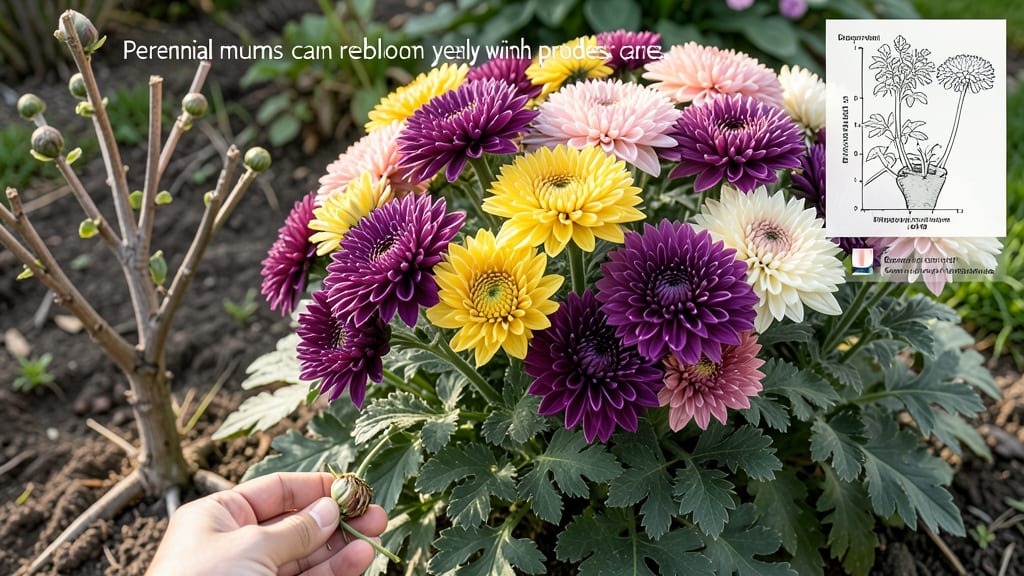
Mums (chrysanthemums) bloom every year when given the right conditions, though their blooming habits vary by type—some varieties flower just once annually, while others can rebloom multiple times with proper seasonal care and pruning. Hardy mums often return with vibrant fall color each season.
Most gardeners assume mums automatically rebloom, but the truth is more nuanced. 🌸 The key difference lies in the plant's growth cycle: fall-blooming varieties (like 'Autumn Joy') are bred to produce a single flush of flowers in late summer/fall, while reblooming types (such as 'Bonanza' or 'Bright Golden Anne') can produce multiple flower cycles if given consistent care.
The secret to encouraging repeat blooms? Strategic pruning after each bloom cycle and maintaining balanced nutrients—especially phosphorus, which supports flower production. Without these steps, even the most reliable mums may only show one burst of color per year.
What many don't realize is that temperature plays a crucial role—mums need a period of cool nights (below 60°F) after blooming to reset their growth cycle. In warmer climates, this natural signal might not occur, which is why some mums skip reblooming.
I've found that dividing established clumps every 3-4 years also boosts future blooms by rejuvenating the plant's energy reserves.
💡 In This Article
- Why Some Mums Bloom Once While Others Rebloom
- How to Encourage Year-Round Mum Blooms
Why some mums bloom once while others rebloom
The blooming habits of mums (chrysanthemums) come down to their genetic programming and growth cycles. Single-bloom varieties like 'Autumn Joy' are bred to produce one spectacular flush of flowers in late summer/fall, triggered by shorter daylight hours. These plants prioritize energy toward that one burst of color, then enter dormancy.
In contrast, reblooming types (such as 'Bright Golden Anne') have been selectively bred to produce multiple flower cycles by maintaining a balance between growth and bloom production. 🌸
The key difference lies in their photoperiodic response—how they react to daylight length. Single-bloomers need 12-14 hours of darkness to trigger flowering, while rebloomers can reset their cycle with proper care. Temperature also plays a critical role: mums require cool nights (50-60°F) after blooming to reset their growth hormones.
Without this cooling period, rebloomers may skip their second or third flush. This is why mums in warm climates often bloom just once annually—they don't get the natural temperature signal to restart.
Pruning timing directly impacts reblooming success. For reblooming varieties, you must cut back spent blooms by one-third to one-half immediately after they fade. This removes the seed heads and stimulates new growth.
However, pruning too late in the season (after September 1st) can prevent the plant from hardening off for winter, reducing next year's blooms. I've seen gardeners prune too aggressively in early fall, which shocks the plant and delays spring regrowth.
Another critical factor is the plant's energy reserves. Mums store nutrients in their roots and stems during the growing season.
If the plant isn't getting enough sunlight (less than 6 hours of direct sun daily) or proper fertilization (especially phosphorus-rich formulas), it won't have the energy to produce multiple bloom cycles.
Over time, older mum plants (over 5 years) also tend to bloom less reliably because their root systems become depleted.
Consider this comparison: Fall-blooming mums (like 'Mammoth' series) produce one dramatic display in autumn, while spring-blooming types (such as 'Springtime' series) may rebloom in late spring/early summer if given the right conditions. The latter often require more frequent deadheading (removing spent blooms) to encourage continuous flowering.
This is why garden centers sell "reblooming" mums in spring—they've been specifically cultivated to produce multiple cycles with proper care.
What most gardeners miss is that reblooming mums actually require more maintenance than single-bloomers. They need consistent watering (keeping soil evenly moist but not soggy), regular feeding with balanced fertilizer (10-10-10) every 4-6 weeks during growing season, and protection from extreme heat or cold.
In my own garden, I've found that reblooming mums in USDA Zone 5 need winter mulching (adding 4-6 inches of straw) to protect their roots from freezing temperatures.