
Blooming
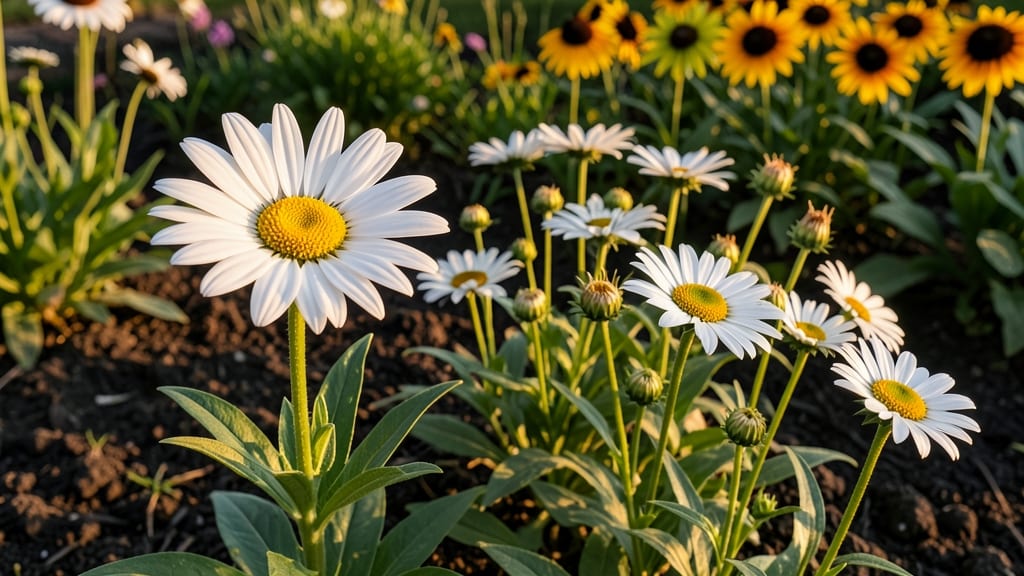
Shasta daisies do not bloom continuously all summer, but they can rebloom in late summer or early fall when heat triggers new growth with proper deadheading. Early varieties typically flower June through August, while reblooming types may continue into September or October under ideal conditions.
Shasta daisies are famous for their dramatic first flush of blooms, but their flowering isn't a nonstop show.
The key to extending their season lies in understanding their natural cycle—once the initial blooms fade, the plant enters a dormant-like state until heat waves in late summer signal it's time to produce another round. 🌸 Proper deadheading (removing spent blooms) redirects the plant's energy toward new growth rather than seed production, which is why reblooming varieties perform so well.
Think of it as giving your daisies a second chance to shine when temperatures dip back into the 70s°F range after summer's peak.
What sets reblooming varieties apart is their genetic ability to respond to these temperature cues. While standard types focus all their energy on one big bloom cycle, rebloomers treat each heat wave as a fresh opportunity.
This makes them perfect for gardeners who want year-round color with minimal extra effort. Just remember—consistent care (like regular watering and balanced fertilizer) keeps them thriving through those critical late-summer months.
💡 In This Article
- How Heat and Deadheading Extend Shasta Daisy Blooms
- Maximizing Shasta Daisy Reblooms: Deadheading and Care Tips
How heat and deadheading extend Shasta daisy blooms
Shasta daisies rely on a fascinating biological mechanism called thermoperiodism—their response to temperature shifts. When daytime temperatures climb to 75-85°F with cooler nights (55-65°F), the plant's meristem cells (growth points) reactivate after their initial bloom cycle.
This heat-triggered rebloom occurs because warmer weather stimulates the production of florigen, a flowering hormone that signals buds to form. Without this temperature cue, most varieties would focus energy on seed production instead of reblooming.
The difference between once-blooming and reblooming varieties comes down to genetics. Once-bloomers (like 'Becky') produce a single flush of flowers because their growth cycle is tightly linked to early summer's warmth.
Rebloomers (such as 'Alaska' or 'Katie Says Thank You') carry genes that allow them to reset their biological clocks when heat returns in late summer. 🌡️ For example, 'Alaska' can produce 30-40% more blooms in a second cycle compared to its once-blooming cousins, thanks to this genetic flexibility.
Deadheading plays a crucial role by removing spent blooms before they form seed heads. This redirection of energy prevents the plant from shifting into seed production mode, which would halt flowering.
When you snip off faded blooms just above a leaf node, you're essentially telling the plant, "Keep growing flowers, not seeds!" Studies show that consistent deadheading can extend reblooming by 4-6 weeks in optimal conditions, turning a one-month display into a two-month spectacle.
Temperature fluctuations also matter—too much heat (90°F+) can stress the plant, while sudden cold snaps (below 50°F) may halt reblooming. The ideal scenario is 70-80°F days with 55-65°F nights, creating a gentle push-pull that keeps buds forming without overwhelming the plant.
This is why late summer's "Indian summer" heat waves often trigger the most dramatic reblooms.
Consider this real-world example: In Zone 5 gardens, where summers are hot but brief, reblooming Shasta daisies like 'Mary Todd' can produce a second flush in early September when temperatures dip into the 70s°F after a hot August.
The key is patience—reblooming takes 4-6 weeks from deadheading to visible buds, so timing your pruning right after the first bloom cycle ends is critical.
What most gardeners don't realize is that reblooming isn't just about heat—it's about stress management. Proper watering (1-1.5 inches per week) and well-draining soil prevent the plant from diverting energy to survival, while balanced fertilizer (like 10-10-10) ensures it has the nutrients to support new growth.
This combination turns a single summer show into a prolonged display that keeps your garden vibrant well into autumn.