
Blooming
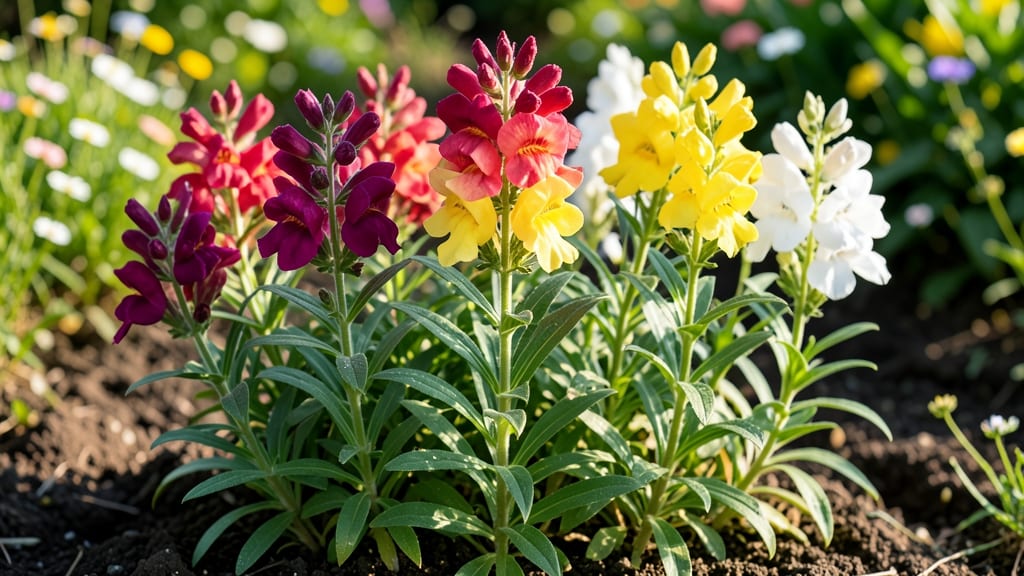
Snapdragons don't bloom all summer continuously—they follow seasonal cycles, peaking from spring to early fall, though some late-summer varieties may extend blooming until frost. Your growing conditions and regional climate play a huge role in how long and when they flower.
Snapdragons are actually seasonal bloomers, not continuous summer flowers.
Their flowering patterns are tied to daylight changes, with most varieties responding to shorter days in late summer by slowing production. 🌿 In warmer climates (USDA zones 8-10), you might see extended blooming, while cooler regions often get a more defined spring-to-fall window.
The key to maximizing your snapdragon display lies in selecting the right cultivars for your zone and providing consistent care—like proper watering and deadheading—to encourage reblooming.
What many gardeners don't realize is that snapdragons actually enter dormancy during extreme heat or cold, which triggers their bloom cycles. This natural pause is why you'll see fewer flowers in mid-summer unless you're growing heat-tolerant varieties.
The good news? With strategic pruning and deadheading, you can coax your plants to produce a second flush of blooms later in the season.
💡 In This Article
- Snapdragon Bloom Cycles: Seasonal and Climate Factors
- Extending Snapdragon Blooms: Pruning and Deadheading Tips
Snapdragon bloom cycles: seasonal and climate factors
Snapdragons (Antirrhinum majus) are photoperiod-sensitive plants, meaning their blooming cycles are triggered by changes in daylight length rather than continuous warmth. As days lengthen in spring, most varieties respond by producing buds rapidly, leading to peak flowering between late spring and early fall.
However, when daylight hours begin shortening in late summer—typically after July 20-25 in the Northern Hemisphere—the plants detect this shift and enter a natural "bloom pause," reducing flower production. This biological mechanism explains why even heat-tolerant varieties rarely bloom continuously through summer's hottest months.
The specific timing varies by USDA hardiness zone. In cooler zones (3-7), snapdragons often bloom from May through September, with a sharp decline in August as temperatures exceed 85°F.
Heat-tolerant varieties like 'Dragon Wing' or 'Monarch' may extend blooming into October in zones 8-10, but only if nighttime temperatures stay above 55°F.
The key threshold is 70°F+ daytime heat combined with 60°F+ nighttime temperatures—when both conditions are met for prolonged periods, snapdragons conserve energy by slowing flower production and focusing on seed development instead.
Dormancy cycles also play a crucial role. Snapdragons native to Mediterranean climates (where they originated) experience dry, hot summers, which triggers a semi-dormant state.
In gardens, this manifests as bud drop or stunted growth when summer heat exceeds 90°F for more than 3-4 days. 🌡️ What's fascinating is how this dormancy isn't absolute—some varieties like 'Rocket' series can be coaxed into reblooming with proper care, while others like 'Tom Thumb' may completely halt flowering until cooler fall temperatures return.
Regional climate patterns create dramatic differences in bloom duration. In Pacific Northwest gardens (zone 7-8), snapdragons might bloom from April through November due to mild summers and consistent moisture, while Midwestern gardens (zone 5-6) often see blooms concentrated between June and August with minimal fall reblooming.
The humidity factor is critical too—high humidity (>70%) can promote fungal diseases that stress plants, indirectly shortening bloom cycles by diverting energy to defense mechanisms rather than flower production.
Cultivar selection is your most powerful tool for extending summer blooms. Early-season types like 'Butterfly' peak in May-June and fade by July, while late-season varieties such as 'Applause' maintain color until September-October.
The secret lies in their genetic response to photoperiod: late bloomers have been bred to delay their sensitivity to shortening days by 4-6 weeks compared to early varieties. Mixing both types in your garden creates a staggered bloom effect that can fool the eye into thinking snapdragons flower continuously.
What most gardeners overlook is how soil temperature affects root activity. Snapdragons need soil temps above 55°F for optimal nutrient uptake—below this threshold, roots become sluggish, directly impacting flower development. In cooler climates, this often explains why snapdragons bloom poorly in June despite warm air temperatures.
Mulching with 2-3 inches of straw can maintain root-zone temperatures and extend the active growing season by 2-3 weeks in spring and fall.