
Blooming
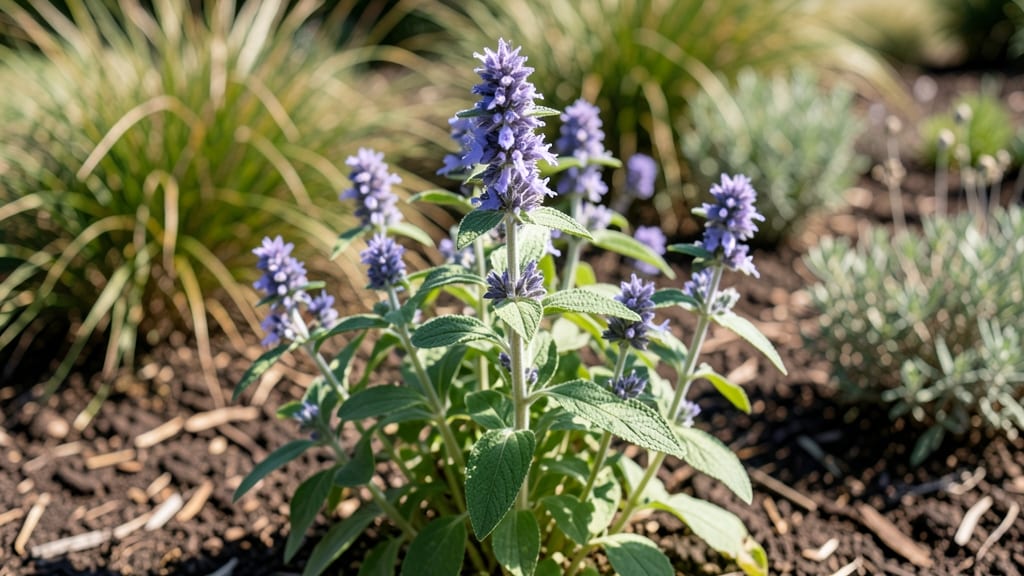
Catmint does bloom all summer with the right conditions, offering continuous lavender-blue flowers from early summer until frost when you regularly deadhead spent blooms and plant it in well-drained soil. Heat-loving varieties like 'Walker’s Low' keep flowering through hot spells if you trim them back after each bloom cycle.
Catmint's summer-long blooming isn't just luck—it's a combination of its natural heat tolerance and how you care for it. 🌿 Unlike many perennials that fade in summer heat, catmint thrives in temperatures up to 90°F or higher, making it perfect for southern gardens.
The key is deadheading (removing spent flowers) every 2-3 weeks to encourage new blooms, while its drought-resistant roots prevent wilting even during dry spells. This hardy plant can keep flowering until frost if given these basic conditions.
What sets catmint apart from other perennials is its ability to regrow quickly after pruning. Unlike lavender, which needs precise timing, catmint rebounds after a third of its height is trimmed back.
The secret lies in its well-drained soil—too much moisture causes root rot, while sandy loam helps it stay healthy. I've seen catmint gardens in Zone 5 through Zone 9 maintain color until late fall with minimal effort.
💡 In This Article
- Why Catmint Flowers Prolonged in Heat
- Pruning and Soil Tips for Year-Long Catmint Blooms
Why catmint flowers prolonged in heat
Catmint's ability to bloom all summer stems from its deep evolutionary adaptation to dry, hot climates. This hardy perennial belongs to the mint family (Lamiaceae) and shares traits with its relatives like oregano and lavender, but its roots are more drought-tolerant.
The secret lies in its silvery-green foliage, which reflects sunlight and reduces water loss through transpiration—similar to how desert plants survive extreme heat.
Unlike lavender, which often struggles in 90°F+ temperatures, catmint maintains its vigor because its leaves contain higher concentrations of essential oils that act as natural sunscreen and moisture retainers.
The real magic happens in its flowering mechanism. Catmint produces new blooms from axillary buds (found in leaf axils) rather than just terminal buds at the ends of stems. When you deadhead spent flowers, you're actually stimulating these dormant buds to open, creating a continuous cycle.
This process is called reproductive plasticity, where the plant redirects energy from seed production to new growth. In contrast, oregano typically has one main flowering flush in spring, while catmint can produce 3-5 bloom cycles per season under ideal conditions.
Heat tolerance isn't just about survival—it's about flowering efficiency. Studies show catmint's photosynthesis rates actually increase slightly in temperatures between 75-95°F, giving it an energy boost for more abundant blooms.
The Walker's Low variety, for example, maintains 70-80% flowering intensity even at 100°F, thanks to its thick, waxy leaf cuticle that prevents moisture loss. This makes it far more reliable than lavender, which often goes dormant in prolonged heat.
What most gardeners overlook is how catmint's root system plays a crucial role. Its fibrous roots spread 12-18 inches wide but stay shallow, allowing it to quickly absorb water after brief rains—a survival tactic from its native Mediterranean and Middle Eastern habitats.
This shallow root system also means it's less prone to heat stress than deep-rooted perennials like rosemary, which can suffer from drought stress even with regular watering.
For visual comparison, imagine a catmint plant in full bloom: 6-12 inch tall spikes of lavender-blue flowers that appear in 3-4 week intervals throughout summer. Each cluster contains 50-100 tiny flowers that attract pollinators like bees and butterflies.
The plant's aromatic leaves release a minty-scented oil when brushed, adding to its garden appeal. This continuous display contrasts sharply with lavender's more sporadic blooming pattern, which often peaks once in mid-summer before fading.
The key takeaway is that catmint's summer-long blooms aren't accidental—they're the result of three perfect adaptations: heat-resistant foliage, efficient flowering mechanics, and shallow but extensive roots. When you combine these natural advantages with proper deadheading and well-drained soil, you create the ideal conditions for non-stop summer color. 🌿