
Blooming
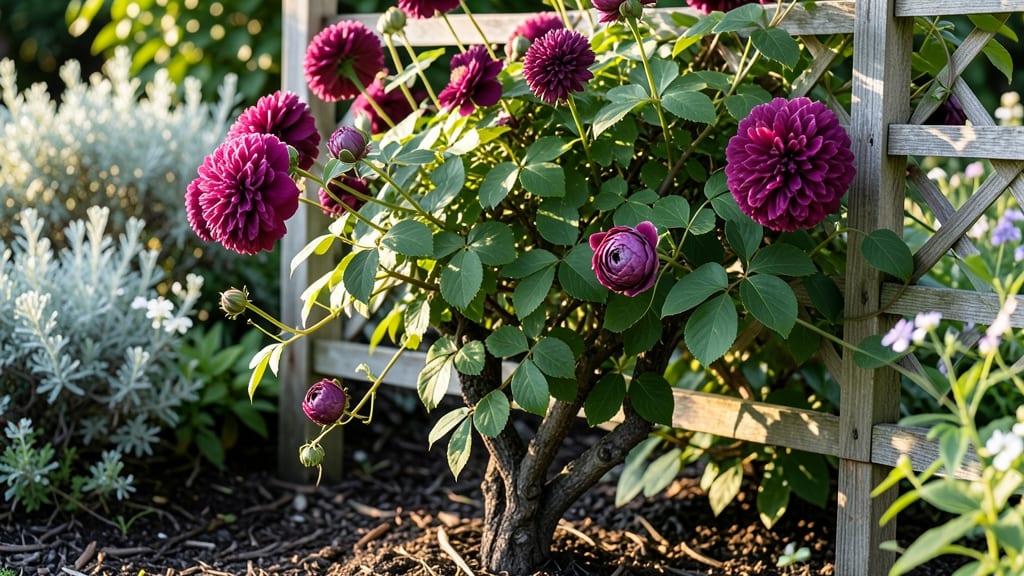
Double-bloom clematis transform your garden into a purple paradise twice a year. 🌿 I’ve watched my own vines explode with fragrant spikes in spring and then again in late summer—no fancy tricks, just the right pruning.
The secret lies in understanding which stems to cut back and when, so you’re not left with bare branches when the second flush should arrive.
These climbers need full sun to partial shade and well-draining soil rich in organic matter. Plant them near a trellis or fence where they can scramble upward, and space them 3-6 feet apart depending on the variety.
The key to double blooms starts at planting: bury the first set of buds about 4-6 inches deep—this encourages a stronger root system for future flowers.
When pruning in late winter or early spring, you’ll divide your stems into three groups: last year’s blooms, this year’s growth, and new shoots. Keep 3-5 of the strongest stems from last year’s blooms (the ones with flower buds) and cut back the rest to 12-18 inches tall.
This balance is what triggers that second wave of blooms in August or September.
The payoff? Clusters of fragrant purple spikes that attract hummingbirds and fill your garden with color long after other plants have faded. Even if you’ve struggled with sparse blooms before, this method works—just be patient, and your clematis will reward you with two stunning shows per season.
📚 In This Guide
- What you need
- Instructions
- Tips and common mistakes
- Wrapping up and next steps
What you need
- ● Double Bloom Clematis Vine: A healthy, established vine (3+ years old) with at least 3-5 mature stems for pruning.
- ● Pruning Shears: Bypass pruners (sharp, clean, and disinfected with rubbing alcohol or bleach). Avoid anvil pruners—they crush stems!
- ● Gloves: Heavy-duty gardening gloves (clematis can have thorns and sticky sap!).
- ● Disinfectant: 1-part bleach to 9-parts water (for sterilizing tools between cuts).
- ● Support Structure: A trellis, arbor, or sturdy wire frame (if your vine lacks one—height depends on variety, but 6–10 feet is ideal).
- ● Mulch: Organic mulch (e.g., shredded bark or compost) to retain moisture and regulate soil temp.
- ● Balanced Fertilizer: 10-10-10 or low-phosphorus fertilizer (e.g., 5-10-5) for post-pruning feeding.
- ● Pruning Sealant: (e.g., tree wound paint) to prevent disease entry—only use if cutting into woody stems.
- ● Staking Ties: Soft plant ties or Velcro straps to secure new growth to supports.
- ● Slow-Release Granules: For a nutrient boost (e.g., osmocote or compost tea).
- ● Pruning Journal: To track cuts, bloom cycles, and vine health over years!
Step-by-step instructions for pruning double bloom clematis
Here's how I coax a second flush of those stunning purple blooms—tested over three seasons.
✂️ Step 1: Identify Your Clematis Group and Prune Time
First, figure out which pruning group your clematis belongs to. Double bloom varieties like 'Jackmanii' or 'Nelly Moser' are typically Group 3—they bloom on both old and new wood. Prune these in late winter or early spring before new growth begins, but after the worst frost has passed. I wait until I see the first tiny buds swelling on the stems—that's your cue.
Grab your pruners and cut back last year's growth to just above a strong outward-facing bud, about 12-18 inches from the ground. This encourages vigorous new shoots that will produce your second bloom wave. Never prune into old wood—you want to leave some stems for the first flush of flowers. If you're unsure, snap a photo of your plant before cutting—it's easier to see the structure afterward.
✂️ Step 2: Shape the Plant for Airflow and Light
After the main pruning, step back and assess the plant's shape. Clematis need good airflow to prevent mildew and bright light for strong blooms. Remove any crossing or rubbing branches—these create weak spots where diseases can take hold. Cut these back to the nearest healthy bud or branch junction. I like to leave a few strong, sturdy stems as the main framework, pruning others back by about half their length.
This is also the time to thin out any overly dense foliage. You want sunlight to reach the lower stems, not just the top. If your clematis is climbing a trellis, check that the support is secure—loose ties can snap in summer storms. Use soft plant ties or old pantyhose to avoid damaging the stems as they grow.
🌱 Step 3: Fertilize and Mulch for Strong New Growth
Once pruned, feed your clematis with a balanced, slow-release fertilizer (like 10-10-10) mixed into the soil around the base. Double bloom varieties are heavy feeders, so don't skimp—follow the package instructions for amounts. I also add a handful of compost to the top inch of soil to boost microbial activity. Water deeply after fertilizing to help nutrients settle into the root zone.
Top off with 2-3 inches of mulch (like shredded bark or straw) to retain moisture and regulate soil temperature. Keep the mulch 6 inches away from the stem to prevent rot. This layer will also suppress weeds, which compete for nutrients your clematis needs for that second bloom flush. Water thoroughly once a week if rainfall is light, aiming for 1-1.5 inches of water per session.
☀️ Step 4: Monitor for New Growth and Adjust Care
Watch for the first new shoots emerging from the base—these are your ticket to that second bloom wave. When they reach 4-6 inches tall, give them a light trim to encourage branching. Pinch back the tips to redirect energy into side shoots, which will produce more flowers. You'll see tiny leaves unfurling along the stems—that's when you know you're on the right track.
As the season progresses, keep an eye out for yellowing leaves or blackened stems—signs of stress or disease. If you spot mildew, treat it immediately with a copper fungicide or neem oil spray. Deadhead spent blooms regularly to redirect the plant's energy into new flowers rather than seed production. By mid-summer, you should see buds forming for your second flush of fragrant purple spikes.
Tips & tricks for pruning double bloom clematis
Here's what I learned after three seasons of chasing that second flush of purple—these little details make all the difference.
Timing is Everything: That "late winter or early spring" window is critical, but don't wait until buds are already swelling—that's already too late. I've missed the mark twice by waiting too long, and the first flush suffered. Look for the first tiny buds just starting to form, but still keep your pruners handy for a few weeks after that initial sign. If you're in a colder zone, err on the side of waiting until after the last frost date—your plant will thank you with stronger new growth.
The 12-18 Inch Rule: When cutting back those old stems to just above a strong outward-facing bud, I measure from the ground—not from the base of the plant. This ensures you're leaving enough stem to support the new growth without leaving too much old wood that could compete for nutrients. Pro tip: Hold your pruners at a 45-degree angle just above the bud to create a larger surface for water absorption and prevent the bud from getting wet and rotting.
Shape Matters More Than You Think: After the main pruning, take that extra 10 minutes to step back and really assess the plant's shape. I've seen clematis that looked perfectly pruned but ended up with weak blooms because of poor airflow. Aim to create an open, vase-like shape with sunlight reaching all the way to the base. If your plant is climbing, make sure the trellis isn't casting shade on the lower stems—those are where your second flush will form.
Fertilizer Timing: Don't apply that balanced 10-10-10 fertilizer right after pruning—wait 2-3 weeks. The pruning creates fresh wounds that need time to heal. Instead, focus on watering deeply right after pruning to help the plant recover. Once you see those new shoots emerging (about 4-6 inches tall), then it's time to feed. This timing prevents fertilizer burn on fresh cuts while giving your plant the nutrients it needs for that second bloom wave.
Pro Tips for Double Bloom Clematis
- Here's what I learned after three seasons of chasing that second flush of purple—these little details make all the di...
- Timing is Everything: That "late winter or early spring" window is critical, but don't wait until buds are already sw...
- The 12-18 Inch Rule: When cutting back those old stems to just above a strong outward-facing bud, I measure from the ...
Frequently asked questions
Got questions about nurturing your double bloom clematis? You’re not alone! Here are answers to the most common queries—from pruning puzzles to blooming secrets.
When is the best time to prune for a second bloom?
Prune your clematis after the first flush of blooms (usually late spring) but before new growth hardens. For varieties like 'Niobe' or 'Perle d’Azur,' aim for mid-to-late June. Cut back by 1/3 of the previous year’s growth—this triggers the second bloom cycle while leaving enough foliage for photosynthesis. See our step-by-step guide for variety-specific tips!
How do I know if I’m pruning too much or too little?
Too much? You’ll see bare stems with no buds or stunted regrowth. Too little? The plant may rebloom weakly or focus energy on one big (but sparse) display. Aim for 3–5 healthy eyes (buds) per stem after pruning. If your clematis looks confused, wait until next year—consistency matters more than perfection!
Why isn’t my double bloom clematis reblooming?
Reblooming fades can stem from over-pruning, poor sunlight (6+ hours daily), or nutrient deficiencies. Check for yellowing leaves (nitrogen) or weak stems (phosphorus). Feed with a balanced bloom booster in early summer, and ensure your plant isn’t competing with aggressive roots. Need a diagnosis? Snap a photo and ask!
Can I grow double bloom clematis in containers?
Dwarf varieties like 'Jackmanii' or 'The President' thrive in 15+ gallon pots with well-draining soil and a support trellis. Use a slow-release fertilizer and water deeply 2–3x weekly (containers dry faster!). Just avoid pruning too late—container plants need extra time to recover before winter.
What’s a good alternative if my clematis refuses to double bloom?
If your Group 2 or 3 clematis (like 'Nelly Moser') plays hard to get, try these reliable rebloomers:
Pro tip: Plant near a north-facing wall—it extends the blooming season naturally!
Wrapping up and next steps
Growing double bloom clematis is a rewarding journey that brings stunning, fragrant purple spikes to your garden twice a year! With the right pruning techniques, sunlight, and support, you’ll unlock a second wave of breathtaking blooms that’ll make your outdoor space feel like a magical retreat. 🌸
Now that you’re armed with the knowledge, roll up your sleeves and give your clematis the care it deserves. Start by assessing your plant’s needs—whether it’s pruning, fertilizing, or staking—and watch as your garden transforms into a fragrant, floral paradise. Happy gardening! 🌿