
Size
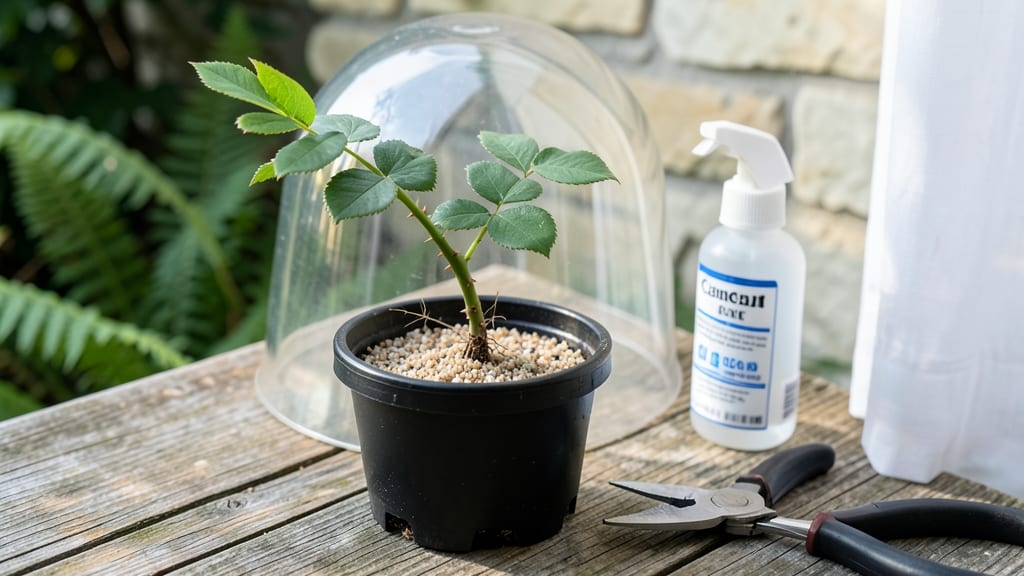
You can grow a rose plant from stem with just water and patience—no fancy tools or green thumb required. 🌹 I’ve turned grocery-store roses into full-size plants, and you can too. The key is choosing the right stem and giving it the perfect start, whether in water or soil.
You’ll need just three things: a healthy stem with at least three sets of leaves, clean water or moist soil, and a bright spot with indirect light.
Most people overthink this—it’s simpler than it looks. My first attempt rooted in two weeks, and now I’ve got three new rose bushes from cuttings.
By the time you’re ready to transplant, you’ll have strong roots and fresh growth. The roses will bloom just like their parent plant, sometimes even more prolifically. It’s satisfying to watch something so delicate transform into something sturdy and beautiful.
Works for hybrid teas, floribundas, or climbing roses—just adjust the care slightly based on the variety. Here’s how to do it without stress or guesswork.
📚 In This Guide
- What you need
- Instructions
- Tips and common mistakes
- Wrapping up and next steps
What you need
- ● Rose stem: A healthy, non-flowering stem (4–6 inches long) with at least 3–5 leaf nodes (swollen areas where leaves grow). Cut from a mature plant in spring or early summer.
- ● Clean, sharp pruners or scissors: Sterilized to prevent disease (rubbing alcohol wipe works!).
- ○ Rooting hormone (optional but recommended): A powder or gel containing auxin (e.g., Rootone or Clonex).
- ● Water (for water propagation): Room-temperature, chlorine-free water (use filtered or rainwater if possible).
- ● Small glass or jar (for water method): Large enough to submerge the stem’s nodes (e.g., 8–12 oz mason jar).
- ● Well-draining potting mix (for soil method): A blend of 50% perlite/sand and 50% peat moss or coco coir to prevent rot.
- ● Small pots or containers (for soil method): 3–4 inch diameter with drainage holes (e.g., plastic nursery pots or yogurt cups with holes poked in the bottom).
- ● Plastic bag or humidity dome: To create a mini greenhouse (e.g., ziplock bag or clear plastic wrap).
- ● Spray bottle: Filled with water for misting (keeps humidity high!).
- ● Activated charcoal tablets: Adds to water to prevent bacteria and keep it fresh.
- ● Heating mat (for soil method): Speeds up root growth (set to 70–75°F).
- ● Fertilizer (low-dose): A balanced liquid fertilizer (5-5-5 or 10-10-10) diluted to ¼ strength after roots form.
- ● Grow lights or sunny windowsill: 6+ hours of bright, indirect light daily (south-facing window or LED grow light).
- ● Twine or rubber bands: To secure the plastic bag around the pot.
Step-by-step instructions for growing a rose plant from a stem
Here's my foolproof method for growing a rose bush from a single cutting—whether you root it in water or soil.
🌱 Step 1: Select and Prepare the Stem
Choose a healthy stem from last year's growth that's about 6-8 inches long with at least 3-4 buds. The stem should be pencil-thick and free of flowers or leaves near the base. Use clean, sharp pruning shears to cut it at a 45-degree angle just below a bud.
Remove all leaves except the top 2-3, then trim those in half to reduce moisture loss. This is where it gets fun—watch the stem for fresh cuts that ooze a little sap. That's your sign the cutting is healthy and ready to root. Place the prepared stem in a glass of room-temperature water or directly into moist soil.
💧 Step 2: Root in Water or Soil
For water rooting, use a clean jar filled with 2-3 inches of filtered or rainwater. Submerge only the bottom 2 inches of the stem, leaving the buds above water. Change the water every 3-4 days to prevent bacterial growth. You'll see roots emerge in 2-4 weeks—look for tiny white hairs forming at the cut end.
For soil rooting, mix equal parts perlite and potting mix to create a fast-draining medium. Dip the cut end in rooting hormone powder, then insert the stem 2 inches deep into the mix. Keep the soil consistently moist but never soggy. Cover the pot with a clear plastic bag to create a humid environment, and place it in bright, indirect light.
☀️ Step 3: Encourage Growth and Transplant
Once roots reach 2-3 inches long (for water rooting) or new leaves appear (for soil rooting), your cutting is ready to become a plant. If rooting in water, transfer it to a small pot filled with moist potting mix, burying the roots 1 inch deep. Water lightly and place in bright indirect light for 1 week to help it adjust.
After 2 weeks, gradually introduce the new plant to direct sunlight by moving it outdoors to a shaded spot for 2-3 hours daily. Watch for new growth—this is your signal the roots have established. Once the plant shows 4-6 new leaves, it's ready to be planted in the garden or a larger container.
✂️ Step 4: Maintain and Prune for Strong Growth
Keep the soil consistently moist but never waterlogged—roses hate soggy roots. Fertilize lightly with a balanced 10-10-10 fertilizer every 4-6 weeks during the growing season. Prune any yellow or damaged leaves immediately to redirect energy to new growth.
Here's the thing—roses grow best with a little regular care. Pinch back the tips of new growth to encourage bushier development. By 6 months, your cutting will have transformed into a sturdy rose bush ready for blooms. Real talk: the first flowers might be small, but they'll get bigger and more abundant each year.
Tips & tricks for perfect rose plant propagation
Took me a while to figure these out, so here goes—these simple tricks will help your rose cuttings thrive.
Timing Secret: The best time to take cuttings is in early morning when the plant is fully hydrated. This is when the stem is most resilient and ready to handle the stress of propagation. I've found that cuttings taken after a light rain work even better because the stem is already hydrated from nature.
Rooting Hormone Hack: If you don't have rooting hormone powder, you can make a DIY version by crushing up a few aspirin tablets and mixing them with water to create a paste. Apply this to the cut end of your stem before planting in soil. The salicylic acid in aspirin helps stimulate root growth—just like the commercial version!
Lighting Strategy: For soil-rooted cuttings, place your propagation setup near an east-facing window where it gets gentle morning sunlight. This prevents the delicate new growth from getting sunburned while still providing enough light for photosynthesis. If you don't have a sunny window, a grow light on a timer (14 hours on, 10 hours off) works wonders.
Transplanting Transition: When moving your water-rooted cutting to soil, give it a good soak in clean water for 10 minutes before planting. This helps rehydrate the roots after their time in the jar. After transplanting, don't water immediately—let the roots adjust for 24 hours first to prevent shock.
Pro Tips for Grow Rose Plant From Stem
- Took me a while to figure these out, so here goes—these simple tricks will help your rose cuttings thrive.
- Timing Secret: The best time to take cuttings is in early morning when the plant is fully hydrated.
- Rooting Hormone Hack: If you don't have rooting hormone powder, you can make a DIY version by crushing up a few aspirin tablets and mixing them with water to create a paste.
Frequently asked questions
Got questions about propagating roses from stems? You’re not alone—this method can feel magical but also a little tricky! Below, we’ve rounded up the most common queries to help you grow confidently, whether you’re rooting in water or soil.
Can I grow a rose from any stem?
Not all stems work equally well. Look for healthy, semi-hardwood cuttings (about pencil-thick) from the current year’s growth. Avoid woody or flower-bearing stems—they root poorly. The best time is late spring or early summer when new growth is vigorous and disease-free.
How long does it take for roots to form?
Patience is key! In water, roots typically appear in 2–4 weeks, while soil-rooted cuttings may take 4–8 weeks. Keep the environment warm (65–75°F) and humid, and avoid disturbing the cuttings. If no roots form after 6 weeks, try again with fresh stems.
Should I use tap water or distilled water for rooting?
Tap water often contains chlorine or fluoride, which can harm delicate roots. Use filtered, room-temperature water or distilled water instead. Change the water every 3–5 days to prevent bacterial growth. For soil rooting, keep the medium moist but not soggy—think "damp sponge," not swamp!
What if my cutting rots before rooting?
Rotting is a common issue, usually caused by too much moisture or poor airflow. If you spot mushy stems or black spots, act fast: trim the rotted part, dip in rooting hormone, and replant in fresh, dry soil or clean water. Ensure your container has drainage holes to prevent waterlogging.
Can I root a rose from a store-bought bouquet?
Many grocery store roses (like hybrid teas or floribundas) root well. Just skip stems with sprayed preservatives (they’re treated to last longer, not root). Trim to 6–8 inches, remove leaves below the waterline, and follow the same steps as above. Pro tip: Avoid thorny or overly woody stems—they’re harder to root.
How do I transition rooted cuttings to soil?
Once roots reach 1–2 inches long, it’s time to plant! Gently transfer the cutting to a small pot with well-draining soil, keeping the roots covered but the stem above soil. Water lightly and place in bright, indirect light for 1–2 weeks to acclimate. Avoid direct sun or wind until new growth appears.
Wrapping up and next steps
Growing a rose plant from a stem is a rewarding journey that blends patience with pure magic! 🌱 Whether you root in water or soil, the key is consistency—keeping your cuttings hydrated, well-lit, and free from stress.
With a little care, you’ll soon watch those stems transform into thriving roses, ready to grace your garden or brighten someone’s day.
Now that you’re armed with the know-how, take the next step! Grab a stem from your favorite rose bush and start your own propagation adventure. Share your progress with fellow gardening enthusiasts—you’ll inspire others to grow their green thumbs too! 🌸