
How To
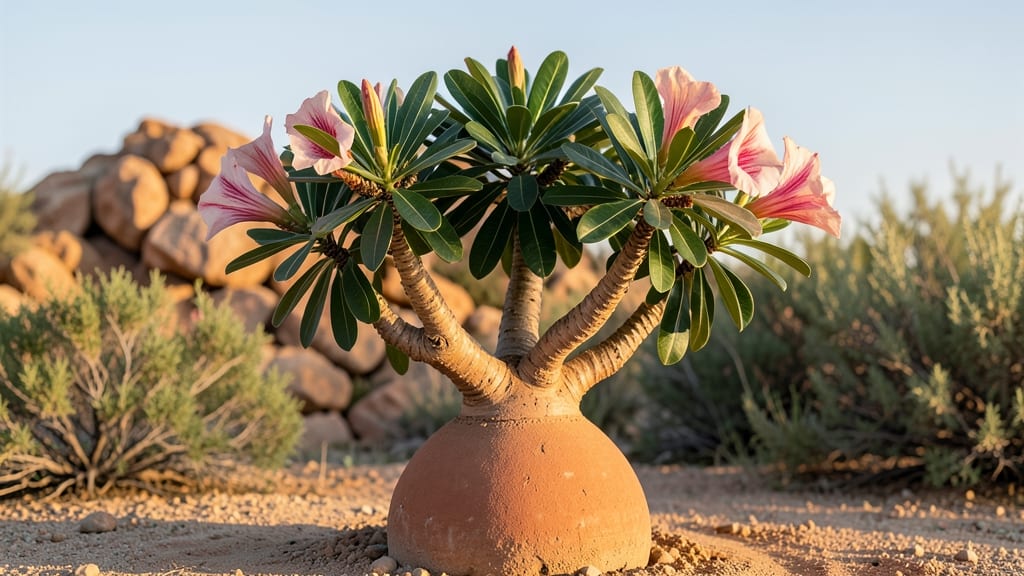
Before planting, it’s smart to research how tall does a desert rose grow, since its height—ranging from 3 to 10 feet—will shape your garden’s design.
Picture this: a compact 🌵 desert rose in a pot on your patio, barely reaching your waist, or a towering specimen in your desert landscape, casting shade over a small seating area.
The difference comes down to pruning, sunlight, and whether you’re growing it indoors or outdoors in USDA Zone 9b.
Some varieties stay under 3 feet when pruned regularly, while others can stretch toward 10 feet if left unchecked. The key is understanding how each type matures and what tricks—like strategic trimming or container size—can keep it at your ideal height.
Below, I’ll break down the height ranges by variety, how to control growth, and whether your desert rose is better suited for a container garden or a bold landscape statement. Ready to get the sizing right?


Desert rose height by variety: mature size expectations
Choosing a desert rose (Adenium obesum) means selecting a plant with dramatic height potential—from compact dwarf varieties to tree-like specimens reaching 10 feet. The key to predicting mature size lies in understanding genetics, pruning habits, and growing conditions.
Without intervention, many desert roses grow 5-8 feet tall in ideal climates, but their true height depends entirely on the variety you pick.
Genetics play the biggest role in final height. Some dwarf varieties stay under 3 feet, while others grow aggressively when unpruned. Even within the same species, rootstock differences can create plants that mature at half the height of their siblings.
For example, a grafted desert rose on a dwarf rootstock might stay at 2 feet, while an ungrafted plant of the same top variety could reach 6 feet.
Here’s how common desert rose varieties compare in mature height, including their growth habits and ideal uses:
| Variety | Mature Height (ft) | Growth Habit | Best For |
|---|---|---|---|
| Dwarf Varieties (e.g., 'Baby Doll', 'Mini Rose') | 1.5–3 ft | Compact, bushy | Containers, small gardens |
| Standard Varieties (e.g., 'Black Prince', 'Pink Parfait') | 4–6 ft | Upright, multi-stemmed | Landscaping, patio borders |
| Tree Forms (e.g., 'Giant Adenium', ungrafted wild types) | 6–10 ft | Single-trunk, woody | Specimen plants, large landscapes |
| Grafted Varieties (e.g., 'Desert Queen' on dwarf rootstock) | 2–4 ft (controlled) | Bushy, controlled | Containers, bonsai-style |
Your growing conditions also shape final height. Desert roses in full sun and warm climates (USDA Zones 9–11) grow faster and taller, while those in cooler zones or shade may stay shorter.
For example, a 'Black Prince' in Arizona might reach 7 feet, but the same plant in Zone 8 could max out at 4 feet due to slower growth.
Pruning is the most effective tool for controlling height. If you want a 3-foot desert rose in a container, prune back 1/3 of new growth annually in early spring.
For tree forms, avoid heavy pruning—they rely on their thick, woody stems for structural support. Always use sterilized shears to prevent disease when trimming.
Container-grown desert roses rarely exceed their pot size unless root-bound. A 5-gallon container will limit most varieties to 3–4 feet, while a 15-gallon pot allows 5–6 feet of growth. If you notice roots circling the pot, repot immediately to avoid stunted growth or root rot.
Light exposure directly impacts height. Desert roses in partial shade grow 30–50% shorter than those in full sun. If you’re growing indoors near a south-facing window, expect 2–3 feet of height—far less than outdoor specimens.
For maximum height, place your plant in direct sunlight for 6+ hours daily.
Soil drainage is another height-influencing factor. Poor drainage leads to root stress and stunted growth, while well-draining cactus/succulent mixes encourage taller, healthier plants. Amend heavy clay soil with perlite or pumice to improve drainage and support optimal growth.
For fastest height gain, fertilize lightly in spring and fall with a low-nitrogen, high-phosphorus blend (e.g., 5-10-10). Avoid heavy feeding—it promotes leafy growth over height. Instead, focus on balanced care to encourage upward expansion naturally.
If you’re planning your garden layout, remember: desert roses need space. A 6-foot variety planted near a walkway will eventually require pruning to prevent overgrowth. For small spaces, choose dwarf or grafted varieties and prune regularly to maintain your desired height.
How to control desert rose height: pruning and growth tips
Managing your desert rose height starts with understanding its natural growth patterns. Without pruning, these stunning succulents can grow 5-6 feet tall outdoors, while container-grown varieties typically stay 3-4 feet. The key to controlling height lies in seasonal pruning and understanding when to trim for optimal shape.
Desert roses grow most actively during spring and summer, with new growth emerging from the thick, woody base. This makes late spring the perfect time to prune for height control, as the plant enters its dormant phase in fall and winter.
Container plants may need more frequent pruning since their root systems are restricted.
- 1. Spring Pruning: Trim 1/3 of new growth after last frost to encourage bushier growth and control height. Use sterilized shears at a 45° angle.
- 2. Summer Maintenance: Lightly prune spent flowers to redirect energy to foliage growth. Avoid heavy cuts during peak heat.
- 3. Fall Dormancy: Stop pruning entirely—let the plant rest before winter. Only remove dead or diseased branches.
- 4. Winter Care: Prune only if needed for shape, using clean cuts to prevent rot in cold climates.
- 5. Container-Specific: Prune roots and tops annually if pot-bound. Repot every 2-3 years to refresh growth.
For container-grown desert roses, regular pruning is essential to prevent leggy growth. I recommend trimming back by 1/3 every spring to maintain a compact shape. Always use sterilized tools to avoid introducing pathogens to the plant's thick, water-storing stems.
If your desert rose grows too tall too quickly, it may need more direct sunlight or better-draining soil. These plants thrive in USDA Zone 9b+, where they receive full sun exposure. In cooler climates, keep them in containers for easier winter protection and height management.
Remember that desert roses bloom on new growth, so pruning too late in the season can reduce flowering. Time your cuts to finish by early July to allow enough time for new branches to develop before winter dormancy begins.
For a tree-like form, prune selectively to create a single trunk with branches emerging higher up. This takes patience—allow the strongest central stem to develop before shaping the canopy. Regular watering adjustments (deep but infrequent) also help control vertical growth.