
Pruning
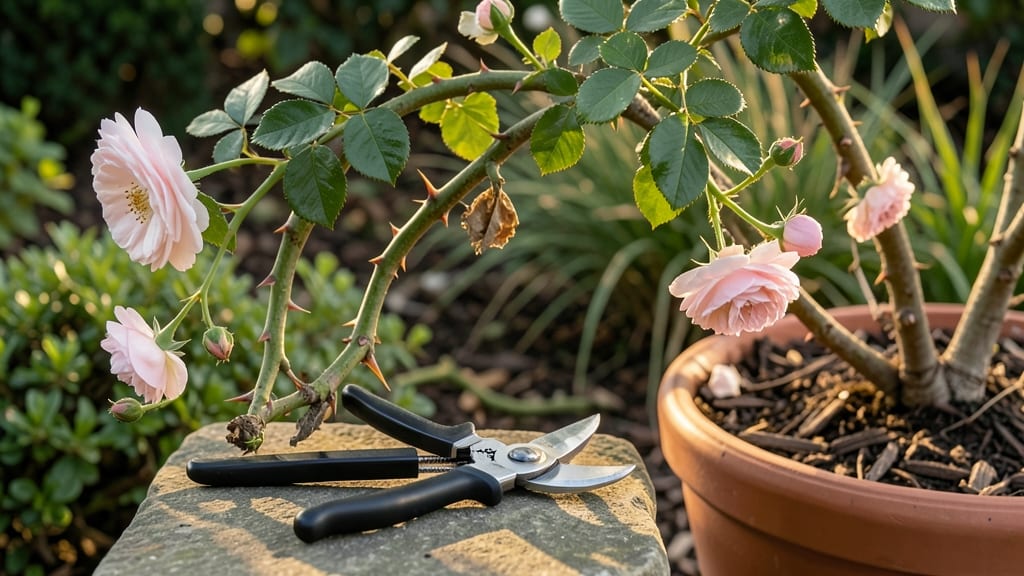
Deadheading climbing roses isn’t just about tidying up—it’s the secret to nonstop fragrant blooms all season. 🌹 I’ve spent years watching roses fade after their first flush, until I learned this simple technique that keeps them flowering like they just got a second wind.
The timing and cuts matter more than most gardeners realize, and I’ll show you exactly how to do it without turning your prized climbers into bare sticks.
You’ll need just three basic tools: sharp bypass pruners, clean hand pruners for smaller stems, and a pair of gloves to protect your hands from thorns.
The real magic happens in late spring and early summer, right after each bloom cycle—cutting back just above a leaf with five leaflets (that’s your growth signal) triggers new buds to form. Ramblers and hybrid teas respond differently, so I’ll walk you through species-specific tricks that make all the difference.
What you’ll end up with is a climbing rose that looks like it’s in peak bloom throughout the entire growing season, not just for a few weeks.
The fragrance stays strong, the branches stay lush, and you’ll avoid the heartbreak of watching roses put all their energy into hips instead of flowers.
This method works for roses trained on trellises, walls, or even arbors—no matter how they’re growing, they’ll reward you with more blooms than you thought possible.
The best part? You’ll troubleshoot common mistakes like over-pruning (which stunts growth) or cutting too late (which invites winter damage). I’ll show you how to spot the signs of stress in your roses and adjust your approach before it’s too late.
Ready to transform your climbing roses into a fragrant, never-ending showstopper?
📚 In This Guide
- What you need
- Instructions
- Tips and common mistakes
- Wrapping up and next steps
What you need
- ● Pruning shears or bypass pruners – Choose sharp, clean ones (7–10" blade length works best for climbing roses). Dull blades crush stems—no good!
- ● Gloves – Heavy-duty gardening gloves (thick leather or reinforced fabric) to protect from thorns and scratches.
- ● Disinfectant (rubbing alcohol or bleach solution) – 1 part bleach to 9 parts water to sterilize tools between cuts.
- ● Trash bag or bucket – For collecting spent blooms and debris (1–2 gallon size).
- ○ Optional: Ladder or step stool – If your roses are tall (6+ feet), safety first! A sturdy 4–6 ft ladder works.
- ● Choose a dry, sunny day – Avoid pruning after rain or in wet conditions to prevent disease.
- ● Work during the rose’s active growth phase – Early morning or late afternoon is ideal to reduce stress on the plant.
- ● Know your rose type – Climbing roses bloom repeatedly (e.g., ‘New Dawn’, ‘Blaze’), so deadheading encourages more flowers.
Step-by-Step instructions for deadheading climbing roses
Here's how I keep my roses blooming all season—no special tools, just sharp eyes and steady hands.
✂️ Step 1: Identify the Right Blooms to Trim
Wait until a rose bloom fades completely—its petals will turn brown and crumble at the touch. This signals the plant has finished using energy on that flower and is ready to redirect it to new growth. I always check in the morning when blooms are fully open; faded ones are obvious with wilted centers.
Never cut healthy buds or partially open blooms. You'll know you're ready when 70-80% of the petals have fallen naturally. For climbing roses, focus on stems with 3-5 spent blooms—these are the most productive branches for new flowers.
✂️ Step 2: Use Clean, Sharp Pruners for Precision Cuts
Wipe your pruners with rubbing alcohol before you start—this prevents spreading disease between cuts. I like to make my first cut ¼ inch above a leaf node where the stem meets a leaf or bud. This is where new growth will emerge, and you want to encourage that.
For climbing roses, look for outward-facing buds—they'll grow away from the center of the plant, creating a more open, airy structure. Make your cut at a 45-degree angle just above the node. This angled cut prevents water from pooling on the stem, which can rot the plant.
✂️ Step 3: Cut Back to the Right Spot for Continuous Blooms
For repeat-blooming climbing roses, cut back to the first 5-leaf cluster below the faded bloom. This ensures you're removing the spent flower but leaving enough energy in the stem to support new growth. I count leaves because they're easier to see than tiny buds.
If you're dealing with a long stem with multiple spent blooms, cut just above the first healthy leaf node below the lowest faded bloom. This single cut removes all the dead flowers while preserving the plant's energy reserves. Avoid "snipping" individual blooms—it weakens the stem over time.
🌿 Step 4: Clean Up and Monitor for New Growth
After deadheading, remove all fallen petals and debris from around the base of the plant. This keeps pests away and prevents fungal diseases from taking hold. I use a small hand broom to sweep up petals—it's faster than picking them up one by one.
Within 7-10 days, you should see new buds forming at the leaf nodes where you made your cuts. These buds will grow into fresh blooms. If you don't see new growth after two weeks, check your rose's watering—climbing roses need 1-2 inches of water weekly during bloom season.
⏰ Step 5: Time Your Deadheading for Season-Long Blooms
Deadhead every 2-3 days during peak bloom season to keep your climbing roses producing flowers nonstop. I set a reminder on my phone for every Tuesday and Friday—consistency is key. In early morning or late afternoon, when temperatures are cooler, is the best time to prune.
By late summer, reduce deadheading to every 5-7 days. The plant needs time to harden off and prepare for winter. Look for hip formation (the round seed pods) as a signal to slow down—this means the rose is shifting its energy toward seed production rather than new blooms.
Tips & tricks for perfect rose pruning
These little details make all the difference between a garden full of roses and one that just keeps putting out the same tired blooms.
Timing Secret: Early morning is your best friend for deadheading—cooler temperatures mean less stress on the plant, and the blooms are fully open, making faded ones obvious. I've learned the hard way that afternoon pruning can shock the plant, especially on hot days. Also, if you're in a humid climate, avoid pruning when dew is still on the petals to prevent fungal issues.
Precision Cutting Technique: When making your 45-degree angle cut in Step 2, think of it like trimming your nails—you want to avoid any rough edges. I use my non-dominant hand to steady the stem while cutting with my dominant hand. This gives me better control, especially when dealing with thick climbing rose canes. The angled cut isn't just for looks—it creates more surface area for the stem to heal properly.
Growth Monitoring: After your cuts, keep an eye out for those new buds forming within 7-10 days—they'll appear as tiny green swellings at the leaf nodes. If you don't see any after two weeks, it's often a watering issue. I've found that climbing roses need 1-2 inches of water weekly during bloom season, but the soil should never be soggy. A moisture meter comes in handy here if you're unsure.
Seasonal Adjustment: The shift from every 2-3 days to every 5-7 days in late summer is crucial. This isn't just about cutting less—it's about letting the plant prepare for winter. I've seen roses that were over-pruned in fall struggle to bloom the next season. Look for those round seed pods (hips) as your natural signal to slow down—it's the plant's way of telling you it's time to focus on survival rather than flowers.
Pro Tips for Deadhead Climbing Roses
- These little details make all the difference between a garden full of roses and one that just keeps putting out the same tired blooms.
- Timing Secret: Early morning is your best friend for deadheading—cooler temperatures mean less stress on the plant, and the blooms are fully open, making faded ones obvious.
- Precision Cutting Technique: When making your 45-degree angle cut in Step 2, think of it like trimming your nails—you want to avoid any rough edges.
Frequently asked questions
Got questions about deadheading climbing roses?
You’re not alone! Here are the most common queries—plus quick, expert answers to keep your roses thriving.
When is the best time to deadhead climbing roses?
Deadhead right after a bloom fades (every 2–3 weeks during peak season). For repeat bloomers like ‘New Dawn’ or ‘Blaze,’ prune spent flowers in spring through early fall—avoid heavy cuts in late summer to prevent weak growth before winter. Pro tip: Mornings are ideal to avoid attracting pests to fresh cuts!
Do I cut all the way back to the main stem, or leave a few leaves?
Trim just above a set of 5 leaves (or a healthy outward-facing bud) to encourage new growth. Never cut into old wood—this stunts future blooms. For ramble-type roses, leave a few leaves to shade the stem and protect against disease. See a visual guide for tricky spots!
What if my climbing rose stops blooming after deadheading?
Check for these fixes:
- Over-pruning: You may’ve cut too aggressively. Next time, trim only spent blooms, not entire stems.
- Nutrient deficiency: Feed with rose-specific fertilizer (high in phosphorus) after pruning.
- Pests/disease: Inspect for aphids or black spot. Clean tools with rubbing alcohol between cuts.
Can I deadhead climbing roses in hot or rainy weather?
Skip deadheading if:
- Rain is forecast: Wet cuts invite fungal infections. Wait for dry, sunny days.
- Extreme heat (above 90°F): Stress weakens the plant. Prune in early morning or evening instead.
Are there alternatives to deadheading for lazy gardeners?
Yes! Try these low-maintenance options:
- Let blooms fade naturally: Some roses (like ‘Climbing Iceberg’) self-clean. Just remove seed pods when they form.
- Use bloom-boosting sprays: Products like Foliage Guard extend bloom life by 30–50%.
- Plant near a trellis: Strategic placement reduces hidden deadheads and improves airflow.
Wrapping up and next steps
Deadheading climbing roses might seem like a daunting task, but with the right tools and techniques, you’ll enjoy a garden bursting with continuous, fragrant blooms all season long! 🌹 Remember, timing, clean cuts, and regular maintenance are key—so grab those pruners and give your roses the TLC they deserve.
Ready to transform your garden? Start small—pick one rose bush this weekend and practice your deadheading skills. Before you know it, you’ll be a pro, and your climbing roses will thank you with show-stopping flowers from spring to fall!