
Shrubs
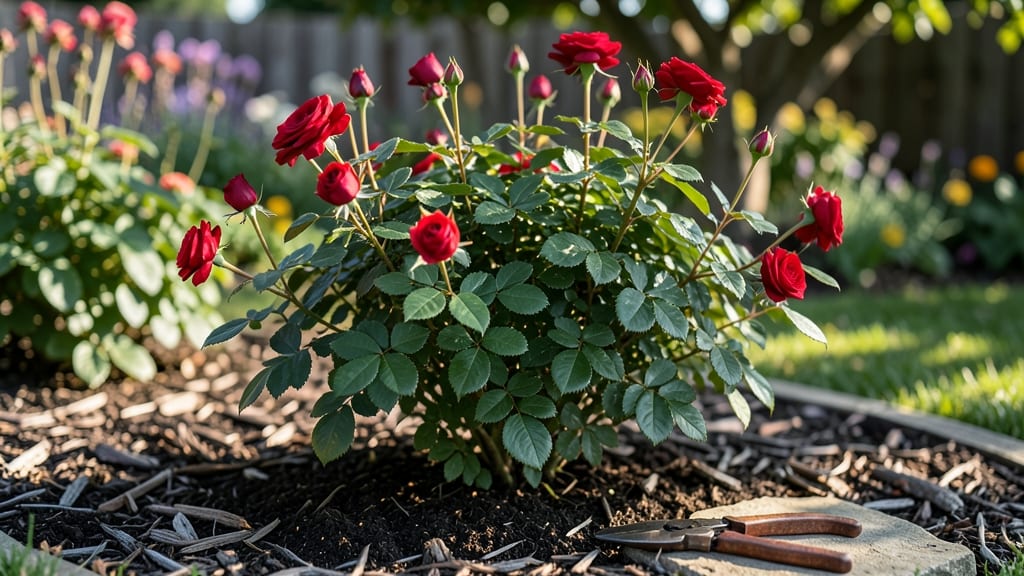
Growing a mini red rose bush that bursts with fragrant blooms all season isn’t just possible—it’s easier than you think. 🌹 My first attempt with a tiny 'Fairy Tale' rose taught me the secret: three strategic trims per year keep these compact beauties thriving without the fuss of full-size roses.
The key lies in when and how you prune, not how often.
Start with the right variety—dwarf roses like 'Playboy,' 'Bonica,' or 'David Austin's 'Mini Pinkie' stay under 2 feet tall and bloom nonstop with minimal effort. Plant in well-draining soil with morning sun and afternoon shade (critical for hot climates), and space them 18-24 inches apart.
Water deeply but infrequently—these roses hate soggy roots—and feed with a balanced rose fertilizer every 4-6 weeks.
Those three pruning sessions? The first in early spring (cut back by 1/3), the second after blooming (shape for bushiness), and the final in late summer (remove spent flowers).
You’ll end up with a neighborhood-jealousy bush covered in velvety red blooms that smell like a Parisian garden. The best part? No deadheading required—they bloom continuously.
Works in containers, along fences, or as a standalone specimen. Even my black thumb can’t kill these—just follow the trim schedule, and you’ll have fragrant red roses for years. Ready to transform your space?
📚 In This Guide
- What you need
- Instructions
- Tips and common mistakes
- Wrapping up and next steps
What you need
- ● Mini red rose bush: Choose a dwarf variety (e.g., 'Fairy Rose,' 'Playboy,' or 'David Austin Mini')—ensure it’s disease-resistant and suited for your climate zone.
- ● Well-draining potting soil: 3–5 gallons (for container gardening) or 1–2 cubic feet (for in-ground planting). Mix with perlite or compost (20% perlite) to improve aeration.
- ○ Container (optional but recommended): 15–20 gallon pot with drainage holes (if growing in containers).
- ● Fabric grow bag (alternative for better root aeration).
- ● Fertilizer: Balanced granular fertilizer (10-10-10 or 20-20-20), 1–2 tbsp per plant.
- ○ Slow-release rose-specific pellets (optional but ideal for steady growth).
- ● Pruning tools: Bypass pruners (sharp, clean, and sanitized with rubbing alcohol).
- ● Hand pruners (for smaller cuts).
- ● Mulch: 2–3 inches of organic mulch (e.g., shredded bark or straw) to retain moisture and regulate soil temperature.
- ● Gloves: Heavy-duty gardening gloves to protect from thorns.
- ● Watering can or hose with nozzle: For gentle, deep watering (avoid wetting foliage to prevent disease).
- ● Rose food or liquid fertilizer: (e.g., Miracle-Gro Rose Food) for a mid-season boost.
- ● Support stake or trellis: 3–4 ft tall (for varieties needing support).
- ● Soil pH tester: Ideal pH for roses is 6.0–6.5; adjust with lime or sulfur if needed.
- ● Fungicide (preventative): Copper-based spray (e.g., Bonide Copper Fungicide) for humid climates.
Step-by-step guide to pruning your mini red rose bush for year-round blooms
Here's how I keep my compact red roses flowering nonstop—just three strategic cuts a year, timed perfectly.
✂️ Step 1: First Spring Trim to Encourage New Growth
Wait until you see new leaf buds swelling on the stems—usually 2-3 weeks after last frost—before making your first cut. I grab my sterilized pruners and remove any dead, diseased, or crossing branches first. These are the ones that look brown and brittle or rub against others.
Next, cut back last year's growth by about one-third, always making clean cuts at a 45-degree angle just above an outward-facing bud. This angle helps water run off the stem instead of pooling. For mini roses, I never cut below the 5th leaf node—that's where their energy reserves live.
☀️ Step 2: Mid-Season Deadheading for Continuous Blooms
As soon as a flower fades, snip the stem back to the first set of five healthy leaves below the bloom. This might seem drastic, but it redirects the plant's energy into producing new buds instead of seed development. I do this every 7-10 days during peak bloom season.
Here's the thing—if you see any stems growing toward the center of the bush, they're competing for sunlight. Cut those back immediately to maintain that rounded shape. Your goal is air circulation, so don't be shy about thinning out crowded areas. Just remember: never cut more than one-third of the plant at once.
⏰ Step 3: Late Summer/Autumn Light Pruning for Winter Prep
About 6 weeks before your first frost, give your mini rose one final trim. Remove any weak, spindly growth that hasn't hardened off yet—these are the stems that look pale and haven't developed thick bark. Cut them back to the nearest strong bud.
Now's also the time to shape the bush for winter. I like to keep mine slightly taller than wide to help snow accumulate and insulate the crown. Just avoid heavy pruning now—you don't want to stimulate new growth that won't have time to harden before cold sets in.
🌱 Step 4: Post-Bloom Renewal Trim (Optional for Year-Round Growth)
If you want nonstop blooms, give your mini rose a light renewal trim after the first flush of spring flowers. Simply cut back any stems that have finished blooming by about half their length, but leave the new growth untouched. This encourages a second wave of flowers.
Watch for new growth emerging from the base—these are your plant's insurance policy for next year's blooms. I make sure to leave at least 3-4 strong stems per plant to maintain vigor. The key is consistency: trim after each bloom cycle, and your mini rose will reward you with flowers nearly year-round.
Tips & tricks for perfect mini red rose bush pruning
These simple yet game-changing strategies will help you maintain your mini red rose bush with confidence and precision.
Timing Secret: Pay close attention to those 2-3 weeks after last frost for your first spring trim. This is when new leaf buds begin to swell, signaling the plant's readiness to grow. I always check for at least three buds opening on a stem before starting—this ensures you're not cutting too early and sacrificing potential blooms. For colder climates, wait until nighttime temperatures consistently stay above 40°F to avoid frost damage.
Cutting Technique: The 45-degree angle cut isn't just aesthetic—it's essential for plant health. This angle prevents water from pooling on the cut surface, which can lead to rot. When cutting back to the 5th leaf node, count carefully: the first node is where the leaves attach to the stem. For mini roses, this precise cut ensures you're preserving enough energy reserves while still encouraging new growth. I always use sharp, sterilized pruners to make clean cuts that heal faster.
Deadheading Discipline: The 7-10 day deadheading schedule might seem frequent, but it's what keeps your mini rose producing blooms continuously. Here's my trick: set a reminder on your phone for every 10 days during peak bloom season. When you see a flower starting to fade (petals curling or dropping), that's your cue to act immediately. The sooner you remove spent blooms, the more energy your plant can redirect to new buds. This is especially important for mini roses—they have limited energy reserves compared to larger varieties.
Winter Prep Strategy: That 6 weeks before first frost window is your last chance to prepare your mini rose for winter. I focus on three key areas: removing weak stems (look for pale, thin growth), shaping the bush slightly taller than wide (helps snow insulation), and avoiding heavy cuts that stimulate new growth. For extra protection in harsh winters, I mound soil around the base of the plant up to the first set of buds—this creates an insulating barrier against freezing temperatures.
Pro Tips for Mini Red Rose Bush
- These simple yet game-changing strategies will help you maintain your mini red rose bush with confidence and precision.
- Timing Secret: Pay close attention to those 2-3 weeks after last frost for your first spring trim.
- Cutting Technique: The 45-degree angle cut isn't just aesthetic—it's essential for plant health.
Frequently asked questions
Got questions about your mini red rose bush? You’re not alone! Here are some of the most common queries—plus quick, expert-backed answers to keep your compact beauty thriving.
How do I know if my mini red rose bush is healthy?
A healthy mini red rose bush has vibrant green leaves, no yellowing or spots, and steady (though modest) growth. Check for pests like aphids or spider mites—tiny webs or sticky residue are red flags. Prune any brown or wilted stems promptly to encourage new blooms. Pro tip: Gently tug a leaf—if it resists, the plant’s well-hydrated!
When is the best time to plant a mini red rose bush?
Spring (after the last frost) or early fall are ideal for planting. Avoid extreme heat or cold, which can stress the roots. If you’re planting in summer, water deeply daily for the first 2 weeks to help it establish. Bonus: Amend the soil with compost to boost nutrient uptake from day one!
Can I trim my mini red rose bush too much?
Yes—but not all at once! Prune no more than 1/3 of the plant’s height in a single session to avoid shock. Focus on dead, crossing, or overcrowded stems. For year-round blooms, trim lightly after each flush of flowers (about every 6–8 weeks). Warning: Avoid cutting into old wood (brown stems)—this can stunt regrowth.
What’s the difference between a mini red rose bush and a regular rose?
Mini red rose bushes (like ‘Fairy Tale’ or ‘Peach Drift’) stay compact (1–3 feet tall), bloom prolifically, and often require less maintenance. Regular roses may need staking, more pruning, and space. Minis are perfect for containers, small gardens, or even indoor growing with bright light! Fun fact: Some minis produce thousands of blooms per season—double the charm in half the space!
How do I fix yellow leaves on my mini red rose bush?
Yellow leaves usually signal overwatering, underwatering, or nutrient deficiency. Check the soil—it should be damp but not soggy. Adjust watering and fertilize with a balanced rose food (like 10-10-10) every 4–6 weeks. If spots appear, treat with neem oil for fungal issues. Quick fix: Mulch around the base to retain moisture and regulate temps!
Can I grow a mini red rose bush in a pot?
Choose a container at least 12–15 inches deep with drainage holes. Use well-draining potting mix and repot every 2–3 years. Place in full sun (6+ hours daily) and water when the top inch of soil feels dry. Container hack: Add a time-release fertilizer tablet when planting for low-maintenance nutrition!
Wrapping up and next steps
A mini red rose bush brings timeless beauty and fragrance to any garden with minimal effort—especially when you master the three key trims! Whether you’re pruning for shape, health, or year-round blooms, these techniques ensure your shrub thrives while keeping maintenance simple. 🌹
Ready to transform your space? Start by grabbling your pruners and scheduling your first trim—your rose bush (and future admiring neighbors!) will thank you. Happy gardening! 🌱