
Diseases
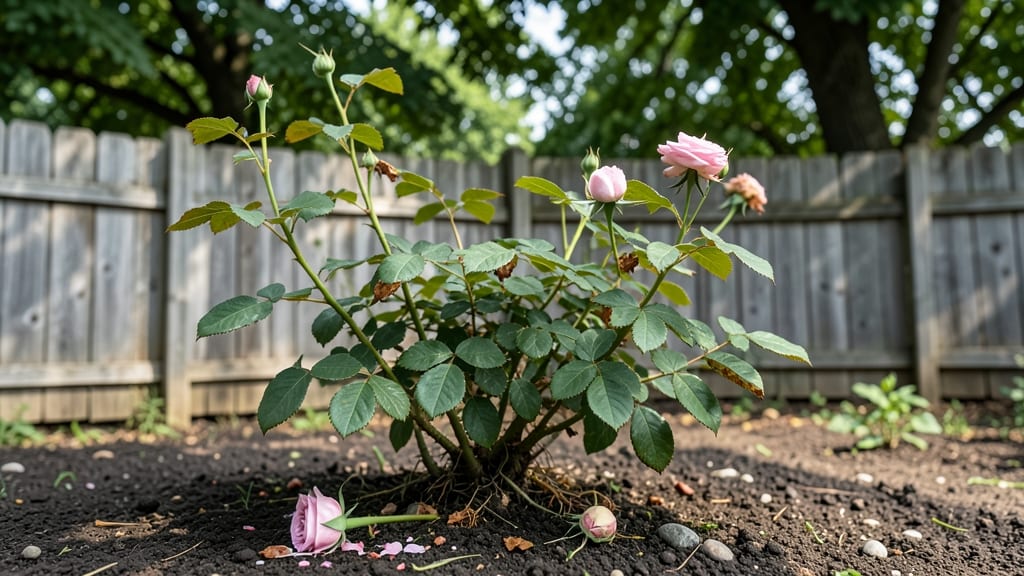
Your rose bush dropping leaves doesn’t have to mean game over—fix it fast with a quick diagnostic. 🌿 I’ve seen black spot, spider mites, and even overwatering turn lush roses into sad skeletons, but the right steps bring them back to full bloom within weeks.
Start by checking the leaves for spots, webbing, or yellowing—each clue points to a different fix. Black spot? Prune infected leaves and spray with neem oil. Spider mites? Blast them off with water. Overwatering? Let the soil dry between waterings. Most problems solve themselves once you identify the root cause.
📚 In This Guide
- What you need
- Instructions
- Tips and common mistakes
- Wrapping up and next steps
What you need
- ● Pruning shears or secateurs – Sharp, clean, and sterilized (70% isopropyl alcohol or bleach solution) to prevent disease spread. Quantity: 1 pair
- ● Gloves – Heavy-duty, long-sleeved gloves (nitrile or rubber) to protect against thorns and potential pathogens. Quantity: 1 pair
- ● Garden trowel or small shovel – For gently lifting soil or inspecting roots if needed. Quantity: 1
- ● Watering can or hose with adjustable nozzle – For deep watering (avoid overhead sprinkling). Quantity: 1
- ● pH testing kit – Soil pH strips or digital meter to check acidity levels (ideal: 6.0–6.5 for roses). Quantity: 1
- ● Fungicide (systemic or contact) – Copper-based or neem oil-based for fungal diseases (e.g., black spot). Quantity: 1 bottle (follow label rates)
- ● Insecticidal soap or horticultural oil – For pests like aphids, spider mites, or scale. Quantity: 1 bottle
- ● Organic mulch – Shredded bark, pine straw, or compost (2–3 inches thick) to retain moisture and regulate temperature. Quantity: Enough to cover base of bush
- ● Notebook & pen – To document symptoms, treatments, and progress over time.
- ○ Magnifying glass (optional but helpful) – For closely inspecting leaves, stems, or pests.
- ● Hand lens or smartphone with macro camera – To capture close-ups of pests/diseases for ID.
- ● Soil moisture meter – To check root-zone hydration accurately.
- ● Epsom salt (magnesium sulfate) – 1 tbsp per foot of plant height if yellowing suggests magnesium deficiency.
- ● Compost or slow-release fertilizer – Balanced 10-10-10 or rose-specific formula for nutrient boosts.
- ● Row cover or shade cloth – If environmental stress (heat/cold) is suspected.
How to diagnose and fix a rose bush dropping leaves quickly
Here’s my no-nonsense approach to identifying why your roses are shedding leaves—and how to stop it fast.
🌿 Step 1: Check for Overwatering or Underwatering
Reach down and feel the soil 2 inches deep. If it’s soggy or smells musty, you’re overwatering. Roses hate wet feet—roots suffocate and leaves drop. If the soil is bone-dry, that’s the problem too. Water deeply once a week (or when the top 2 inches feel dry), ensuring water penetrates 6 inches down. A drip irrigation system or soaker hose delivers moisture evenly without drowning roots.
Watch for yellowing leaves with brown edges—the classic sign of overwatering. Underwatered roses show crispy edges and wilted petals. Adjust your watering schedule immediately. I always check soil moisture in the morning before watering to avoid creating a soggy mess.
☀️ Step 2: Assess Sunlight and Temperature Exposure
Roses need 6+ hours of direct sun daily, but too much scorching afternoon sun can stress them. If your bush is in a spot where leaves curl or scorch (brown patches), it’s getting too hot. Move it to a location with morning sun and afternoon shade if possible. A light shade cloth on hot days helps too.
Cold drafts or sudden temperature swings also trigger leaf drop. If your roses are near a window that drafts at night or in a spot where temps fluctuate wildly, relocate them to a more stable microclimate. I’ve seen roses in patios recover completely after moving them away from AC vents or open garage doors.
🐛 Step 3: Inspect for Pests and Diseases
Flip over a few leaves to check for aphids, spider mites, or sawfly larvae—tiny green or black bugs that suck sap and cause leaves to yellow and drop. A strong spray of neem oil (mixed as directed) or insecticidal soap usually clears them up in 3-5 days. For sawflies, handpick larvae and drop them into soapy water.
Look for black spots, powdery white residue, or fungal growth—signs of black spot or powdery mildew. Prune infected leaves immediately and apply a copper fungicide or baking soda spray (1 tsp baking soda + 1 quart water + a drop of dish soap) every 7-10 days until the issue clears. Always water at the base, not overhead, to prevent fungal spread.
✂️ Step 4: Prune for Health and Airflow
Use clean, sharp pruners to trim away dead, diseased, or crossing branches—these compete for nutrients and stress the plant. Cut just above a healthy outward-facing bud (about ¼ inch above). Avoid heavy pruning mid-season unless absolutely necessary, as it can shock the bush and trigger more leaf drop.
Thin out crowded canes to improve airflow. Roses need good circulation to dry quickly and resist disease. If your bush is densely packed, remove 20-30% of the oldest canes to open it up. This step alone can revive a struggling rose in as little as 2-3 weeks. I always prune on a dry morning to minimize stress on the plant.
🌱 Step 5: Feed and Adjust Soil Conditions
Roses dropping leaves often need a balanced fertilizer (look for 10-10-10 or 20-20-20). Apply it once a month during growing season (spring to fall), following label instructions. Over-fertilizing burns roots, so stick to the recommended dose. If your soil is compacted or poor-draining, amend it with compost or aged manure to improve structure and nutrient availability.
Test your soil’s pH—roses prefer 6.0-6.5. If your soil is too alkaline (pH above 7), add sulfur or peat moss to lower it gradually. A simple soil test kit (available at garden centers) gives you exact readings in 10 minutes. Amending soil takes time, but it’s worth it for long-term recovery.
Tips & tricks for reviving a struggling rose bush
Real talk: Your roses aren't giving up that easily—here's how to turn things around before it's too late.
Soil Test Timing: That 10-minute soil test kit reading isn't just for pH—use it to check moisture too. Press the probe 2 inches deep in multiple spots around the bush. If the soil sticks to the probe, you're overwatering. If it crumbles like dust, it's time to hydrate. I've seen roses recover completely after just adjusting their watering schedule based on this simple test. The key is consistency—stick to the once-a-week guideline unless your local climate demands more frequent watering.
Pest Inspection Strategy: Don't just look at the leaves—check the undersides AND the stems. Aphids love to hide in the leaf axils (where leaves meet stems), while spider mites prefer the undersides. I've caught early infestations by shaking leaves over a white sheet of paper—pests show up clearly against the background. For sawflies, look for clusters of small, green larvae along the new growth. Act fast: those 3-5 days for neem oil to work start from the moment you spot them.
Pruning Precision: That ¼-inch cut above the bud isn't just arbitrary—it's about growth direction. Cutting too close to the bud can damage it, while cutting too far creates a stub that collects water and invites disease. I always make my cuts at a 45-degree angle to shed water away from the bud. And here's a pro move: after pruning, give your roses a light feeding with a diluted fish emulsion (½ the recommended strength) to help them recover faster. The bush will show new growth in about 2-3 weeks if everything's right.
Fertilizer Frequency: The once-a-month guideline works perfectly for most roses, but timing matters more than you think. Apply your fertilizer in early spring when new growth starts, then again in early summer. Avoid fertilizing late in the season—new growth won't have time to harden off before winter. I've seen roses stressed by fall fertilizing because the new growth gets damaged by early frosts. And remember: more isn't better. Stick to the label doses—over-fertilizing causes more problems than it solves.
Pro Tips for Rose Bush Dropping Leaves
- Real talk: Your roses aren't giving up that easily—here's how to turn things around before it's too late.
- Soil Test Timing: That 10-minute soil test kit reading isn't just for pH—use it to check moisture too.
- Pest Inspection Strategy: Don't just look at the leaves—check the undersides AND the stems.
Frequently asked questions
Got questions about why your rose bush is dropping leaves? You’re not alone—this is a common issue, but the good news is most causes have simple fixes. Below, we’ve rounded up the most to help you diagnose and recover faster.
Why is my rose bush dropping leaves suddenly?
Sudden leaf drop is often caused by environmental stress, like extreme heat, cold snaps, or underwatering. Pests (like spider mites) or fungal diseases (such as black spot) can also trigger it. Check for yellowing leaves, spots, or webs—these clues point to the root cause.
Is it normal for rose bushes to drop leaves in fall?
Yes! Roses naturally shed leaves in autumn as they prepare for winter dormancy. However, if leaves turn brown before fall or drop prematurely, it could signal stress (e.g., poor soil, pests, or disease). Prune dead foliage but avoid heavy cuts—save pruning for early spring.
How do I tell if leaf drop is from pests vs. disease?
Use this quick guide:
- Pests (e.g., aphids, spider mites): Look for tiny bugs, webbing, or sticky residue (honeydew) on leaves.
- Disease (e.g., black spot, powdery mildew): Spot dark spots, white powder, or leaf curling. Diseases thrive in humid, poorly ventilated areas.
Can underwatering or overwatering cause leaf drop?
Underwatering
causes wilting and crispy edges, while overwatering leads to yellowing leaves and root rot. Roses need 1–1.5 inches of water weekly, but ensure soil drains well. Stick your finger 2 inches into the soil—if it’s dry, water; if soggy, hold off.
Will my rose bush recover if I fix the problem?
Many roses bounce back with the right care! Focus on:
- Removing affected leaves (but not healthy ones).
- Adjusting watering or improving soil drainage.
- Applying organic mulch to protect roots.
Pro Tip:
Keep a plant journal! Note when leaf drop starts, weather changes, and treatments. Patterns (like drops after heavy rain) help you act faster next time.
Wrapping up and next steps
Don’t let a few dropped leaves stress you out—your rose bush is just sending you a signal! 🌿 With the right diagnosis and care, most issues are fixable, and your roses can bounce back stronger than ever.
Start by identifying the root cause (literally!), then take action with confidence—whether it’s pruning, adjusting water, or treating disease.
Ready to revive your roses? Pick one fix from this guide and monitor progress over the next few weeks. Soon, you’ll be admiring lush, vibrant blooms—and maybe even sharing your success with fellow gardeners! 🌸