
Pruning
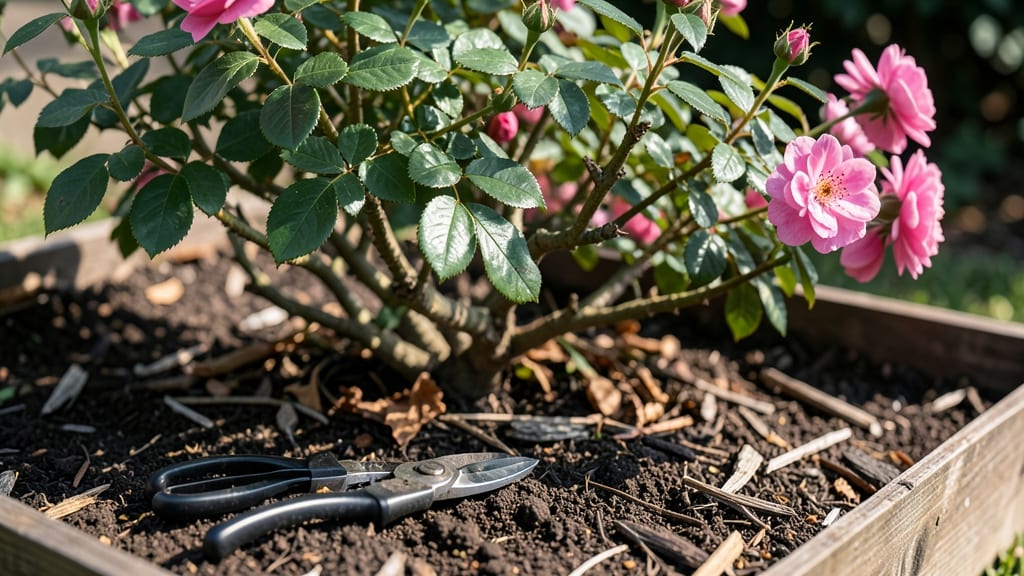
To prune roses in Michigan, timing varies by variety: hybrid teas and grandifloras need pruning in late February to early March before buds break, while Knock Out shrub roses wait until March or April after buds swell. Never prune after late spring to avoid frost damage or disease.
Michigan's cold winters and variable spring frost dates make pruning timing critical. 🌸 The key is watching for bud swell—when buds begin to plump up—rather than relying solely on calendar dates.
Hybrid teas and floribundas benefit from early pruning to encourage strong new growth before summer, while shrub roses like Knock Outs handle later cuts better. I always check the forecast for the last expected frost date in my area (usually mid-May in southern Michigan) to plan my pruning schedule accordingly.
What many gardeners overlook is the importance of sanitizing tools before pruning—using rubbing alcohol or bleach solution prevents spreading fungal diseases like black spot. For hybrid roses, I aim to cut back to an outward-facing bud about 1/4 inch above it, while shrub roses can be pruned more lightly.
The goal is to shape the plant while maintaining airflow to reduce moisture buildup.
💡 In This Article
- Michigan Rose Pruning by Variety and Climate Zones
- Step-by-Step Rose Pruning Guide for Michigan Gardens
Michigan rose pruning by variety and climate zones
Michigan's climate—spanning USDA zones 5 and 6—creates distinct pruning windows for different rose varieties. Hybrid teas and grandifloras, which bloom primarily on new wood, need aggressive pruning in late February to early March while still dormant. This timing removes winter-damaged canes and stimulates vigorous spring growth.
The key trigger is when daytime temperatures consistently reach 40°F, signaling the plant's dormancy break. In northern Michigan (zone 5), wait until mid-March to avoid late frosts that can damage fresh cuts.
Shrub roses like Knock Outs and Explorer series follow a different schedule. These varieties bloom repeatedly on old and new wood, so they tolerate later pruning in March or April after buds visibly swell (about 1/2 inch in size). The delay allows them to harden off from winter stress.
Climbing roses require even lighter pruning—typically just removing dead wood in late winter—while floribundas fall between hybrid teas and shrub roses in terms of timing. What's critical is avoiding pruning after late May, when new growth is too tender for Michigan's unpredictable summer frosts.
The science behind these timings involves plant physiology. Pruning stimulates the release of auxin hormones, which promote cell elongation in buds. When done too early (before 40°F days), canes may not heal properly; too late, and you risk encouraging weak growth that can't withstand Michigan's summer heat waves.
I've found that using a sharp bypass pruner at a 45-degree angle just above an outward-facing bud creates the optimal wound for healing. The angle prevents water from pooling on the cut surface, reducing fungal infections.
Climate zone matters too. Southern Michigan (zone 6) can prune 2-3 weeks earlier than northern areas (zone 5) because frost-free dates arrive sooner. For example, Detroit typically sees its last frost around April 15, while Traverse City waits until May 10.
Always check your local Michigan State University Extension frost maps for precise timing. The goal is to prune when the plant is ready to grow but before it's stressed by extreme temperature swings.
Post-pruning care varies by variety. Hybrid teas benefit from a balanced 10-10-10 fertilizer applied 4-6 weeks after pruning to support new growth. Shrub roses, however, prefer a low-nitrogen, high-phosphorus fertilizer (like 5-10-10) to encourage flowering.
Mulching with 3-4 inches of organic matter (like composted leaves) helps retain moisture and regulate soil temperature—a critical factor in Michigan's variable springs. What most gardeners miss is that over-pruning can actually reduce flowering in some varieties by removing too much leaf surface area for photosynthesis.
Here's a quick reference for Michigan gardeners:
- Hybrid Teas/Grandifloras: Prune late February-early March (before buds swell) to 18-24 inches tall
- Shrub Roses (Knock Outs): Prune March-April (after buds swell) to 24-36 inches tall
- Climbing Roses: Light pruning late winter only; remove dead/diseased wood
- Floribundas: Prune early March to 24-30 inches tall
The most common mistake I see is pruning too late in spring, which stresses plants and opens them to black spot fungus. Always sanitize your tools with 70% rubbing alcohol between cuts to prevent disease spread. 🌿