
Propagation
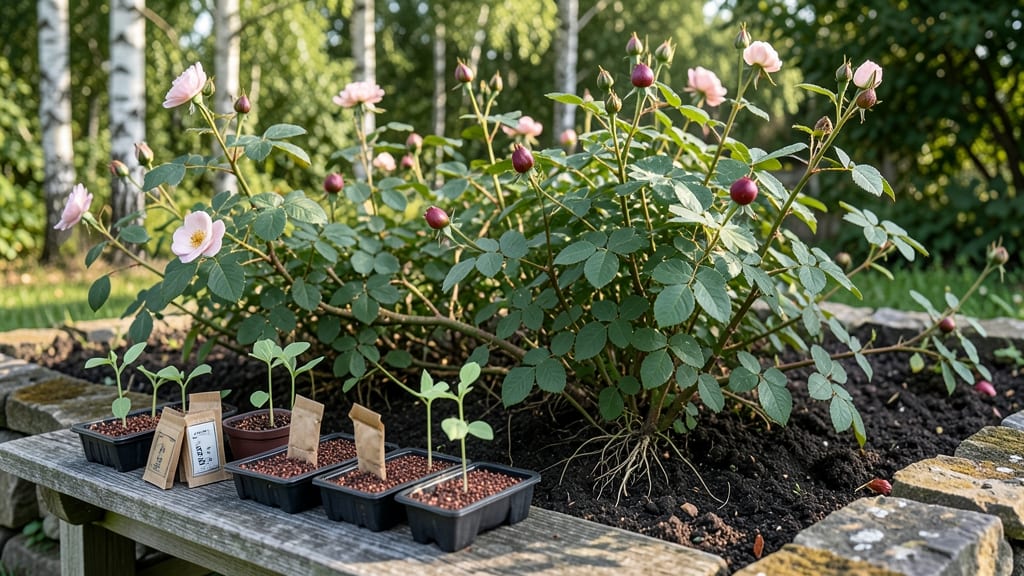
To find rose seeds, look for wild roses or heirloom varieties at specialty nurseries, online seed suppliers, or botanical gardens—since most hybrid roses produce sterile seeds. Rose hips from these plants are your best bet for viable seeds.
Rose seeds don't come from grocery stores or big-box garden centers—they require targeted sourcing. 🌹 Wild roses and heirloom varieties are your best bet, as their hips (the seed pods) contain viable seeds.
Many gardeners turn to online seed banks like Baker Creek Heirloom Seeds or Eden Brothers, which specialize in heirloom and open-pollinated varieties. Local botanical gardens and rose societies often have seed exchanges too, where you can collect hips directly from mature plants.
Always verify the source to avoid sterile hybrids or contaminated seeds.
If you're working with hybrid roses, you'll likely need to start with cuttings instead—most hybrids are bred for specific traits and won't produce true seeds. For heirloom varieties, timing matters: collect hips in late fall or winter when they're fully ripe and slightly soft.
Store them in a cool, dry place until you're ready to extract the seeds, which usually takes about 4-6 months for proper stratification.
💡 In This Article
- How to Identify Viable Rose Seeds from Hybrid Varieties
- Top Online and Local Sources for Authentic Rose Seeds
How to identify viable rose seeds from hybrid varieties
Most hybrid roses—like those bred for vibrant blooms or disease resistance—are sterile, meaning their seeds won't grow into true-to-type plants. This happens because hybridizers crossbreed roses to combine desirable traits, often resulting in seeds that either don't germinate or produce unpredictable offspring.
The key difference lies in their reproductive biology: wild and heirloom roses reproduce naturally through open pollination, while hybrids rely on human intervention to maintain their specific characteristics. 🌿
To spot viable rose seeds, focus on wild roses (Rosa species) or heirloom cultivars, which produce rose hips—the bright red or orange fruit that contains the seeds. These hips typically appear in late summer to early fall, growing to about 1-2 inches in length.
When fully ripe, they'll feel slightly soft and may split open naturally. Inside, you'll find tiny, wrinkled seeds embedded in a gel-like pulp—these are your viable seeds, ready for extraction and stratification.
The germination process begins with stratification, a cold treatment that mimics winter conditions. After extracting seeds from the hips, clean them thoroughly and mix with moist sand or peat moss. Store the mixture in a sealed container at 35-40°F for 4-6 months.
This cold period breaks seed dormancy, allowing them to sprout once warm conditions return. Without stratification, germination rates drop dramatically—often below 10%, compared to 50-70% with proper treatment.
Hybrid roses, on the other hand, often produce hips that are sterile or yield seeds with poor viability. Even if you collect hips from a prized hybrid, the resulting plants may not resemble the parent at all.
This is why gardeners rely on cuttings or grafting for hybrids, while seeds remain the preferred method for propagating wild and heirloom types. The contrast in reproductive success between hybrids and heirlooms highlights why sourcing matters so much—what you buy directly impacts your gardening outcomes.
For those eager to experiment, consider starting with Rosa rugosa or Rosa canina (dog rose), two hardy species known for their high seed viability. Their hips are larger and easier to work with, making them ideal for beginners.
The seeds from these species often germinate within 2-4 weeks after stratification, offering a tangible reward for patience. 🌱
If you're unsure about a rose's parentage, look for open-pollinated labels on seeds or plants—this indicates the variety can reproduce naturally. Many reputable seed suppliers clearly mark their offerings, helping you avoid sterile hybrids.
Always cross-reference with trusted sources like the American Rose Society database to confirm a variety's reproductive capabilities before investing in seeds.