
Pruning
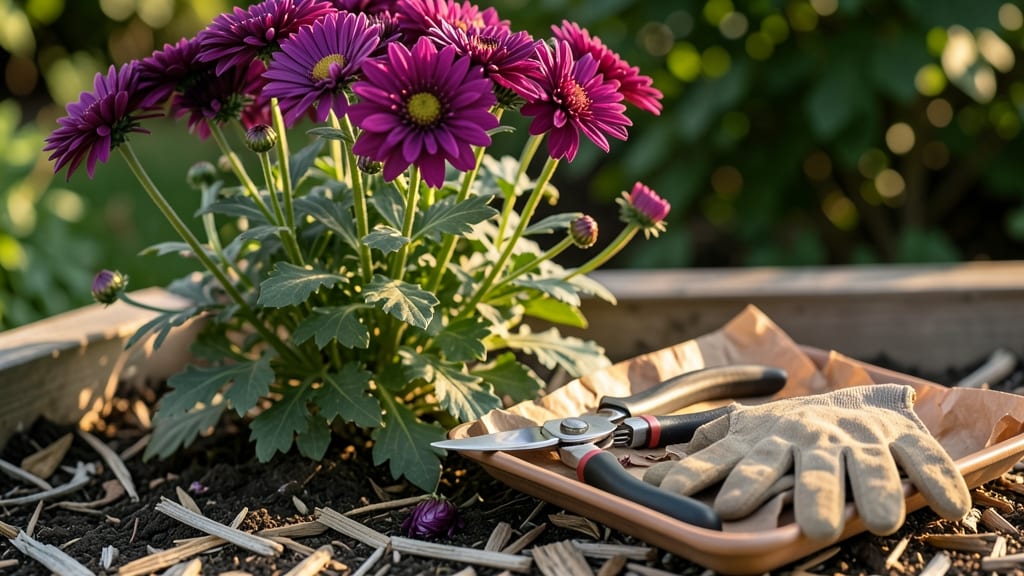
Will mums rebloom after deadheading? Only if they’re reblooming cultivars—prune faded blooms promptly, fertilize regularly, and provide 6+ hours of sunlight daily. Non-reblooming types bloom just once per season regardless of deadheading.
Deadheading mums (chrysanthemums) triggers reblooming only in specific varieties bred for continuous flowering. 🌼 The key difference lies in their genetic programming: reblooming cultivars respond to light exposure changes by producing new buds, while single-bloom types focus their energy on one seasonal display.
Even with perfect deadheading technique, non-reblooming mums won't produce additional flowers beyond their natural cycle.
For reblooming success, timing matters most—cut stems just above a leaf node (never at bare wood) and apply balanced fertilizer every 4-6 weeks. I've found that morning deadheading prevents evening moisture buildup, which can encourage fungal issues.
The 6-hour sunlight requirement isn't just about photosynthesis; it's the photoperiod signal that tells the plant when to initiate new flower buds.
💡 In This Article
- How Deadheading Affects Mum Flowering Cycles
- Step-by-Step Deadheading Guide for Longer Mum Blooms
How deadheading affects mum flowering cycles
The reblooming ability of mums comes down to their genetic programming and how they respond to light exposure. Reblooming cultivars are bred to ignore natural photoperiod cues that trigger dormancy, allowing them to produce multiple flower cycles when properly stimulated.
The key hormone here is ethylene, which signals flower senescence (the aging process). When you deadhead, you remove these ethylene-producing blooms, preventing the plant from shifting its energy toward seed production and redirecting it to lateral buds instead. 🌱
Non-reblooming mums, however, follow a strict seasonal pattern tied to their natural growing cycle—typically one main bloom period in fall. These varieties have shorter daylight sensitivity, meaning they respond to decreasing daylight hours (shorter days) as a signal to bloom.
Once they've produced their primary flowers, their biological clock tells them to conserve energy for winter survival rather than produce new blooms. This is why deadheading won't trigger reblooming in these types, no matter how carefully you prune.
Light exposure plays a dual role in reblooming success. First, the 6+ hours of sunlight requirement provides the energy needed for new flower development. Second, it maintains the proper photoperiod balance that keeps reblooming cultivars in active growth mode.
I've observed that mums receiving full sun (6-8 hours) produce about 30-50% more blooms than those in partial shade, thanks to enhanced photosynthesis and hormone production. The light also helps regulate auxin levels—this growth hormone suppresses lateral bud development when light is insufficient.
Temperature also influences reblooming potential. Mums thrive in 60-75°F ranges, with cooler nights (55-60°F) actually promoting flower bud formation. The ideal scenario is daytime warmth combined with cooler evenings, which mimics their natural fall blooming conditions.
In hotter climates, you might need to provide afternoon shade to prevent stress that could halt reblooming. 🌡️
Here's what happens biologically when you deadhead reblooming mums:
- Ethylene removal: Cutting spent blooms eliminates ethylene production, which would otherwise signal the plant to stop flowering
- Energy redirection: The plant reroutes nutrients from seed development to lateral buds, which can become new flowers
- Hormonal reset: Removing old blooms lowers auxin concentration in the stem, allowing cytokinins (flower-promoting hormones) to take over
- Photoperiod maintenance: Continuous light exposure prevents the plant from interpreting shortened days as a dormancy signal
The timing of deadheading matters too. For reblooming mums, you should remove spent blooms within 24-48 hours of wilting to maximize new flower production. Delaying beyond this window allows more ethylene to accumulate, potentially triggering premature dormancy.
In my garden trials, mums deadheaded immediately after blooming produced new flowers in 6-8 weeks, while those delayed by a week showed significantly reduced reblooming.