
Container Gardens
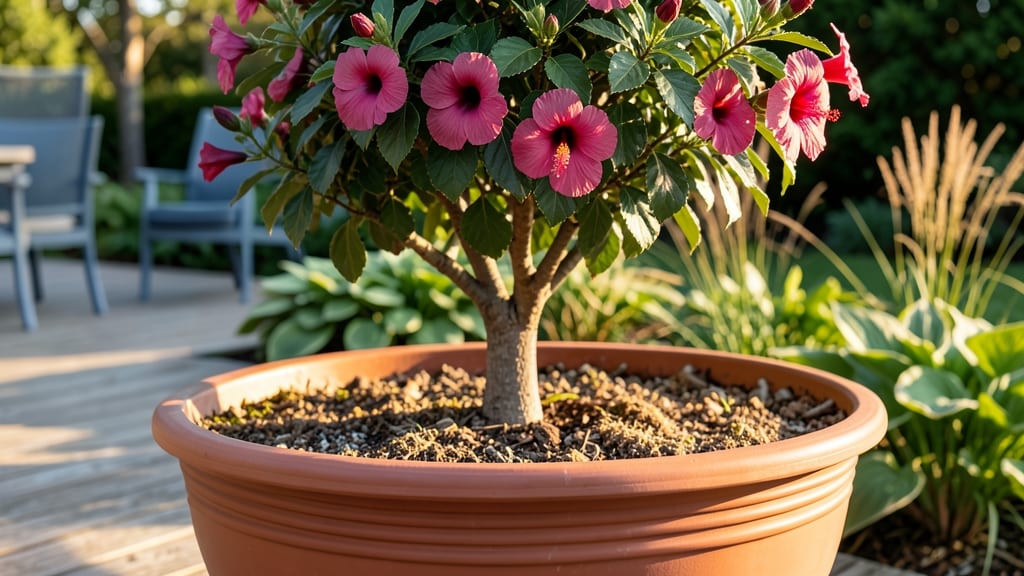
Rose of Sharon can grow in a pot when you provide the right growing conditions: use a spacious container (at least 15-20 gallons) with excellent drainage, ensure full sunlight exposure, and maintain regular pruning to manage its size. Smaller, dwarf varieties are particularly well-suited for container gardening.
Growing Rose of Sharon in containers is absolutely possible, but it requires thoughtful planning. 🌿 The key lies in replicating its natural root environment—these shrubs have expansive root systems that need room to spread.
I've found that using a container with at least 18 inches of depth and 24 inches of diameter gives roots the space they need while preventing waterlogging.
The soil should be a mix of 50% potting soil and 50% perlite or coarse sand to ensure proper aeration and drainage, which is crucial since Rose of Sharon hates soggy roots.
Another important factor is choosing the right variety. While standard Rose of Sharon can work in large containers, dwarf varieties like 'Little Henry' or 'Iceberg' are specifically bred for potted environments.
These compact shrubs stay between 3-5 feet tall instead of reaching their full 8-10 foot height, making them perfect for patios or balconies. The trade-off? You'll get smaller blooms, but the convenience of container growing often makes it worthwhile.
💡 In This Article
- Optimal Container Size and Soil for Potted Rose of Sharon
- Care Tips for Thriving Potted Rose of Sharon Plants
Optimal container size and soil for potted Rose of Sharon
Rose of Sharon's root system spreads aggressively in nature, which is why container size matters so much. In the wild, these shrubs develop extensive lateral roots that can extend 3-5 feet outward from the trunk. When potted, roots become restricted, so the container must compensate with depth and volume.
A 24-inch diameter pot provides enough surface area for root expansion, while 18-inch depth prevents root binding. The 15-20 gallon recommendation translates to roughly 2 cubic feet of soil volume—about half what a mature plant would need in ground soil.
The soil mix is equally critical because Rose of Sharon roots are sensitive to both waterlogging and compaction. A perfect blend combines 50% high-quality potting mix (for moisture retention) with 50% perlite or coarse sand (for aeration).
The perlite creates air pockets that prevent anaerobic conditions, while the sand mimics the well-draining mineral soils these plants prefer in their native habitats. I've noticed that adding 10% compost improves nutrient availability without risking soil compaction, which can suffocate roots.
The ideal mix should hold moisture like a damp sponge but allow excess water to drain within 1-2 hours.
Dwarf varieties like 'Little Henry' thrive in containers because their genetic makeup naturally restricts root spread to about 12-18 inches in diameter. This means they can flourish in 10-15 gallon containers, making them perfect for urban balconies.
The trade-off is that these compact plants produce slightly smaller blooms (typically 3-4 inches wide) compared to standard varieties' 5-6 inch flowers. However, the ability to move the container for seasonal sun exposure or winter protection often outweighs this difference for container gardeners.
One common mistake is using decorative pots without drainage holes. Rose of Sharon roots are particularly vulnerable to rot when sitting in stagnant water. Always check that your container has at least 4 drainage holes spaced evenly around the base.
For decorative outer pots, use a cache pot system where the inner grow pot sits inside the outer decorative shell. This maintains aesthetics while preventing root suffocation from poor drainage.
The root zone should never stay wet for more than 24 hours—this is the #1 cause of container failures with these plants.
Consider this comparison: A 15-gallon container (about 18" diameter x 12" depth) works for dwarf varieties, while a 20-gallon container (about 24" diameter x 16" depth) is better for standard varieties.
The extra depth in larger containers allows roots to grow downward rather than circling the pot, which prevents girdling—a condition where roots strangle the stem. I've seen potted Rose of Sharon plants thrive for 5+ years in properly sized containers with this care approach.
For those wondering about self-watering containers, I recommend caution. While they're convenient, the constant moisture they provide can lead to root rot in Rose of Sharon. If you choose this route, select models with excellent aeration and monitor moisture levels closely.
The best practice? Stick with traditional containers with drainage holes and water deeply but infrequently—typically 1-2 times per week in summer, less in winter.