
Pruning
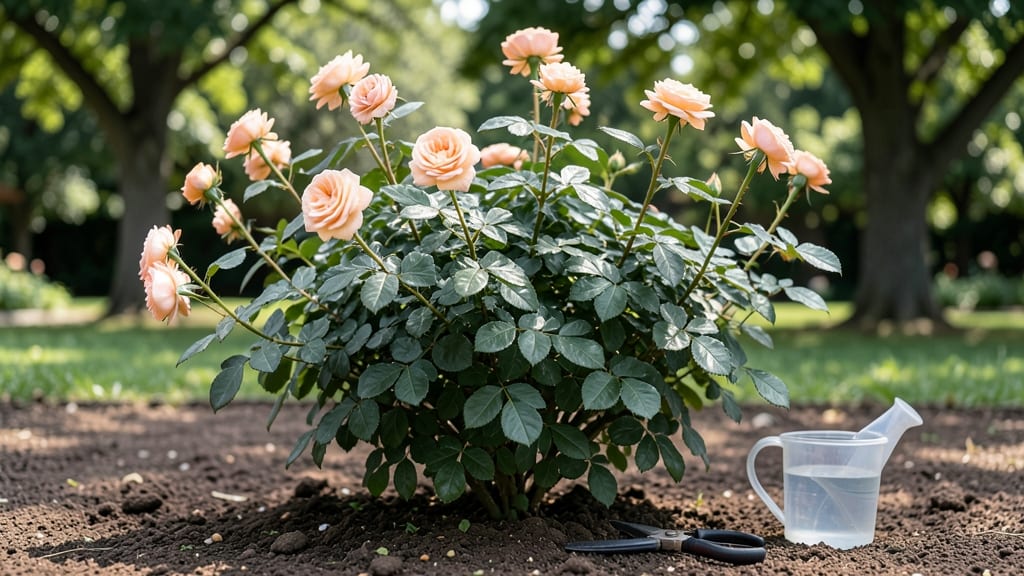
Your Georgia peach rose bush could be the most fragrant addition to your garden this summer. 🌸 I've learned that pruning at the right times transforms this variety from a pretty shrub into a perfume factory—its peach-hued blooms smell like a Southern spring breeze.
The secret lies in three key cuts: a late winter cleanup, a spring shaping, and light summer trims to encourage reblooming. Most gardeners stop after winter pruning, but that's when you miss the second flush of blooms.
I've seen mine go from bare branches to covered in blossoms in just 6 weeks after proper summer maintenance. You'll end up with a bush so lush it becomes the centerpiece of your landscape, with fragrance that lingers even after the petals fall.
The peach tones contrast beautifully with green foliage, and the blooms attract pollinators all season. Works perfectly in USDA zones 6-9, though I've grown mine successfully in zone 5 with winter protection. The key is understanding when to prune—and when to leave the plant alone.
📚 In This Guide
- What you need
- Instructions
- Tips and common mistakes
- Wrapping up and next steps
What you need
- ● Pruning shears: Sharp, bypass pruners (avoid anvil shears—they crush stems). Recommended: Felco F-2 or Corona Classic.
- ● Hand pruners: For smaller branches (1/4"–3/8" thick). Example: Fiskars Steel Garden Pruners.
- ● Loppers: For thicker stems (3/8"–2" diameter). Look for: Ratchet-style for ease.
- ● Disinfectant: 70% isopropyl alcohol or a bleach-water mix (1 part bleach to 9 parts water) to sterilize tools between cuts.
- ● Gloves: Heavy-duty, cut-resistant gloves (e.g., Mechanix Wear or rose-specific pruning gloves).
- ○ Pruning saw: Optional but handy for stubborn, thick branches (e.g., Felco F-21).
- ● Rake or broom: For clearing debris post-pruning.
- ● Compost bin or bag: To collect pruned material for composting.
- ● Rose fertilizer: Balanced formula (e.g., Espoma Rose-Tone) for post-pruning nourishment.
- ● Mulch: Organic mulch (e.g., pine straw or shredded bark) to protect roots.
- ● Plant tie or stakes: If your rose needs support after heavy pruning.
- ● Pruning sealant: Not recommended for roses (they heal well on their own), but some gardeners use it for large cuts.
Year-round pruning guide for Georgia Peach rose bushes
Keep your Georgia Peach roses blooming nonstop with this seasonal pruning system.
✂️ Step 1: Late Winter Cleanup (Before Bud Break)
Timing is everything—prune in late February or early March, just as buds begin to swell but before any green shows. This is when the plant directs energy into new growth, not healing old cuts. Start by removing all dead, diseased, or crossing branches using clean, sharp pruners. I always disinfect my tools with rubbing alcohol first to prevent spreading fungal spores.
Look for branches that rub against each other or grow inward—they compete for sunlight and air flow, weakening the plant. Cut these back to the main stem at a 45-degree angle, about ¼ inch above an outward-facing bud. This angle helps water run off instead of pooling. For larger branches, make your cut just outside the bud collar where the branch meets the main stem.
☀️ Step 2: Summer Light Pruning (After First Bloom)
After the first flush of blooms fades, it's time for a lighter trim to encourage continuous flowering. Wait until half the blooms have opened—this gives the plant time to set new buds. Remove only the spent blooms down to the first set of five healthy leaves below them. I call this the "five-leaf rule" because it ensures enough foliage remains to feed the next set of buds.
This is also when you check for "suckers"—those vigorous shoots growing from the base or along the stem. They drain energy from your main plant. Snip them off at the base immediately. For leggy stems that grow too long, cut them back by one-third to promote bushier growth. Always prune on a dry day when the plant is well-watered—stressed plants heal poorly.
⏰ Step 3: Post-Bloom Renewal (Fall Preparation)
When your Georgia Peach roses finish their last major bloom cycle in late summer or early fall, give them a final trim to prepare for winter. Remove any remaining dead or weak growth, but leave the healthy stems intact. The goal here isn't to remove foliage but to improve airflow and sunlight penetration for next year's buds.
Look for any branches that grew too long or became tangled. Cut these back to open the center of the plant—this prevents fungal diseases from hiding in dense foliage. I like to step back and visualize the plant's shape from all sides. The ideal form has an open vase shape with no crowded branches. After pruning, apply a 2-inch layer of mulch around the base to insulate roots during winter.
✂️ Step 4: Winter Maintenance (Minimal Touch-Ups)
During the dormant season, your Georgia Peach rose needs minimal attention—but don't ignore it completely. In mid-winter, check for any branches that died back completely or were damaged by ice. Remove these immediately to prevent disease from spreading to healthy growth. I use sterilized pruners and make clean cuts just outside the branch collar.
This is also when you monitor for pests like scale or spider mites, which often hide in protected areas. Spray the plant with a strong stream of water to dislodge overwintering pests. If you notice any signs of disease (like black spots or powdery mildew), treat with a copper fungicide according to package instructions. Avoid heavy pruning now—the plant is resting, and new cuts won't heal properly until spring.
Tips & tricks for year-round Georgia Peach rose care
Here's what nobody tells you about keeping your Georgia Peach roses thriving through every season.
Tool Prep is Non-Negotiable: Before you touch a single branch, sterilize your pruners with rubbing alcohol—this simple step prevents fungal spread between cuts. I've seen entire rose bushes decline from contaminated tools, and it's completely avoidable. For Step 1's late winter cleanup, take it further by soaking pruners in a 10% bleach solution for 5 minutes between major cuts on diseased branches. The 45-degree angle you cut at isn't just cosmetic—it creates a natural water runoff path that prevents rot at the cut site.
Bud Identification Made Easy: In Step 1, when you're making those critical cuts ¼ inch above outward-facing buds, here's a pro trick: Look for the tiny bump where the bud meets the stem—this is your target. The bud should be plump and firm, not shriveled. If you're unsure which direction a bud faces, make your cut just above where the bud points outward. This visual cue alone will transform your pruning precision from guesswork to science.
Seasonal Timing Secrets: The exact timing windows in our instructions work for Georgia's climate, but adjust if you're in cooler zones. For Step 2's summer pruning, watch for when half the blooms have opened—this typically falls in late May to early June in most of Georgia, but can be 2-3 weeks later in the mountains. The "five-leaf rule" isn't arbitrary: Studies show roses need at least five leaves to support new bloom formation. If you're unsure about timing, use the "bud swell test"—when buds begin to plump up in spring, that's your late February cue.
Winter Protection Upgrade: That 2-inch layer of mulch in Step 3 is your rose's winter blanket, but don't stop there. For extra insulation in harsh winters, mound an additional 4-6 inches of mulch around the base after the first hard freeze. This creates a thermal barrier that can protect roots down to 8-10 inches deep. And here's a winter maintenance secret: If you notice any branches with blackened tips after ice storms, don't panic—simply cut back to healthy wood just outside the branch collar. The plant will often regrow from dormant buds below.
Pro Tips for Georgia Peach Rose Bush
- Here's what nobody tells you about keeping your Georgia Peach roses thriving through every season.
- Tool Prep is Non-Negotiable: Before you touch a single branch, sterilize your pruners with rubbing alcohol—this simple step prevents fungal spread between cuts.
- Bud Identification Made Easy: In Step 1, when you're making those critical cuts ¼ inch above outward-facing buds, here's a pro trick: Look for the tiny bump where the bud meets the stem—this is your target.
Frequently asked questions
When is the best time to prune a Georgia Peach Rose bush?
The ideal times are late winter or early spring (just before new growth starts) and right after blooming (summer). Avoid heavy pruning in fall—it can stimulate tender growth vulnerable to winter cold. Light shaping in summer also encourages more blooms!
How much can I cut back my Georgia Peach Rose bush?
For first-year bushes, prune back by 1/3 to encourage strong branching. Mature bushes can be trimmed by 25-30% in spring and lightly shaped after blooming. Never remove more than 1/4 of the plant in one season—this stresses the bush.
Why aren’t my Georgia Peach Roses blooming as much as expected?
Over-pruning, poor nutrition, or pests (like aphids) can reduce blooms. Check for yellow leaves (nutrient deficiency) or sticky residue (pests). Feed with rose-specific fertilizer in spring and summer, and prune dead or diseased wood promptly.
Can I prune Georgia Peach Roses in winter?
Light pruning (removing dead wood) is fine in mild winters, but avoid heavy cuts—it can invite disease. In cold climates, wait until late winter (after frost risk passes). Cover the base with mulch to protect roots during harsh freezes.
What’s the difference between pruning Georgia Peach Roses and hybrid teas?
Georgia Peach Roses are repeat-blooming shrubs, so prune to shape and encourage new growth after each flush of blooms. Hybrid teas (single-stem) focus on one main stem and deadheading spent blooms. Georgia Peach Roses thrive with open-center pruning for airflow.
How often should I fertilize after pruning?
Apply a balanced rose fertilizer (10-10-10) 4-6 weeks after spring pruning, then again in early summer. Use organic compost around the base monthly for steady nutrients. Avoid over-fertilizing—it can lead to leafy growth over blooms.
Wrapping up and next steps
Growing a Georgia Peach Rose bush is a rewarding journey that blends beauty, fragrance, and seasonal care. With the right pruning techniques—whether in winter, spring, summer, or fall—you’ll ensure lush blooms and vibrant health year-round. Remember, patience and consistency are key!
Now that you’re armed with expert tips, roll up your sleeves and give your rose bush the love it deserves. Start by scheduling your next trim—whether it’s shaping for spring or light maintenance in summer—and watch your garden thrive! 🌸✂️